

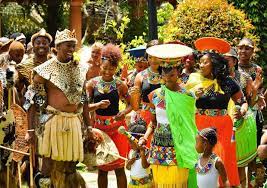
Cross-Border Marriage Myths in Southern Africa: What the Data Really Tell Us About Lesotho Women and Foreign Partners.
Disclosure: As an Amazon Associate, I earn from qualifying purchases.
Product Link: Horny Goat Weed Male Enhancing Supplement - Extra Strength HornyGoatWeed for Men with Black Maca Root Powder, Tongkat Ali, Saw Palmetto & Panax Ginseng Supplement - Energy & Stamina Caps - 90CT
Product Link: https://amzn.to/4neKdea
THE ARTICLE.
In recent weeks, social-media chatter has suggested that women in Lesotho are actively seeking men from countries such as Nigeria and elsewhere abroad for marriage. But how much of this claim is backed by data? Below is a breakdown of what research on migration, marriage and gender in Lesotho shows — and where the gaps remain.
📊 What the Data Show
-
A major survey by the Southern African Migration Project (SAMP) found that in Lesotho, a far higher proportion of female migrants are unmarried, divorced, separated or widowed compared with male migrants. Scholars Commons+3Scholars Commons+3samponline.org+3
-
For example: female migrants in Lesotho: ~24 % widowed; ~20 % divorced/separated. Scholars Commons+1
-
Male migrants: about 84 % married, versus only ~27 % of female migrants in one study. Scholars Commons+1
-
-
Migration patterns: Lesotho has long been a country of labour migration, especially to South Africa — historically male dominated, though female migration has grown. Scholars Commons+2migrationpolicy.org+2
-
Family structure & marriage shifts: Research shows that Lesotho’s social structures are changing — out-migration by husbands, increasing number of female-headed households, and delayed or avoided marriage by some women. Research Portal+1
-
Civil registration data for marriage in Lesotho exist (e.g., vital statistics for 2021), but they do not appear to provide evidence of significant numbers of foreign-national spouses or mass “advertising” of partners abroad. bos.gov.ls+1
🧐 What You Can’t Conclude (Yet)
-
There is no publicly available large-scale data showing that women in Lesotho are systematically seeking or marrying men from Nigeria (or other distant countries) in a coordinated or large-scale way.
-
The narrative of “Lesotho women advertising for Nigerian men” seems anecdotal or isolated, rather than reflective of a documented national trend.
-
Many migration/marriage studies focus on South Africa–Lesotho patterns, not long-distance North-to-South (West Africa to Lesotho) partner recruitment.
-
The social-media posts or forum adverts may over-represent exceptional cases, not broad behaviour.
🔍 Expert View: Interpreting the Narrative
-
Scholars argue that when women migrate or delay marriage, the drivers are often economic necessity, household survival, or shifting gender roles — not necessarily “finding foreign husbands”. (See SAMP research) samponline.org+1
-
Another angle: The dynamics of marriage and migration are gendered — women migrants often come from households with no husband, or are themselves household heads; men migrants tend to be married. samponline.org+1
-
Some researchers caution that media focus on “marriage-migration” oversimplifies the broader structural factors: poverty, labour migration, education, gender expectations. Research Portal
✅ What We Can Say With Confidence
-
The phenomenon of cross-border relationships and migration among Basotho (people of Lesotho) is real — especially along the South Africa–Lesotho axis.
-
Women’s migration and changes in marital patterns are documented in Lesotho’s context.
-
However: the specific claim that many Lesotho women are asking for men from Nigeria (or other far-off countries) remains unsubstantiated as a widespread trend.






Comments