

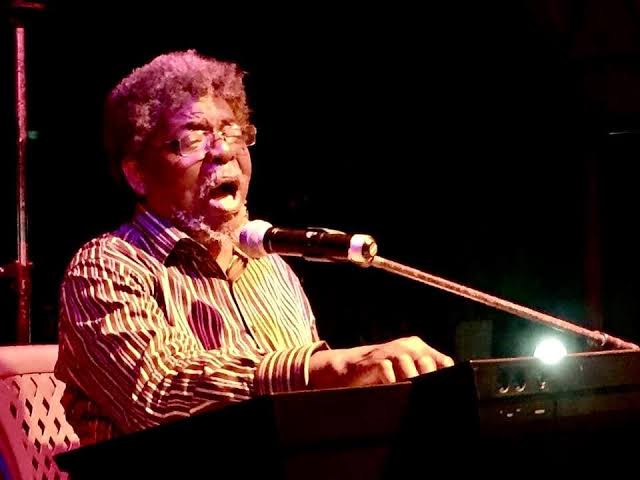
Tunji Oyelana is a Nigerian musician, actor, and academic, known for his significant contributions to the cultural scene in Nigeria, particularly during the 1960s and 1970s. He is often considered one of the pioneers of highlife and folk music in Nigeria and was also closely associated with the famous Nigerian writer and activist, Wole Soyinka.
Early Life and Education
Tunji Oyelana was born on born October 4, 1939 in Nigeria and grew up surrounded by Yoruba culture and traditions, which heavily influenced his artistic career. He attended the University of Ibadan, where he was exposed to theater and music, setting the foundation for his career in the arts.
Music Career
Tunji Oyelana is known for his unique blend of highlife, folk, and traditional Yoruba music. He is a master of storytelling through his music, often incorporating satirical and humorous elements that address social and political issues in Nigeria. Some of his popular songs include:
- "I Love My Country": A song that showcases Oyelana's love for Nigeria and serves as a commentary on the country's political and social challenges.
- "Agba Lo De": A track that speaks about the wisdom of the elderly, celebrating Yoruba culture and values.
- "Oni Suru": A song about patience, blending traditional Yoruba rhythms with highlife influences.
His music often features rich instrumentation, including traditional African drums, guitars, and brass, which give it a distinct Afrobeat flavor. Oyelana's lyrics are typically in Yoruba, though he sometimes sings in English to reach a broader audience.
Acting and Theater
Tunji Oyelana was also a prominent figure in the Nigerian theater scene. He worked extensively with Nobel Laureate Wole Soyinka, appearing in several of his plays and productions. Oyelana's collaboration with Soyinka extended beyond acting, as they shared a commitment to using art as a medium for social and political commentary.
In the 1960s, Tunji Oyelana was one of the founding members of Wole Soyinka's 1960 Orisun Masks. He affectionately refers to Soyinka as "Oga," meaning "boss" in Yoruba. As one of Soyinka's original actors, Oyelana traveled extensively, bringing to life roles in iconic plays such as Kongi's Harvest, The Road, Madmen and Specialists, and Opera Wonyosi, captivating audiences around the world. His contributions to theater are celebrated for their depth, humor, and their powerful reflection of Nigerian society.Notably, Oyelana also played a key role in Soyinka's satirical play "The Man Died", which addresses the state of human rights and political freedom in Nigeria.
Tunji Oyelana later emerged as an ethnomusicologist, producing folk music that dominated the airwaves in the 1970s and 1980s with his band, Tunji Oyelana and The Benders. Many of his albums are now regarded as classics in their genre, characterized by native wisdom, folklore, and wit, blended with sparse syncopation and antiphony. The music relied heavily on the human voice and its tonal inflections to elevate the listener's spirit. Radio stations frequently played his songs, and they were a source of great enjoyment for audiences. Oyelana led the now-defunct Benders Band, known for popular tracks such as "Agbal’ode," "Alaaru to nje buredi," "Guguru perere, epa perere," "Mo lo Soko," "Which Way Africa?," "Osekere," "Okete," and "Enia Bi Aparo," among others.
In the 1980s, Oyelana also gained recognition for his work on television, particularly on NTA Ibadan. Perhaps his most famous role was in the sitcom Sura de Tailor, where he played the lead character. Many fondly recall the show's catchy theme song, which quickly became popular among viewers: "Sura de tailor, oko Adunni, the friend of Major, expert in Toro, danshiki, and buba, also English coat and trouser o... Sura de Tailor is your frie-n-d."
Academic Contributions
Aside from his artistic endeavors, Tunji Oyelana also made contributions to academia. He worked as a lecturer at the University of Ibadan, where he influenced many students with his knowledge of drama and music. His work in education helped bridge the gap between traditional Nigerian art forms and modern academic approaches to theater and music.
Political Activism
Tunji Oyelana's art was often politically charged, and he used his platform to criticize corruption and advocate for social justice in Nigeria. His satirical approach allowed him to discuss sensitive topics while entertaining his audience. This activism, however, sometimes led to friction with government authorities, as was the case with many artists and activists during Nigeria's military regimes.
Later Life and Legacy
In the 1990s, Tunji Oyelana relocated to the United Kingdom, where he continued to perform and promote Nigerian culture. He remained active in the diaspora community, using his music and performances to connect with Nigerians abroad and keep the culture alive.
Tunji Oyelana's contributions to Nigerian music, theater, and education have left an indelible mark on the country's cultural landscape. He is celebrated for his ability to blend entertainment with meaningful messages, making him a beloved figure in Nigerian popular culture. His works continue to inspire new generations of musicians, actors, and activists who seek to use their art to effect change.
Discography (Selected Works)
- "I Love My Country" (1979)
- "Agba Lo De"
- "Oni Suru"
- "Ifa"
- "Koriko Nde"
Awards and Recognition
Although Tunji Oyelana may not have received mainstream international recognition, he is highly regarded in Nigeria for his artistic contributions. He has received various accolades for his work in music and theater, particularly for his collaboration with Wole Soyinka and his influence on Nigerian highlife music.
Tunji Oyelana remains a respected figure, known for his efforts to preserve Yoruba culture through his music and theater while addressing the social and political issues of his time.
Happy 85th Birthday ‘Uncle Tunji Oyelana” - Babacares.
Some references from : Femi Ajibode (Golden Oldies),Websites such as Music in Africa and BBC News Africa.
https://www.babacares.com/blog-details?details=83&title=+%E2%80%9DCelebrating+85+Years+of+Cultural+Legacy%3A+Tunji+Oyelana%2C+The+Icon+of+Nigerian+Music+and+Theater%E2%80%9D.








Comments