


How Artificial Intelligence Is Transforming Your Doctor’s Visit: A New Era in Patient Care.
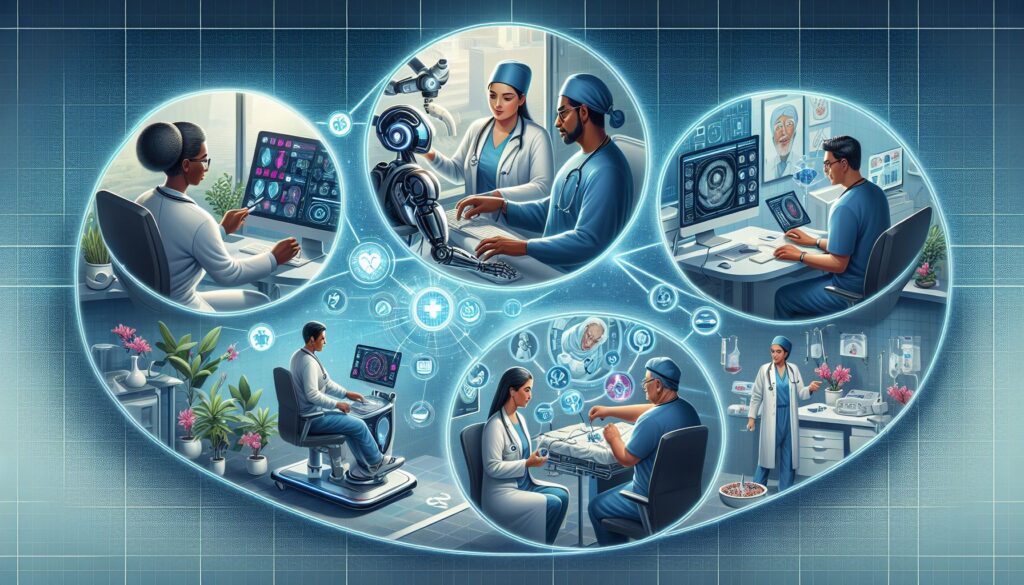
Artificial Intelligence (AI) is revolutionizing healthcare, especially in the way patients experience doctor visits. From streamlined diagnostics to personalized treatment plans, AI technologies are enhancing the efficiency, accuracy, and accessibility of medical services. This transformation is not only making healthcare smarter but also more patient-centered.
1. Faster and More Accurate Diagnoses
One of the most significant ways AI is transforming doctor visits is through diagnostic support. AI-powered tools can analyze patient data, medical images, and lab results faster than humans, often identifying patterns that may be missed.
For example, deep learning algorithms can detect diseases like breast cancer, pneumonia, or diabetic retinopathy in imaging scans with high precision. Google Health’s AI model has even been shown to outperform radiologists in breast cancer detection in some studies (McKinney et al., 2020).
2. Virtual Health Assistants and Chatbots
AI chatbots and virtual assistants are helping patients receive medical advice without even stepping into a clinic. These systems can perform initial symptom checks, schedule appointments, provide follow-up care, and answer common medical questions. Tools like Babylon Health and Ada Health use AI to guide patients through symptoms and recommend actions based on data.
This helps doctors focus on more complex cases while improving patient access to care, especially in underserved or rural areas.
3. Personalized Treatment Plans
AI leverages data from genomics, lifestyle, and electronic health records (EHRs) to help create individualized care plans. Machine learning models can predict how a patient might respond to a treatment based on their unique health profile. This is especially valuable in chronic disease management such as diabetes or heart conditions.
For instance, IBM Watson for Oncology has been used to recommend cancer treatments based on patient data and current research, though its effectiveness has received mixed reviews (STAT News, 2017).
4. Improved Administrative Workflow
AI isn’t just helping doctors with clinical tasks—it’s also revolutionizing how healthcare offices operate. Natural language processing (NLP) tools can transcribe doctor-patient conversations and input data directly into EHRs, reducing documentation burden.
This allows doctors to spend more time interacting with patients rather than doing paperwork. Companies like Suki and Nuance are leading in this space with AI-driven voice assistants for clinicians.
5. Predictive Analytics and Preventive Care
AI systems can analyze a patient's history and lifestyle to predict potential health risks before symptoms appear. This proactive approach enables early interventions, reducing complications and healthcare costs.
For example, AI can alert clinicians about a patient's risk of readmission or developing conditions like sepsis, allowing for timely intervention (NIH, 2020).
6. Telemedicine Integration
During and after the COVID-19 pandemic, telehealth became essential. AI now supports these visits by triaging symptoms, analyzing speech patterns for mental health assessments, or monitoring vitals through wearable devices synced to virtual consultations.
This remote care model ensures patients receive consistent, quality care while reducing the need for physical visits.
Final Thoughts
Artificial Intelligence is rapidly becoming a trusted partner in the exam room, aiding doctors and empowering patients. While there are still challenges—like data privacy, algorithm bias, and ethical concerns—the future looks promising.
By integrating AI thoughtfully, healthcare systems can provide smarter, faster, and more personalized care, fundamentally transforming how we experience a doctor’s visit.
References
- McKinney, S. M., et al. (2020). International evaluation of an AI system for breast cancer screening. Nature, https://www.nature.com/articles/s41586-019-1799-6
- U.S. National Institutes of Health (NIH). (2020). Artificial Intelligence in Healthcare: Past, Present and Future. https://www.ncbi.nlm.nih.gov/pmc/articles/PMC7042545/
- STAT News. (2017). IBM Watson recommended ‘unsafe and incorrect’ cancer treatments, internal documents show. https://www.statnews.com/2017/09/05/watson-ibm-cancer/
- World Health Organization. (2021). Ethics and governance of artificial intelligence for health. https://www.who.int/publications/i/item/9789240029200
https://www.babacares.com/blog-details?details=740&title=How+Artificial+Intelligence+Is+Transforming+Your+Doctor%E2%80%99s+Visit%3A+A+New+Era+in+Patient+Care.







Comments