

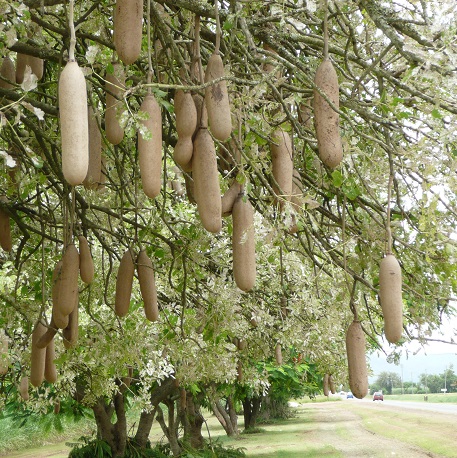
Kigelia Africana (Sausage Tree): Traditional African Medicine Backed by Science.
Disclosure: "This article contains affiliate links. If you purchase through these links, I may earn a commission at no extra cost to you. This helps support my work. Thank you!"
Product: Amissan Kigelia Africana (sausage tree | Balam Kheera) Powder 142g - Skin Firming & Anti-Aging
Product Link: https://amzn.to/4k2j2Sh
THE ARTICLE.
Introduction
Kigelia africana, commonly known as the Sausage Tree, is a sacred and medicinal tree native to sub-Saharan Africa. Named for its large, sausage-shaped fruits, this plant holds a prominent place in African traditional healing for treating skin conditions, infections, and even cancers. With growing scientific interest, modern research is now validating many of its therapeutic claims.
From skincare to antimicrobial applications, Kigelia africana is proving to be more than just folklore—it’s a natural pharmacy in one tree.
What Is Kigelia Africana?
- Botanical Name: Kigelia africana (Bignoniaceae family)
- Common Names: Sausage Tree, Worsboom (Afrikaans), Pandoro (Swahili), Akin (Yoruba)
- Habitat: Tropical and sub-tropical Africa
- Identifying Features: Long, hanging sausage-like fruits; reddish bell-shaped flowers; rough bark
Traditional Uses of Sausage Tree in African Medicine
In African ethnomedicine, parts of the Kigelia tree—especially the fruit, bark, and roots—have been used to:
- Treat skin conditions like eczema, acne, psoriasis, fungal infections
- Heal wounds, ulcers, and abscesses
- Address gynecological issues and sexually transmitted infections
- Support anti-aging and breast firming in cosmetics
- Soothe rheumatic pain and inflammation
Active Compounds and Pharmacological Properties
Kigelia africana contains a rich variety of bioactive phytochemicals, including:
- Iridoids and flavonoids – Anti-inflammatory, antioxidant, and antimicrobial effects
- Naphthoquinones – Anticancer and antibacterial activity
- Saponins, coumarins, and sterols – Hormone-modulating and antimicrobial roles
- Phenolics and lignans – Skin-protective and anti-aging agents
Scientifically Backed Health Benefits
1. 🌿 Anti-Cancer and Anti-Tumor Activity
Extracts from Kigelia have shown promise in inhibiting the growth of cancerous cells, particularly melanoma and breast cancer.
- Study: A 2005 study published in South African Journal of Botany demonstrated that Kigelia africana fruit extract inhibited melanoma cell proliferation [1].
2. 🧴 Skin Healing and Cosmetics
Kigelia extracts are increasingly used in natural skincare for firming, anti-aging, and acne control.
- Mechanism: Its flavonoids and iridoids reduce inflammation, fight bacteria, and improve skin elasticity.
- Products: Featured in lotions, face serums, anti-wrinkle creams, and breast firming gels.
3. 🔬 Powerful Antibacterial and Antifungal Effects
Extracts from fruit and bark are effective against pathogens like Staphylococcus aureus, E. coli, and Candida albicans.
- Research: A study in BMC Complementary Medicine confirmed broad-spectrum antimicrobial action [2].
4. 🔥 Anti-Inflammatory and Analgesic Effects
Used to reduce swelling, joint pain, and menstrual cramps.
- Application: Topical pastes or decoctions applied to painful areas or wounds.
5. 🧬 Antioxidant Protection
The plant’s high phenolic content protects the body against oxidative damage linked to aging and chronic diseases.
How to Use Kigelia Africana
Topical Use:
- Creams and ointments for acne, burns, eczema, and aging skin
- Poultices made from dried fruit or bark for inflammation and wounds
Internal Use:
- Traditionally, decoctions made from the root or bark are consumed under supervision—not recommended without expert guidance, as high doses may be toxic.
Safety and Precautions
- Toxicity Warning: Raw fruits are toxic if ingested and must be processed properly
- Pregnancy: Avoid during pregnancy unless advised by a healthcare professional
- Skin Sensitivity: Conduct a patch test before using topically
Environmental and Cultural Significance
The Sausage Tree is considered sacred in many African communities and is often associated with fertility, healing, and spiritual protection. It is also an important shade tree and supports biodiversity by attracting birds, bees, and bats.
Conclusion
Kigelia africana, the iconic Sausage Tree of Africa, is not only revered in traditional medicine but is now gaining global recognition in skincare and integrative medicine. With its wide range of scientifically backed benefits—from cancer inhibition to skincare and infection control—this remarkable plant continues to bridge the gap between indigenous knowledge and modern science.
When used safely and sustainably, Kigelia is a shining example of Africa’s herbal healing legacy with global potential.
References
- Grace, O. M., et al. (2005). Anticancer and antioxidant potential of Kigelia africana (Lam.) Benth. South African Journal of Botany, 71(3–4), 473–476. https://doi.org/10.1016/S0254-6299(15)30113-6
- Akinmoladun, F. O., et al. (2014). Evaluation of antimicrobial and antioxidant activities of Kigelia africana. BMC Complementary and Alternative Medicine, 14, 203. https://doi.org/10.1186/1472-6882-14-203
- Burkill, H. M. (1985). The Useful Plants of West Tropical Africa, Vol. 1. Royal Botanic Gardens, Kew.
https://www.babacares.com/blog-details?details=738&title=Kigelia+Africana+%28Sausage+Tree%29%3A+Traditional+African+Medicine+Backed+by+Science.








Comments