

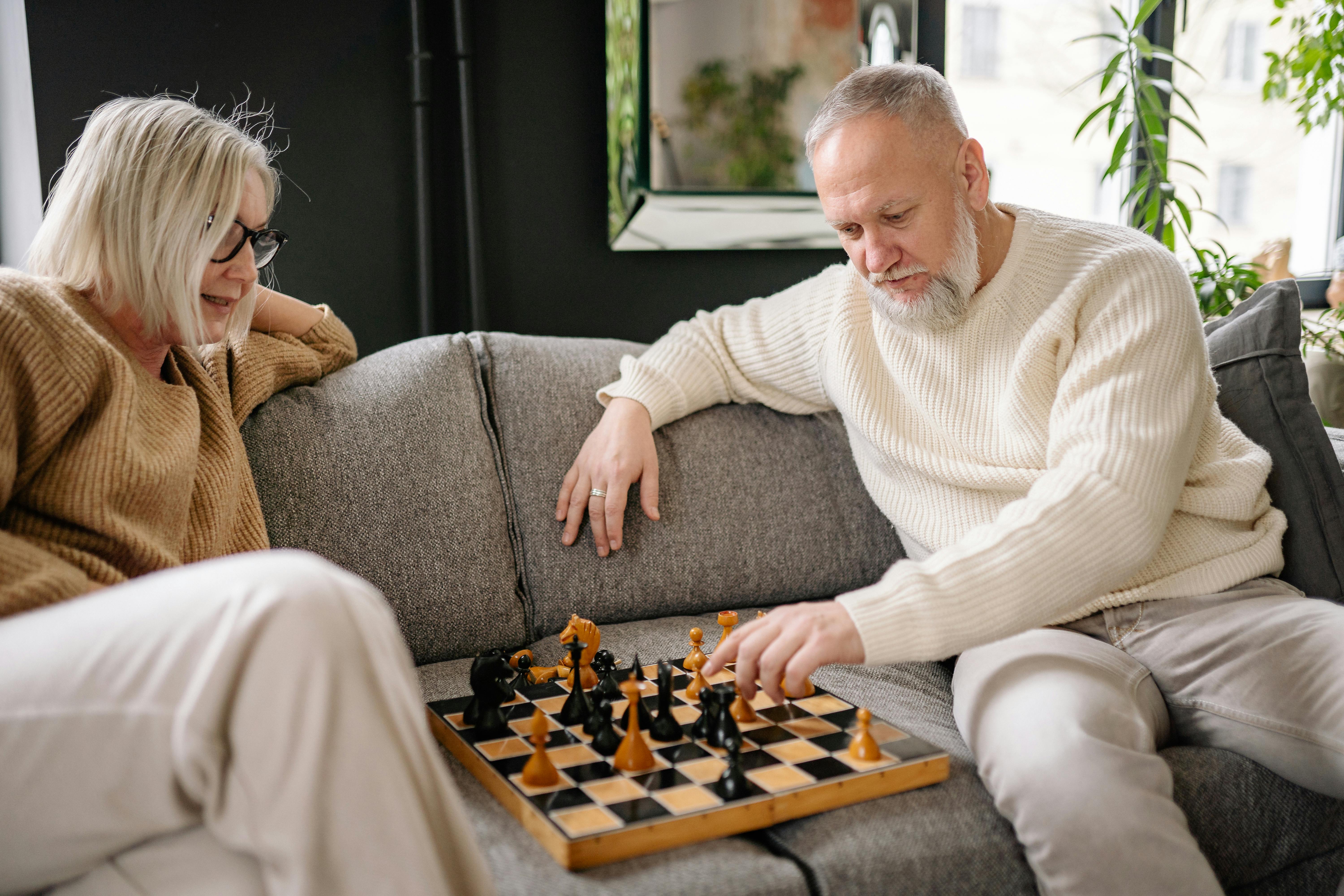
Boost Your Brain Power: How Puzzles and Games Improve Memory and Mental Agility.
Keeping your brain sharp doesn't always require textbooks or meditation. One of the most enjoyable and scientifically supported ways to maintain and improve brain function is by engaging in puzzles and games. From crosswords and sudoku to chess and word searches, these activities provide more than just entertainment—they stimulate your brain and strengthen your cognitive health.
In this article, we'll explore how puzzles and games benefit your brain, backed by research and practical examples.
1. Enhances Memory and Recall
Playing puzzles activates the hippocampus, the part of the brain responsible for memory formation. Engaging in memory-based games such as matching cards, trivia quizzes, and crossword puzzles helps reinforce short-term memory and strengthen the pathways that store long-term memories.
📚 Reference: Whitlock, LA. “Cognitive training and neuroplasticity in aging.” Current Opinion in Neurology. 2010; 23(6): 591–598.
2. Increases Problem-Solving Skills
Games like sudoku, Rubik’s cubes, and strategy games (e.g., chess or checkers) require logical thinking, pattern recognition, and critical reasoning. This kind of mental engagement exercises your brain similarly to how physical exercise works your muscles.
📚 Reference: Green CS, Bavelier D. “Effect of action video game experience on the time course of inhibition of return and the efficiency of visual search in human subjects.” Cognitive Psychology. 2003;47(3): 287–331.
3. Boosts Concentration and Focus
Puzzles demand attention to detail and prolonged mental effort. Activities like jigsaw puzzles or word searches help train the brain to maintain focus over longer periods—an ability that translates into better performance in everyday tasks like studying, working, or problem-solving.
📚 Reference: MacPherson SE, et al. “Processing speed and memory are associated with increased use of strategic approaches in adult puzzles.” Journal of Experimental Psychology. 2015.
4. Supports Emotional Well-being and Reduces Stress
Brain games are known to provide a sense of achievement, which boosts dopamine levels—a neurotransmitter associated with pleasure and motivation. Engaging in these activities, especially in social settings, can also reduce feelings of anxiety and depression.
📚 Reference: Russoniello CV, O’Brien K, Parks JM. “The effectiveness of casual video games in improving mood and decreasing stress.” Journal of CyberTherapy & Rehabilitation. 2009;2(1):53–66.
5. Improves Neuroplasticity and Delays Cognitive Decline
Brain stimulation through puzzles and mental games enhances neuroplasticity—the brain's ability to adapt, form new connections, and reorganize itself. Regular cognitive activity has been linked to lower risk of Alzheimer's disease and dementia.
📚 Reference: Valenzuela MJ, Sachdev P. “Brain reserve and cognitive decline: a systematic review.” Psychological Medicine. 2006;36(4):441–454.
Popular Brain-Stimulating Games You Can Try
-
Crossword puzzles – Boost vocabulary and memory
-
Sudoku – Improve logic and number pattern recognition
-
Chess – Enhances strategy and foresight
-
Scrabble – Strengthens language and spelling skills
-
Memory matching cards – Builds short-term memory and concentration
-
Jigsaw puzzles – Enhances spatial reasoning and patience
-
Online brain apps like Lumosity, Peak, and Elevate
How Often Should You Play?
Experts recommend at least 15–30 minutes a day of brain-training activities for optimal cognitive benefits. Rotate between different types of games to target various areas of brain function.
Final Thoughts
Stimulating your brain with puzzles and games isn’t just fun—it’s one of the most effective and accessible ways to maintain brain health throughout life. By challenging your mind regularly, you not only sharpen your thinking but also build a buffer against age-related mental decline.
So next time you pick up a crossword or log into a brain-training app, remember—you’re not wasting time. You’re exercising your brain.
Disclaimer: This article is for educational purposes and does not replace professional medical or psychological advice.
https://www.babacares.com/blog-details?details=715&title=Boost+Your+Brain+Power%3A+How+Puzzles+and+Games+Improve+Memory+and+Mental+Agility.









Comments