

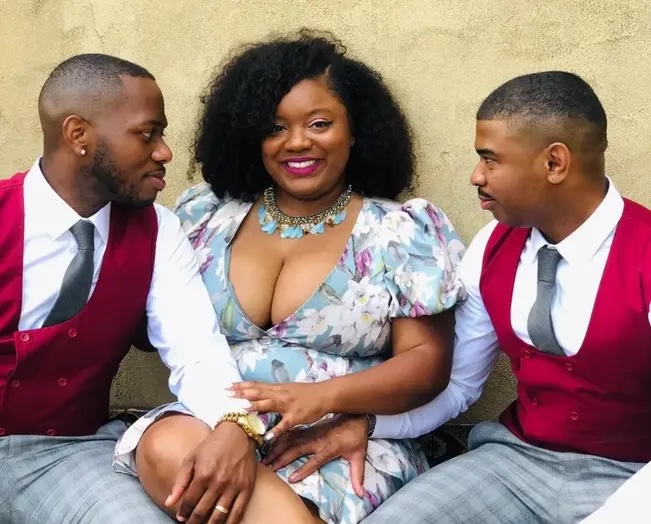
Polyandry and Unusual Marital Practices in Ogoja, Nigeria.
Disclosure: "This article contains affiliate links. If you purchase through these links, I may earn a commission at no extra cost to you. This helps support my work. Thank you!"
Product: Lube Life Water Based Personal Lubricant for Men and Women Original, 32 Ounce (946 mL
Product Link: https://amzn.to/4bNl5HC
THE ARTICLE-
Introduction
Polyandry, the practice of a woman having multiple husbands simultaneously, is rare globally but has been documented in specific cultures. In Nigeria, while polyandry is not widely practiced, certain communities have exhibited marital arrangements that deviate from the predominant monogamous and polygynous systems. One such community is the Irigwe people of northern Nigeria, where women have traditionally acquired multiple spouses, referred to as "co-husbands."
In the context of Ogoja, Ogoja, located in Cross River State, Nigeria, is home to a variety of indigenous ethnic groups with distinct cultural traditions. While polyandry (a woman having multiple husbands) is extremely rare in Nigeria, there have been reports and oral traditions suggesting that some communities in Ogoja have engaged in unusual marital arrangements that resemble polyandry. These practices challenge the conventional patriarchal norms dominant in most Nigerian societies and raise questions about gender roles, economic survival, and historical influences.
The Yakö exhibit a high degree of social heterogeneity but maintain linguistic, political, religious, and cultural homogeneity. Their kinship system is characterized by double descent, recognizing both patrilineal and matrilineal lines, which influences their marriage customs. This dual system allows for a complex social structure where inheritance and lineage are traced through both parents, potentially leading to marital arrangements that differ from the typical monogamous or polygynous systems.
While these practices do not constitute formal polyandry, they reflect the cultural flexibility and diversity in marital arrangements within the region. It's important to note that such customs are not dominant and are often subject to change due to external influences such as modernization, legal frameworks, and religious conversion.
Understanding Polyandry in Ogoja
Polyandry is not a common or officially recognized practice in Nigeria. However, in certain cases, marital relationships in Ogoja and other parts of Cross River have displayed characteristics that resemble polyandry. These arrangements are often influenced by economic, social, and cultural factors rather than formalized marriage systems.
1. Economic Polyandry: When Women Take Multiple Husbands for Survival
In some rural parts of Ogoja, historical accounts suggest that women—particularly those from poorer families—may have entered into relationships with multiple men for economic security. Unlike traditional polygyny (where one man has multiple wives), this system allowed a woman to receive financial and material support from multiple male partners.
- In some cases, one husband might be a primary provider, while others contribute resources sporadically.
- The woman, in return, ensures the continuity of the household and manages family affairs.
- This practice was more common in agrarian communities, where wealth was measured in terms of land, food production, and trade goods.
2. Social Polyandry: Flexible Unions and Marital Freedom
Some reports suggest that among certain ethnic subgroups in Ogoja, women were historically allowed greater freedom in their marital relationships compared to other Nigerian cultures. This did not always mean formalized polyandry but rather a looser form of marital association where:
- A woman could remain married to one man while having relationships with other men.
- In some cases, children born under these unions belonged to the woman's lineage, rather than being strictly tied to the father’s family.
- This may have been influenced by matrilineal traditions, where inheritance and family name were passed down through the mother.
3. Widow Inheritance and Overlapping Marriages
Another reason why some scholars believe polyandry-like relationships might exist in Ogoja is due to the practice of widow inheritance (known in some Nigerian cultures as "Levirate marriage").
- If a woman's husband died, she could be inherited by his brother or close male relative, often without formally dissolving her previous marital status.
- In some cases, this led to situations where a woman maintained relationships with more than one man at the same time, particularly if the new husband did not fully replace the previous one in household leadership.
- This could create an arrangement that, from an outsider’s perspective, appears polyandrous.
How Does This Compare to Other Forms of Polyandry?
Globally, polyandry is most commonly found in:
- Tibet and Nepal, where brothers marry the same woman to keep land within the family.
- Parts of India and Sri Lanka, where polyandry has been practiced among certain tribal groups.
- Some African cultures, such as the Maasai of Kenya, where women can take multiple male lovers while officially married to one man.
Unlike these structured forms of fraternal polyandry (where brothers share a wife), the polyandrous-like practices in Ogoja seem to have been more fluid and economic-driven rather than cultural law.
Challenges and Controversies
1. Social Stigma and Modern Decline
- As Nigeria is predominantly patriarchal, any form of polyandry-like relationship is often viewed as taboo.
- With the rise of Christianity and Islamic influences, traditional marital arrangements that gave women more autonomy have largely disappeared.
- Modern laws do not recognize polyandry, meaning any such relationships would be considered illegitimate under Nigerian family law.
2. Lack of Official Documentation
- Most of what is known about unusual marriage practices in Ogoja comes from oral traditions rather than formal anthropological studies.
- More research is needed to verify whether historical forms of polyandrous-like unions existed and how they functioned.
Conclusion
While polyandry is not a widespread or fully institutionalized practice in Ogoja, certain economic, social, and cultural conditions may have led to women maintaining multiple male partners for survival, inheritance, or familial flexibility. This challenges the notion that African marital traditions are solely male-dominated and highlights the diverse ways in which gender roles have been negotiated in different communities.
Further anthropological research is necessary to document these cases and understand how they have evolved in modern times. However, the discussion surrounding polyandry-like customs in Ogoja remains an intriguing aspect of Nigeria’s rich cultural history.
https://www.babacares.com/blog-details?details=403&title=Polyandry+and+Unusual+Marital+Practices+in+Ogoja%2C+Nigeria.









Comments