

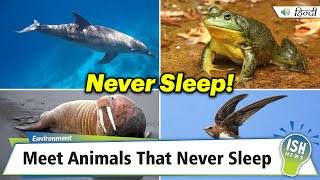
Many animals have evolved unique survival mechanisms that defy common expectations, one of the most intriguing being their ability to go without sleep. While sleep is crucial for most species, there are several animals that either don’t sleep in the conventional sense or have incredibly short sleep cycles. Below are 10 remarkable animals that manage without sleep, demonstrating nature's adaptability.
1. Bullfrogs (Rana catesbeiana)
Bullfrogs are one of the few animals that don’t sleep in the way humans or other animals do. Instead of entering a restful sleep cycle, they experience short periods of inactivity and may remain alert to their surroundings. Their ability to survive without sleep is believed to be linked to their environmental adaptations.
Source: National Geographic
2. Dolphins (Delphinidae)
Dolphins have a fascinating sleep cycle where only one hemisphere of their brain sleeps at a time. This allows them to remain alert and continue swimming or coming up for air while still resting. This unique form of sleep is essential for survival in their aquatic environment.
Source: BBC Earth
3. Sharks (Selachimorpha)
Sharks do not sleep in the traditional sense. Instead, many species engage in a type of rest where they remain partially active to keep moving and oxygenate their bodies. Some species, like the great white shark, are thought to rest in phases, alternating activity and short rest periods.
Source: Sharks Research
4. Jellyfish (Phylum Cnidaria)
Jellyfish have no central nervous system, so they do not sleep in the way most animals do. Instead, they drift in and out of states of rest, but there is no evidence that they require sleep for survival. This makes jellyfish unique in their ability to survive without sleep.
Source: Scientific American
5. Migratory Birds (Various species)
Certain species of migratory birds can stay awake for extended periods while flying across vast distances. For example, some species of swifts and albatrosses have been recorded flying for days without rest, using short naps in flight rather than prolonged sleep cycles.
Source: National Geographic
6. Horses (Equus ferus caballus)
Horses only require short periods of deep sleep, but they do not sleep continuously. They rest while standing, which allows them to stay alert for potential threats. Their sleep is fragmented, with shorter bursts of REM sleep throughout the day.
Source: The Horse
7. Walruses (Odobenus rosmarus)
Walruses are known to sleep very little and can go without sleep for extended periods while foraging. They often sleep while lying on land or ice, but their rest cycles are brief compared to other mammals.
Source: Nature
8. Giraffes (Giraffa camelopardalis)
Giraffes are known to sleep for only short intervals, averaging just 2 to 4 hours per day. Their sleep is often fragmented and spent lying down. They tend to sleep standing up most of the time and only lay down for deep, rapid eye movement (REM) sleep.
Source: Animalia
9. Sea Otters (Enhydra lutris)
Sea otters are known for their ability to survive without sleep in the traditional sense. Instead, they rest intermittently while floating on their backs in the water. They also use tools to crack open shellfish and other food while remaining semi-alert.
Source: Marine Mammal Science
10. Elephants (Loxodonta africana)
Elephants, especially in the wild, are known to get very little sleep. Their sleep is broken up into small naps throughout the day and night, usually lasting only 2-4 hours a day. Elephants may also sleep standing up, much like horses.
Source: World Wildlife Fund
Conclusion
From the depths of the ocean to the skies above, these 10 animals have developed extraordinary ways of surviving without the need for conventional sleep. Whether it’s through intermittent rest or the ability to remain alert for survival, their adaptations are truly fascinating. Understanding how these creatures function can offer valuable insights into the resilience of life on Earth.
References:
• National Geographic
• BBC Earth
• Scientific American
• The Horse
• Nature
• World Wildlife Fund.
https://www.babacares.com/blog-details?details=198&title=10+Fascinating+Animals+That+Dont+Sleep+and+How+They+Survive+Without+It.







Comments