

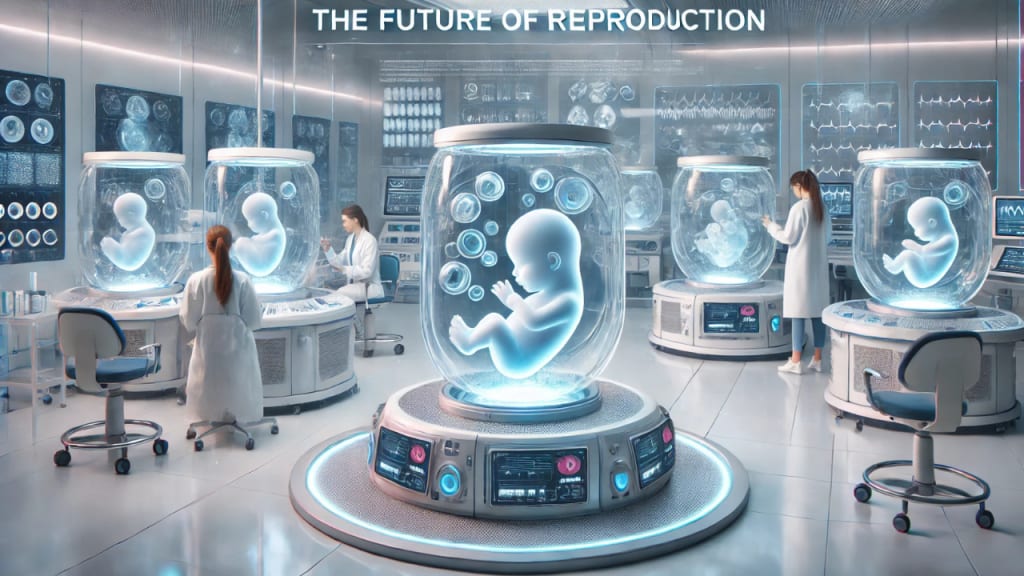
The artificial uterus, a groundbreaking technology designed to replicate the womb environment, could revolutionize neonatal care, especially for extremely premature infants. Researchers have developed an advanced prototype called the "EXTEND system," initially tested on lambs, where it supported development at a pre-birth stage. This system imitates essential womb functions, including oxygen supply and fluid support, and aims to help premature human infants reach a critical stage of development outside the mother's body. The U.S. FDA is considering trials for human use as early as 2024, highlighting the potential for this technology to be used in medical settings soon.
Another concept, known as "EctoLife," envisions a facility of artificial wombs where babies could be grown from fertilized embryos to full term. Created by science communicator Hashem Al-Ghaili, EctoLife integrates modern technologies like AI-based monitoring, haptic feedback, and an app for parents to track fetal development remotely. Al-Ghaili believes this technology could address health issues related to traditional childbirth and offer new reproductive possibilities, though it also raises ethical and societal questions.
These advancements show promise but are still under ethical and regulatory scrutiny, reflecting both excitement and caution as science approaches new reproductive possibilities










Comments