

Understanding the Modus Operandi of Car Thieves in Canada: What Every Vehicle Owner Must Know
By Babajide Moronfolu | Babacares.com
The days when car thieves relied primarily on breaking windows, forcing open doors and tampering with ignition systems are gradually giving way to a more sophisticated form of criminal activity.
Today, organized vehicle thieves in Canada exploit modern automobile technology, target residential properties and operate networks capable of moving stolen vehicles across international borders.
Many Canadians go to bed believing their vehicles are safely parked in their driveways, only to wake up the following morning to discover that their cars have disappeared.
Surprisingly, in some cases, the original vehicle keys remain inside the owner's home.
How do these criminals operate, and what can vehicle owners do to protect themselves?
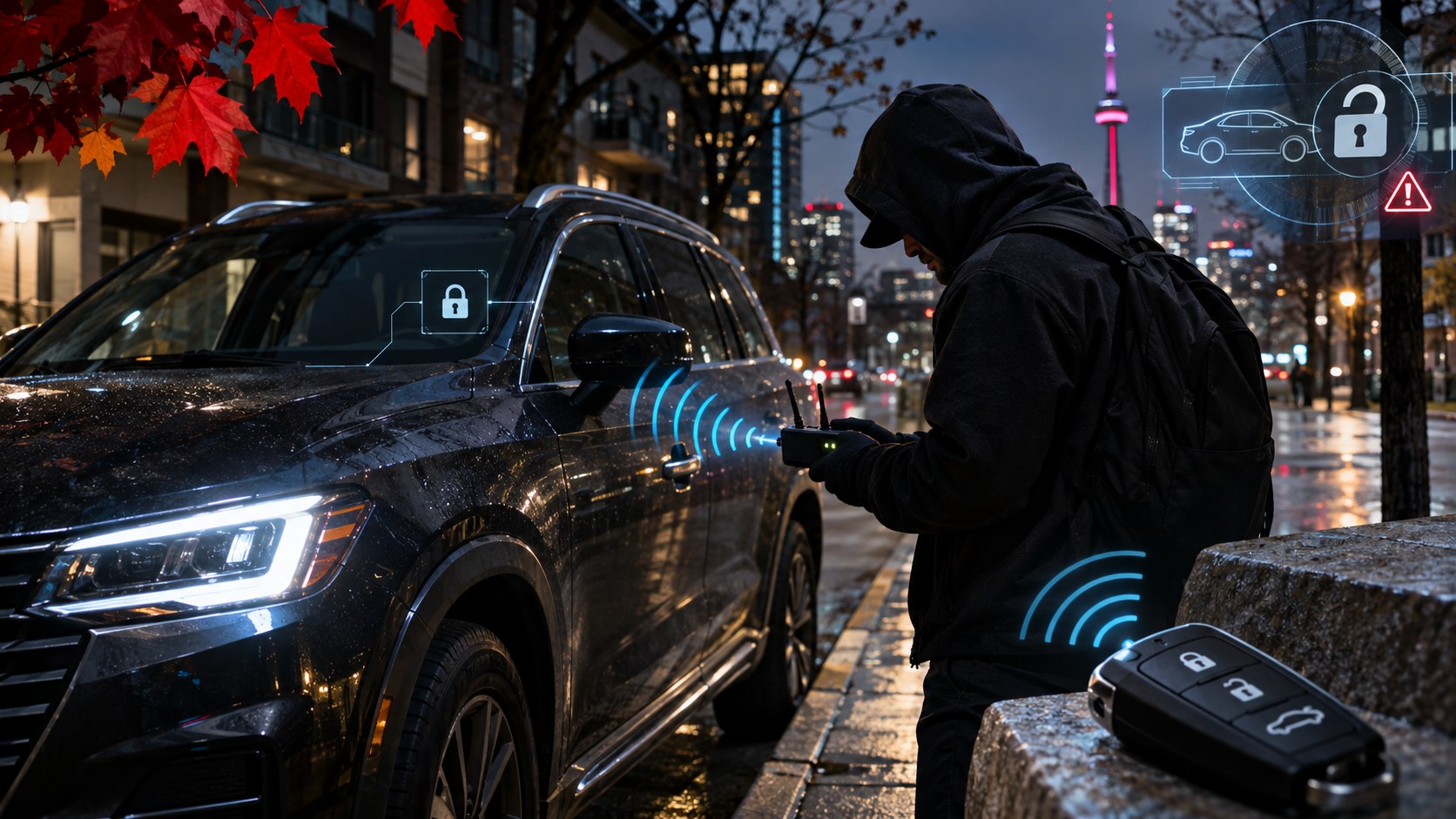
1. Exploitation of keyless entry technology
Modern vehicles equipped with keyless entry and push-button ignition offer convenience to motorists. Unfortunately, vulnerabilities in some of these systems can also be exploited by criminals.
One such method is known as a relay attack, which takes advantage of communication between a vehicle and its electronic key.
Vehicle owners should understand that locking a modern vehicle may not provide sufficient protection against sophisticated electronic theft.
Preventive measure: Keep electronic keys in a tested signal-blocking pouch, commonly known as a Faraday pouch, and consult your dealership about additional security features.
2. Targeting residential properties
Residential driveways have become targets for organized vehicle thieves.
Popular SUVs, pickup trucks and luxury vehicles are particularly attractive because of their demand and resale value in domestic and international markets.
Some vehicle thefts occur at night while families are sleeping. Others happen in public parking areas.
Preventive measure: Park inside a locked garage whenever possible, install security cameras and motion-activated lighting, and use visible physical security devices such as steering wheel locks.
3. Compromising electronic vehicle security systems
Modern vehicles depend heavily on computerized systems to control access, ignition and other essential functions.
Criminals may exploit weaknesses in these electronic systems to gain unauthorized access to vehicles without possessing the owner's original key.
This highlights the need for automobile manufacturers to continually improve vehicle security technology.
Preventive measure: Consult a qualified automotive security specialist about professionally installed immobilizers, manufacturer-approved security upgrades and additional anti-theft protection.
4. Vehicle identity fraud: Selling stolen cars to unsuspecting buyers
Not every stolen vehicle is transported overseas. Some are fraudulently resold within Canada.
Criminals may disguise the identity of a stolen vehicle using fraudulent vehicle identification numbers (VINs), a practice commonly referred to as VIN cloning or re-VINing.
An innocent buyer could unknowingly purchase a stolen vehicle and subsequently lose both the vehicle and the money spent purchasing it.
Preventive measure: Purchase vehicles from reputable dealers, obtain a vehicle history report, verify ownership documentation and arrange an independent inspection before buying a used car.
5. International trafficking of stolen vehicles
Organized vehicle theft has become an international concern.
Criminal networks may transport stolen vehicles to storage and shipping facilities before exporting them illegally to overseas markets.
This criminal activity can involve multiple individuals responsible for theft, transportation, storage, fraudulent documentation and resale.
Breaking these networks requires cooperation between Canadian police, border authorities and law enforcement agencies in destination countries.
These five methods are consistent with practices documented by Canadian police services and federal authorities.
Toronto Police Service+2
The $4.5 million auto theft investigation: Project Cadetta
On November 16, 2026, Peel Regional Police announced a major breakthrough in an investigation into an alleged international vehicle theft operation known as Project Cadetta.
Individuals charged
231
Criminal charges laid
96
Stolen vehicles recovered
$4.5M
Estimated value in Canadian dollarsSource: Peel Regional Police, November 16, 2026.
The investigation, conducted in collaboration with the Canada Border Services Agency, uncovered an alleged operation involving a warehouse in Brampton where stolen vehicles were reportedly prepared for export to West Africa.
All accused individuals remain presumed innocent until proven guilty in court.
The hidden health and financial consequences of car theft
At Babacares, our concern extends beyond criminal investigations and the recovery of stolen vehicles.
Imagine a Personal Support Worker who depends on a vehicle to visit vulnerable clients, a community nurse attending to patients, or a delivery driver whose family depends on daily earnings.
The sudden disappearance of their vehicles could trigger a chain of difficulties, including:
-
Outstanding vehicle loans and financial hardship.
-
Loss of employment income.
-
Anxiety, depression and emotional distress.
-
Sleepless nights and persistent fear.
-
Disruption to medical appointments and family responsibilities.
-
Increased financial pressure associated with insurance and vehicle replacement.
For individuals already living with health conditions, the additional stress may worsen their overall well-being.
A stolen vehicle is not merely a financial loss. It can destabilize an entire household.
Practical ways motorists can protect their vehicles
Use a steering wheel lock
A visible physical security device can discourage thieves and provide an additional layer of protection.
Protect your electronic keys
Keep vehicle keys inside a tested signal-blocking pouch.
Park securely
Use a locked garage whenever possible.
Install security cameras and lighting
Improve visibility around your property and record suspicious activities.
Install an additional immobilizer
Consult a qualified professional about insurer-approved anti-theft systems.
Consider a vehicle tracking system
A tracking device may assist police in locating a stolen vehicle.
Review your insurance coverage
Confirm that your policy covers theft and understand your deductible and potential financial obligations.
No single security device guarantees protection. Combining several preventive measures is advisable.
What should you do if you catch someone attempting to steal your vehicle?
Never confront suspected car thieves. They may be armed or become violent when confronted.
Call 911 if a theft is in progress or your safety is threatened.
If your vehicle has already been stolen, report it immediately to the police and your insurance company. Provide available security footage and tracking information to investigators.
Do not attempt to recover the vehicle yourself.
Your life is more valuable than your car.
The Babacares perspective: Canadians deserve better protection
Canadians work hard, pay taxes, finance vehicles and spend substantial amounts on automobile insurance.
They deserve to feel safe in their homes without constantly worrying about whether their vehicles will still be in their driveways the following morning.
While motorists must take reasonable precautions, the responsibility for preventing vehicle theft cannot rest entirely on vehicle owners.
Automobile manufacturers must improve vehicle security. Police and border authorities must strengthen investigations and disrupt organized criminal networks. Insurance companies should encourage accessible and effective preventive measures.
International cooperation is also necessary to prevent stolen vehicles from entering overseas markets.
The fight against vehicle theft is not simply about protecting automobiles. It is about protecting livelihoods, families, mental health and public confidence.
Do not wait until you become a victim before taking vehicle security seriously.
Protect your vehicle. Protect your livelihood. Protect your peace of mind.
Read more on Babacares.com, subscribe and share.
References
-
Peel Regional Police — Project Cadetta
-
Toronto Police Service — Auto Crime Prevention
-
Halton Regional Police — Auto Theft Prevention
-
Government of Canada — Vehicle Theft Prevention
-
Public Safety Canada — National Action Plan on Combatting Auto Theft
https://www.babacares.com/blog-details?details=1186&title=Understanding+the+Modus+Operandi+of+Car+Thieves+in+Canada%3A+What+Every+Vehicle+Owner+Must+Know









Comments