

Can Nigeria Stop the Next Disease Outbreak Before It Spreads? Federal Government Moves to Strengthen Disease Surveillance
By Babajide Moronfolu | Babacares.com
November 18, 2026
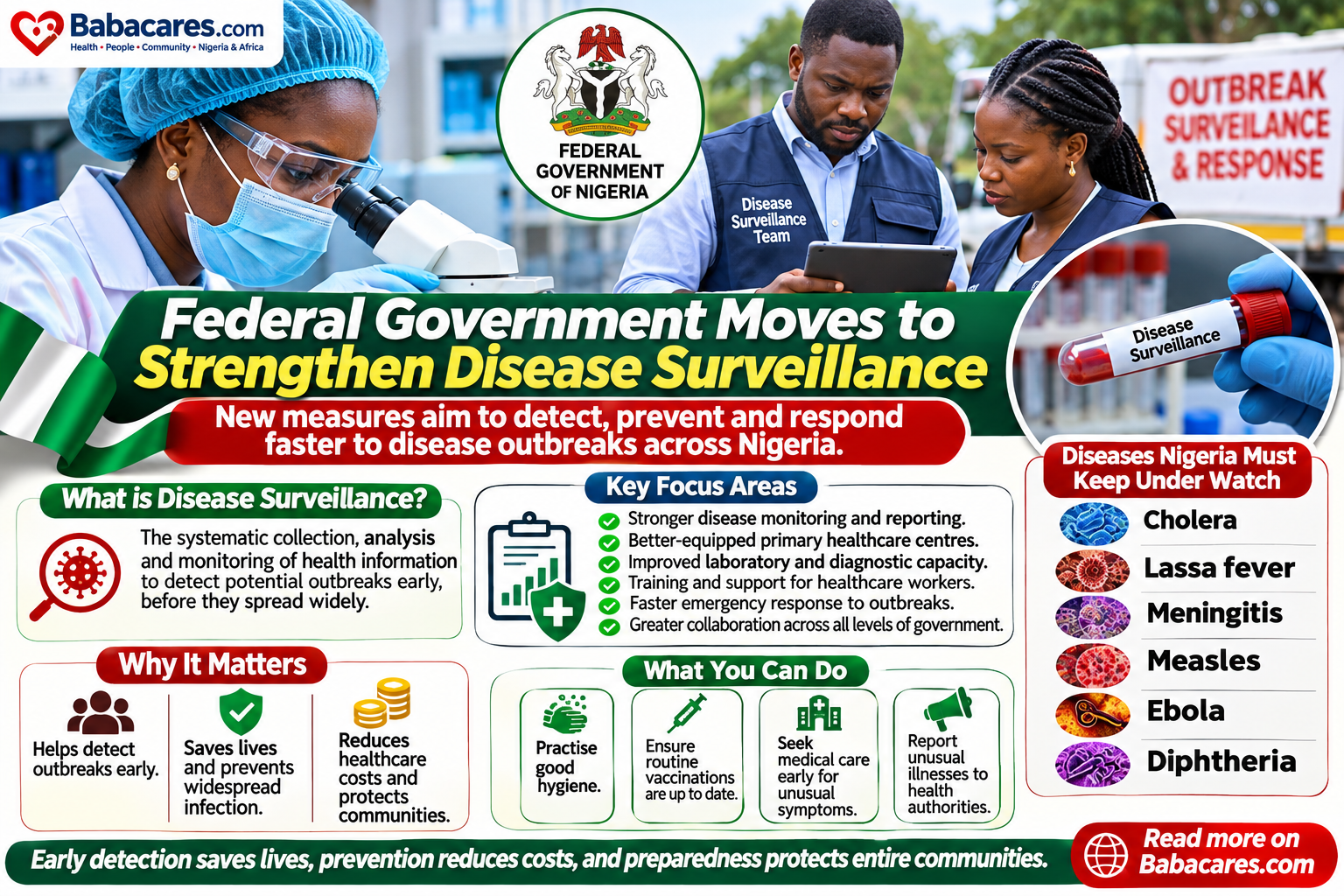
With recurring outbreaks of infectious diseases threatening the lives of Nigerians, the Federal Government has announced fresh efforts to strengthen the country's ability to detect, prevent and respond to public health emergencies.
The development was announced at the technical session of the 67th National Council on Health (NCH), which commenced on November 16, 2026, in Lafia, Nasarawa State.
The initiative comes amid continuing concerns about diseases such as cholera, Lassa fever, meningitis and measles, which remain significant public health challenges in Nigeria.
What is disease surveillance?
Disease surveillance is the systematic collection, analysis and monitoring of health information to detect potential outbreaks before they become widespread.
An effective surveillance system enables healthcare authorities to identify unusual infections, trace contacts, investigate outbreaks and introduce preventive measures.
The earlier a disease outbreak is detected, the greater the opportunity to contain it and save lives.
Diseases Nigeria must remain vigilant against
|
Disease |
Major health concern |
|---|---|
|
Cholera |
Severe diarrhoea and life-threatening dehydration |
|
Lassa fever |
Viral infection commonly transmitted through exposure to infected rodents |
|
Meningitis |
Infection affecting the membranes surrounding the brain and spinal cord |
|
Measles |
Highly contagious infection that can cause serious complications, particularly in children |
|
Ebola |
Severe viral disease requiring rapid detection and containment |
|
Diphtheria |
Bacterial infection that can cause breathing difficulties and heart complications |
Many of these diseases can be prevented or controlled through vaccination, improved sanitation, early diagnosis and timely public health interventions.
What the government intends to achieve
Discussions at the National Council on Health focus on strengthening Nigeria's healthcare system through better governance, disease preparedness, digital health technology, primary healthcare delivery and evidence-based decision-making.
The proposed improvements highlight the need for:
-
Stronger disease monitoring and reporting systems.
-
Accessible diagnostic laboratories.
-
Better-equipped primary healthcare centres.
-
Improved collaboration between federal, state and local governments.
-
Training healthcare workers to recognize emerging health threats.
-
Faster emergency response to disease outbreaks.
Why community participation matters
Disease surveillance should not be the responsibility of government and healthcare professionals alone.
Community members, religious organizations, schools, traditional leaders and the media also have important roles to play.
Nigerians should report unusual illness patterns to health authorities, practise good hygiene, ensure children receive recommended vaccinations and avoid spreading unverified information about disease outbreaks.
People experiencing persistent or severe symptoms should seek professional medical attention rather than relying solely on self-medication.
The Babacares perspective: Prevention is better and cheaper than cure
Nigeria cannot afford to wait until hundreds of people become infected or lose their lives before responding to preventable disease outbreaks.
A functional disease surveillance system should reach beyond major cities and government hospitals into rural communities, where access to healthcare facilities remains limited.
Healthcare workers must be adequately trained, equipped, protected and supported to perform their responsibilities.
Government announcements must also translate into measurable improvements that ordinary Nigerians can experience.
The main National Council on Health meeting, scheduled for November 19–20, 2026, is expected to consider recommendations arising from the technical discussions.
Nigeria needs a healthcare system that does not merely respond to emergencies but actively works to prevent them.
Early detection saves lives. Prevention reduces healthcare costs. Preparedness protects entire communities.
Read more on Babacares.com, subscribe and share.
References:
-
ARISE News — FG Moves to Boost Disease Surveillance, Tackle Public Health Threats
-
Federal Ministry of Health and Social Welfare — 67th National Council on Health Technical Session
-
THISDAY — FG to Strengthen Response to Public Health Threats
-
Official National Council on Health website






Comments