

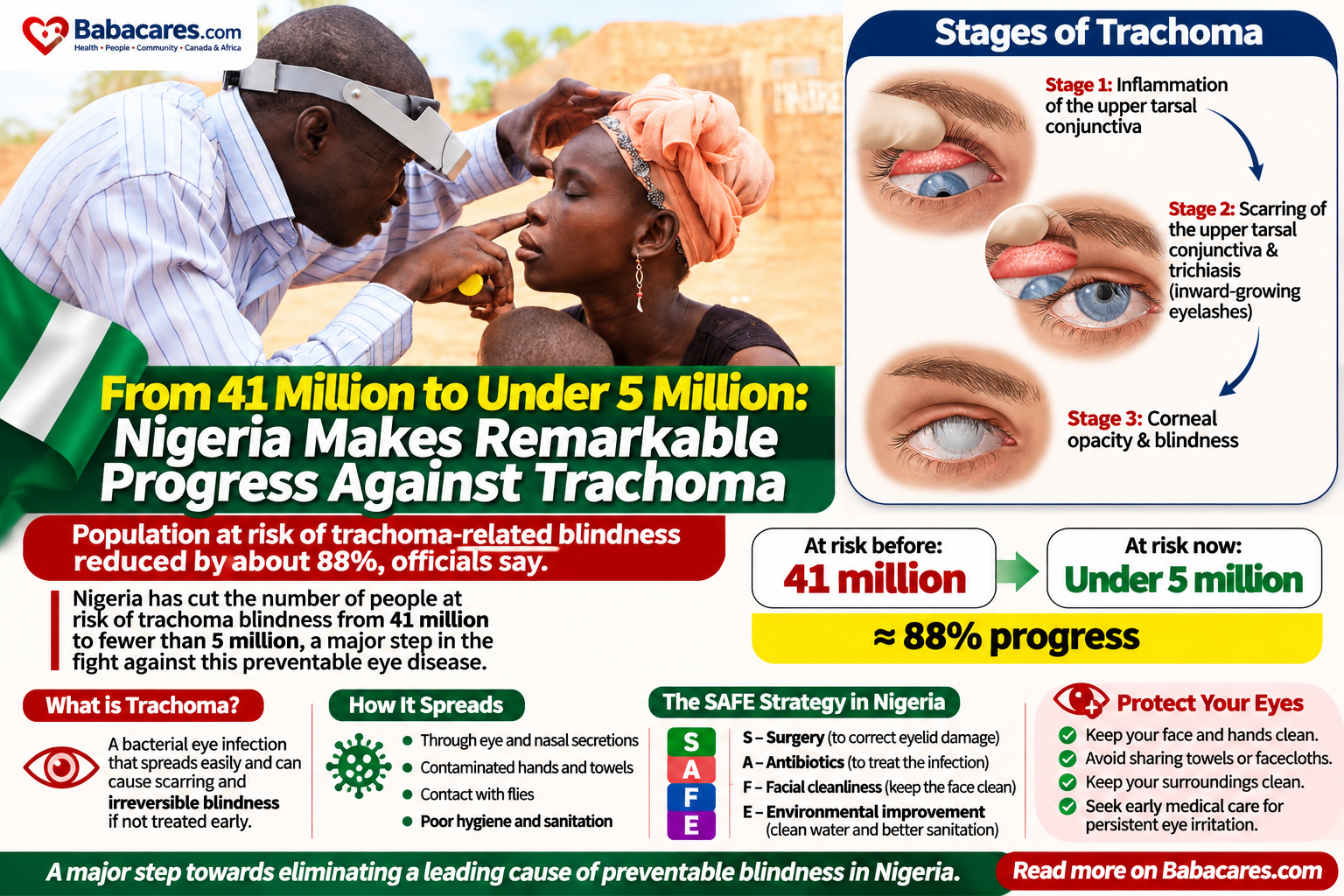
From 41 Million to Under 5 Million: Nigeria Makes Remarkable Progress in the Fight Against Preventable Blindness
By Babajide Moronfolu | Babacares.com
November 18, 2026
Amid the numerous healthcare challenges confronting Nigeria, there is some encouraging news worth celebrating.
Nigeria has reduced the population at risk of trachoma-related blindness from 41 million to fewer than five million, marking a major achievement in the country's fight against preventable blindness.
Dr. Nicholas Olobio, Director of Nigeria's Trachoma Programme, disclosed this on November 17, 2026, during a programme review meeting in Abuja, organized by the Federal Ministry of Health and Social Welfare, Sightsavers Nigeria and other development partners.
News Agency Of Nigeria
Nigeria's progress against trachoma
Previous population at risk
41 million
Current population at risk
Under 5 million
88%
Reported programme progress
118 of 134
Local government areas no longer requiring mass drug administrationSource: News Agency of Nigeria, November 17, 2026.
What is trachoma?
Trachoma is an infectious eye disease caused by a bacterium known as Chlamydia trachomatis. According to the World Health Organization (WHO), it is the leading infectious cause of blindness worldwide.
Repeated infections can cause scarring inside the eyelids, forcing eyelashes to turn inward and scratch the surface of the eye. Without appropriate treatment, this can result in irreversible blindness.
How does trachoma spread?
The infection can spread through contact with eye and nasal secretions, contaminated hands, towels and flies.
Communities with inadequate access to clean water, sanitation and healthcare are particularly vulnerable.
Common symptoms include:
-
Eye irritation and itching.
-
Discharge from the eyes.
-
Swollen eyelids.
-
Sensitivity to light.
-
Eye pain and deteriorating vision.
People experiencing persistent eye irritation or changes in vision should seek professional medical attention.
World Health Organization+1
How Nigeria is fighting trachoma
Nigeria has adopted the WHO-recommended SAFE strategy, which involves four major interventions:
Environmental improvement
Improving access to clean water, sanitation and healthier living conditions.
Although significant progress has been made, insecurity in parts of Borno and Yobe remains a challenge to reaching affected communities.
Prevention is better than cure
Nigerians can contribute to preventing trachoma by washing their faces and hands regularly, avoiding sharing towels and facecloths, maintaining clean surroundings and participating in community eye-health programmes.
Government investment in clean water, sanitation and accessible healthcare is equally important.
The Babacares perspective
Blindness can affect an individual's independence, employment, mental health, mobility and overall quality of life. For older adults, vision loss may also increase the risk of falls, social isolation and dependence on caregivers.
Nigeria's achievement demonstrates what sustained public health intervention and collaboration can accomplish.
However, with nearly five million people still potentially at risk, the battle is not over. Nigeria has made substantial progress, but nationwide elimination has not yet been established.
No Nigerian should lose their eyesight because of a preventable and treatable infection.
We commend the healthcare professionals, government agencies, development partners and community volunteers working tirelessly to protect the gift of sight.
Protect your eyes. Practise good hygiene. Seek early medical attention. Your sight is priceless.
Read more on Babacares.com, subscribe and share.
References:
-
News Agency of Nigeria — Nigeria cuts trachoma at-risk population from 41 million to under 5 million
-
World Health Organization — Trachoma: Causes, prevention and treatment
-
Federal Ministry of Health and Social Welfare — Nigeria's commitment to eliminating avoidable blindness.







Comments