

Palm Oil, Bread and Ballot Choices: What Viral Campaign Images Really Show
By Babajide Moronfolu | Babacares
Images of politically branded palm oil and bread circulating online have raised questions about campaign giveaways, voter influence and the relationship between hunger and democratic choice.
For families facing difficult food bills, even a small gift can matter. But when food carries a politician’s photograph and a request for votes, it also invites scrutiny.
The images supplied to Babacares require different treatment: the palm-oil display has been reported, while the bread photograph has been challenged by fact-checkers. Neither should automatically be presented as proof of confirmed vote-buying.
What Is Known About the Palm Oil?
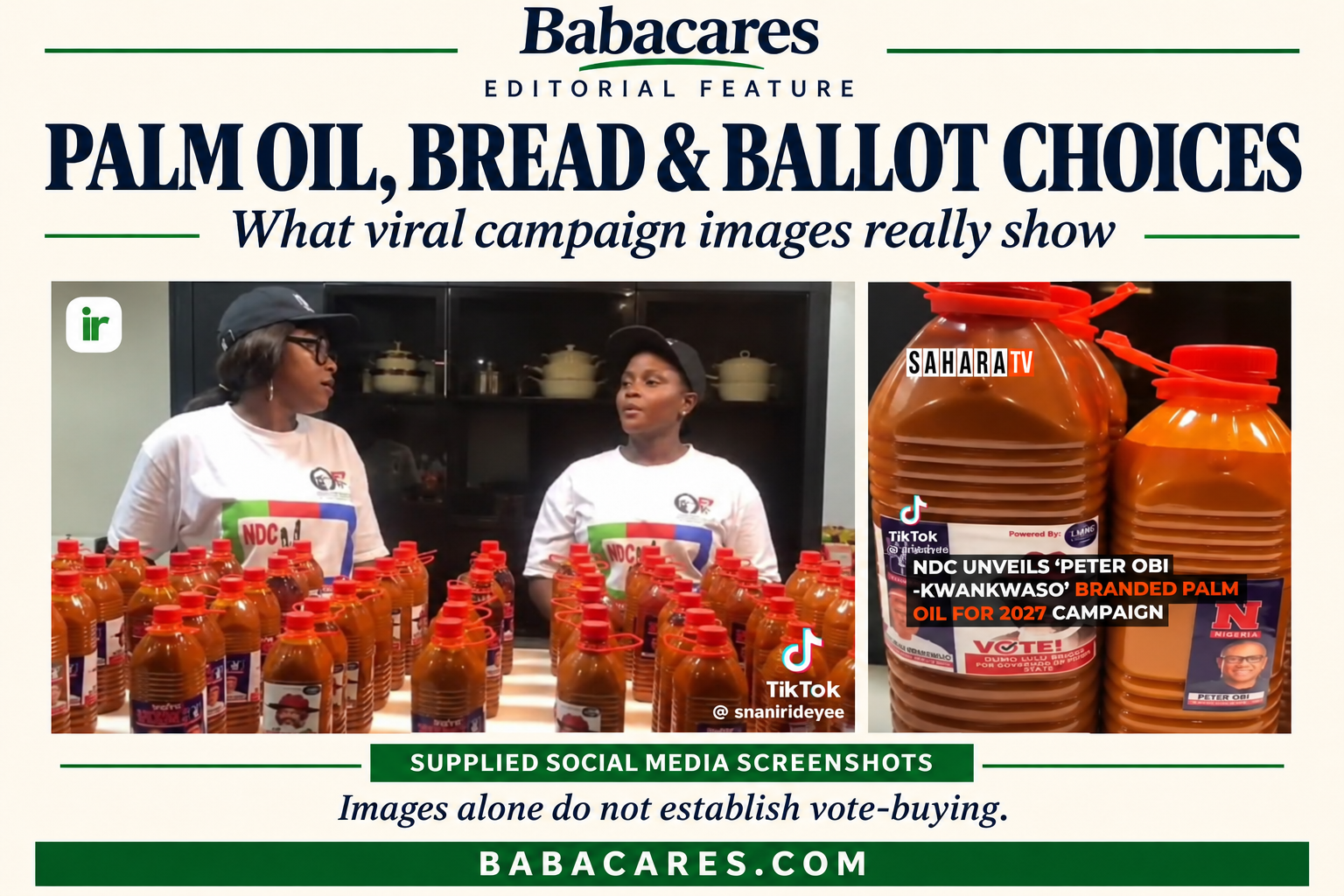
The screenshots show containers apparently holding palm oil, with labels featuring political figures and campaign messages. Another image shows two women standing behind rows of the containers.
In a September 28, 2026 report, Intel Region described circulating videos of women displaying palm oil branded with Peter Obi and Rabiu Kwankwaso’s names. The report also noted campaign clothing associated with Dumo Lulu-Briggs in Rivers State.
However, it explicitly stated that the videos did not immediately establish whether the products were officially produced or distributed by the Nigeria Democratic Congress itself or by associated supporters. Intel Region
The screenshots alone do not establish who funded the items, who received them, when distribution occurred or whether recipients were asked to support a candidate in exchange.
Those are essential questions before making an allegation of electoral wrongdoing.
The Bread Photograph Has a Different Evidence Trail
The supplied bread image shows a wheelbarrow containing wrapped loaves bearing Peter Obi’s photograph and campaign wording.
A Daily Trust investigation, published through Trust Radio, reported that the image appeared to have been digitally altered from an earlier photograph bearing Bola Tinubu’s image.
Its findings drew on reverse-image searching, comparisons between versions and their online chronology, alongside digital-analysis tools. Automated detection scores alone should not be treated as conclusive proof of manipulation. Trust Radio
Crucially, the investigation did not independently establish when or where the bread in the earlier photograph was distributed, or whether Tinubu or the APC organised any distribution. The earlier image therefore cannot simply be used to transfer the accusation to another politician. Trust Radio
The circulating Obi-branded bread photograph is not reliable evidence that he distributed those loaves to prospective voters.
Why Campaign Food Giveaways Deserve Scrutiny
Food assistance can meet an immediate need. The ethical concern arises when that assistance creates pressure, an expectation of political loyalty or a perceived obligation to vote a particular way.
A serious assessment should ask:
- Who paid for and authorised the items?
- Were they sold, displayed or given away?
- How were recipients selected?
- Was a voter card, political pledge or other condition requested?
- Is there evidence connecting the activity to an official campaign?
A politician’s face on packaging does not, by itself, answer these questions. Equally, describing an activity as charity should not prevent scrutiny of its purpose and conditions.
The Babacares Angle: Food Security and Human Dignity
For Babacares, the wider issue is how politics responds to people’s everyday needs.
A bottle of oil or a loaf of bread may offer temporary help. Public debate should also examine the policies that could make nutritious food consistently affordable, support household incomes and improve access to healthcare.
People experiencing hardship deserve respect. They should not be mocked for needing assistance or treated as though their political judgment can be reduced to the value of a food package.
Political organisations should be transparent about assistance programmes: their funding, organisers, eligibility rules and whether any conditions apply.
Accountability Also Requires Accurate Images
Misleading photographs can damage reputations and distract from genuine misconduct.
Before publishing an allegation, journalists and social media users should establish the image’s origin, check its date and location, seek the organisers’ explanation and distinguish what is visible from what is being claimed.
In this case, Babacares can report the documented circulation of branded palm-oil footage and the questions it raises. It should also clearly disclose the fact-check findings concerning the bread photograph.
Voters deserve meaningful policies, transparent campaigns and accurate information about everyone seeking their support.
Where should political outreach end and improper voter influence begin? Share your views respectfully.
Read more on Babacares.com, subscribe and share.
https://www.babacares.com/blog-details?details=1171&title=Palm+Oil%2C+Bread+and+Ballot+Choices%3A+What+Viral+Campaign+Images+Really+Show





Comments