

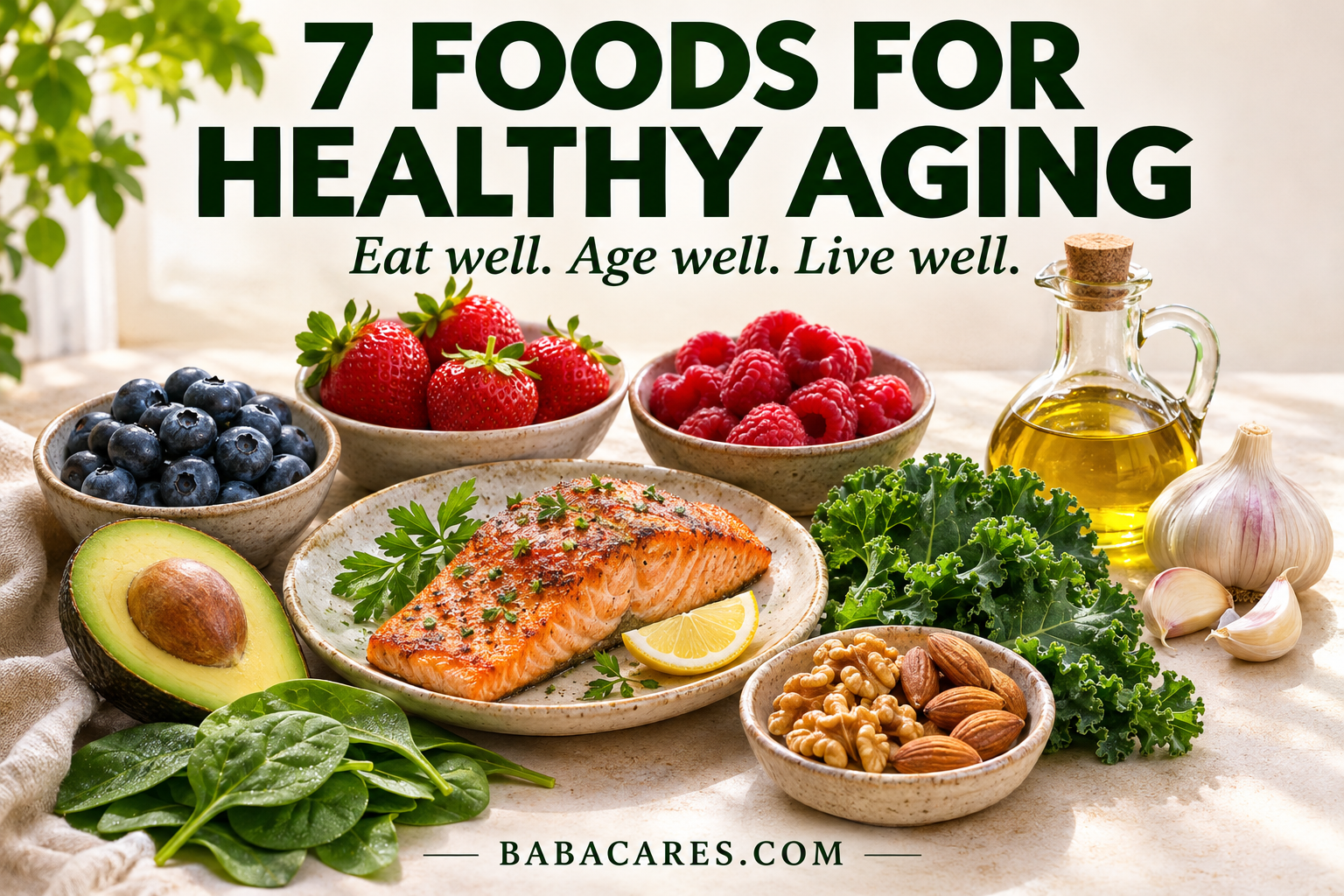
7 Foods for Healthy Aging: What to Eat for Long-Term Vitality
By Babajide Moronfolu | Babacares
Growing older is inevitable, but everyday food choices can help us care for our bodies along the way.
Healthy eating supports the strength, nourishment and well-being we need to enjoy later life. The goal is more energy for daily activities, continued independence and the ability to keep doing the things that matter to us.
Foods often marketed as “anti-aging” cannot reverse aging or guarantee younger-looking skin. Their value lies in how they contribute to a varied, balanced diet. Health Canada recommends vegetables, fruits, whole grains and a range of protein foods as part of healthy eating for older adults. Canada.ca
Here are seven foods worth including in your healthy-aging meals.
1. Berries: A Colourful Addition to Everyday Meals
Blueberries, strawberries, raspberries and blackberries offer flavour and variety without needing added sugar.
Like other fruits, berries contribute fibre, vitamins and minerals. They are useful additions to a balanced eating pattern, although eating them does not guarantee protection against memory loss or wrinkles. Health Canada includes berries among the fruits people can enjoy regularly. Canada.ca
Try this: Add fresh or unsweetened frozen berries to oatmeal or plain yogurt.
If berries are expensive or unavailable, choose other fruits you enjoy. Healthy eating does not depend on buying one particular “superfood.”
2. Fatty Fish: Protein and Healthy Fats
Salmon, sardines, mackerel and trout can bring variety to your protein choices.
Fish provides protein, while fatty varieties also supply omega-3 fats. Fish fits into eating patterns recommended for heart health and healthy aging. It should not, however, be presented as a treatment for joint stiffness or a guarantee against cognitive decline. Canada.ca
Try this: Serve grilled fish with vegetables and brown rice, or add canned sardines to whole-grain toast. Compare labels when choosing canned products to find options lower in sodium.
3. Avocados: An Option for Healthier Fats
Avocados contain predominantly unsaturated fats and can add a creamy texture to meals.
The useful change is often what they replace. Choosing foods containing unsaturated fats in place of foods high in saturated fat can help lower LDL cholesterol. Avocado is one option alongside nuts, fish and unsaturated vegetable oils. Canada.ca
Try this: Spread mashed avocado on toast or add slices to a vegetable-and-bean salad.
Enjoy it as part of a varied diet, without expecting it to tighten skin or reverse visible aging.
4. Leafy Greens: Make Vegetables a Daily Habit
Spinach, kale, collard greens and ugu—fluted pumpkin leaves—can add colour and variety to your meals.
Vegetables supply nutrients that support normal body functions. Health Canada specifically encourages older adults to include dark green vegetables daily. Eating a variety helps broaden the nutrients on your plate. Canada.ca
Try this: Add greens to soups, stews, omelettes or bean dishes.
Traditional meals can be part of healthy eating. Prepare vegetable dishes with attention to the amount of salt, stock cubes and added fat.
5. Nuts: A Convenient Plant Protein Food
Walnuts, almonds, cashews and pistachios make convenient snacks and additions to meals.
Nuts provide plant protein and unsaturated fats. They are included among the protein foods recommended for older adults and can help bring variety to your eating routine. Canada.ca
Try this: Choose a small handful of unsalted nuts, sprinkle chopped nuts over breakfast or use smooth nut butter if chewing whole nuts is difficult.
Choose alternatives if you have a nut allergy.
6. Olive Oil: A Useful Swap in the Kitchen
Olive oil is one source of unsaturated fat that can be used in cooking and salad dressings.
Its benefit is best understood as part of a substitution: replacing some butter, ghee or other fats high in saturated fat with unsaturated oils. Olive oil is not the only suitable choice; canola, soybean and sunflower oils also provide unsaturated fats. who.int
Try this: Use a modest amount in a homemade dressing or when preparing vegetables.
There is no need to drink olive oil or add large amounts to meals to pursue “anti-aging” benefits.
7. Garlic: Flavour Without Relying on Extra Salt
Garlic adds depth to soups, stews, sauces and vegetable dishes. Alongside herbs and spices, it can help make meals enjoyable while you reduce reliance on salt.
Claims about garlic deserve care. Research on garlic supplements suggests possible small effects on cholesterol or blood pressure in some people, but this does not establish that ordinary cooking amounts prevent disease or slow aging. Evidence for immune-boosting claims remains limited. NCCIH
Try this: Use garlic with ginger, onions or herbs to season home-cooked meals.
Garlic supplements are different from garlic in food. They may interact with medicines and increase bleeding risk, so discuss them with a healthcare professional before use. NCCIH
Build a Healthy Eating Pattern You Can Maintain
These seven foods are options, not a complete menu. Whole grains, beans, lentils, eggs and other nutritious foods also deserve a place in healthy-aging meals.
Start with changes that fit your budget and culture:
- Add vegetables to a meal you already enjoy.
- Choose whole fruit more often.
- Include a protein food with meals.
- Use unsaturated fats in place of some saturated fats.
- Drink water regularly throughout the day.
Health Canada notes that thirst can decline with age, making regular drinking important even when you do not feel particularly thirsty. Canada.ca
Food also works alongside movement. Healthy eating and regular physical activity both support health as we grow older. NIDDK
The most useful approach is one you can repeat: nourishing meals, enjoyable variety and realistic habits that support your life over time.
Healthy aging begins with caring for the body you have today.
Which of these foods already appears regularly on your plate?
For more healthy-aging insights, explore Babajide Moronfolu’s Ageless Living: Unlock the Secrets to Staying Young as You Grow.
Read more on Babacares.com, subscribe and share.
https://www.babacares.com/blog-details?details=1170&title=7+Foods+for+Healthy+Aging%3A+What+to+Eat+for+Long-Term+Vitality











Comments