

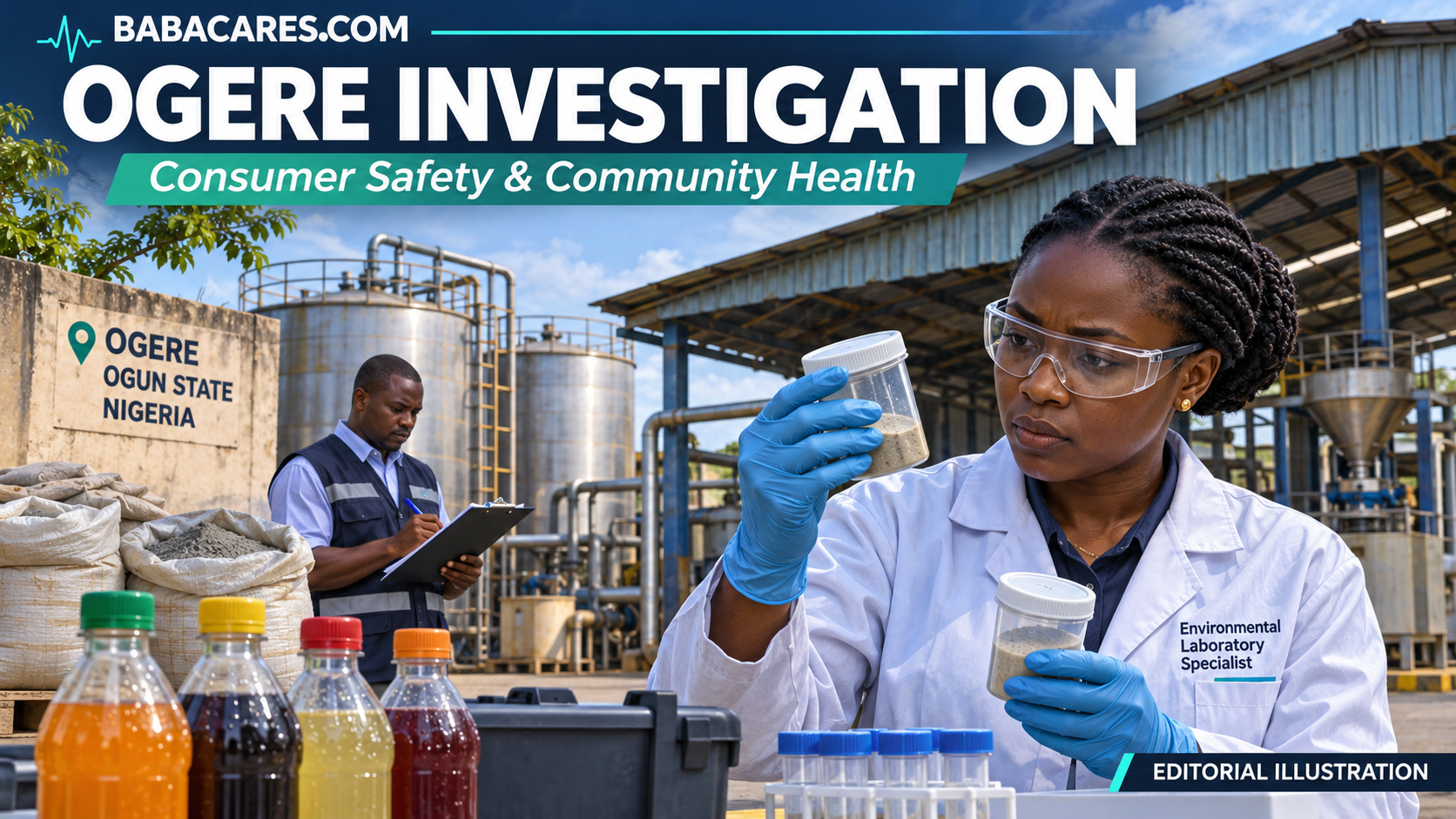
EFCC’s Ogere Discoveries Raise Questions About Consumer Safety and Community Health
By Babajide Moronfolu | Babacares
An EFCC investigation in Ogere, Ogun State, has raised concerns about the safety of industrial activities operating outside regulatory oversight—and what they could mean for consumers, workers and neighbouring communities.
Channels Television reported on November 7 that EFCC Chairman Ola Olukoyede said inspections had exposed suspected unregistered alcohol production, unlawful mining and illegal timber exports, alongside an earlier discovery of a suspected illegal oil-refining facility. Investigations into the activities remain ongoing.
The television footage supplied to Babacares shows officials inspecting industrial premises, processing equipment and stockpiled materials. Such images document the inspection, but cannot establish the chemical contents of containers, the safety of products or anyone’s criminal liability.
What investigators reported
According to an EFCC statement reported by Channels Television on November 3, operatives discovered the suspected refining facility on October 31. The commission said the premises were deserted when officers arrived.
Investigators reported finding processing waste and underground tanks, including two containing substances suspected to be diesel. Preliminary findings suggested that sludge oil had been transported from Warri and Port Harcourt for processing at the Ogere facility. These remain the commission’s investigative findings, rather than conclusions established in court.
During a subsequent inspection, an official of the Nigerian Midstream and Downstream Petroleum Regulatory Authority said the facility lacked regulatory approval. The official also cautioned that the recovered product could not be classified as diesel without laboratory testing.
Why the alcohol allegation deserves attention
For consumers, the report of suspected unregistered alcohol production raises an important question: what safeguards were in place to establish the contents and quality of any products?
The World Health Organization explains that alcohol produced or sold outside normal government controls may carry additional risks because its strength can be uncertain, labelling may be irregular and potentially toxic substances may be present.
However, the information reviewed for this story does not establish that alcohol from the Ogere premises contained methanol or caused poisoning. Those claims would require laboratory results and evidence linking any illness to a particular product.
Public communication should make that distinction clear. An investigation can justify urgent scrutiny without supporting every alarming claim circulated online.
The questions that still need answers
From a public-health perspective, Babacares believes the next stage should establish whether any products reached consumers, whether workers experienced hazardous exposure and whether waste affected surrounding land or water.
Relevant authorities should explain:
-
What substances and finished products were recovered?
-
What have laboratory tests established?
-
Can any distributed products be traced?
-
Are environmental testing, cleanup or worker health assessments necessary?
These are questions for investigation, not evidence that contamination or illness has already occurred.
Protecting people must remain central
The Ogere case illustrates why industrial oversight matters beyond licensing and government revenue. Consumers need confidence in what they buy, workers need safe conditions, and communities deserve clear information about activities around them.
Accountability should follow the evidence. As the investigation develops, timely publication of verified findings will help protect the public and prevent speculation from filling the information gap.
READ MORE ON BABACARES.COM, SUBSCRIBE AND SHARE.
https://www.babacares.com/blog-details?details=1160&title=EFCC%E2%80%99s+Ogere+Discoveries+Raise+Questions+About+Consumer+Safety+and+Community+Health










Comments