

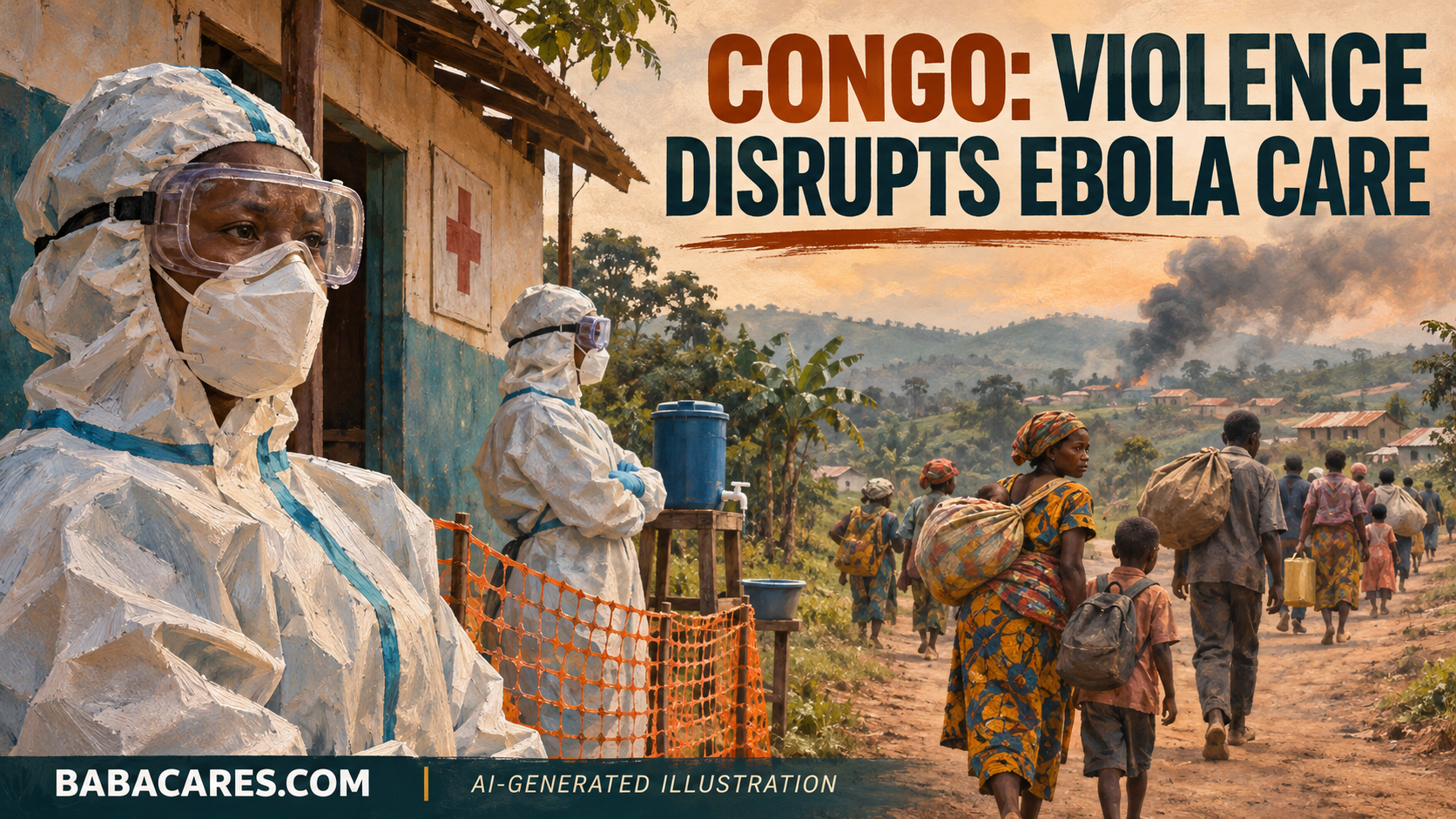
Militant Attack in Eastern Congo Forces Ebola Patients to Flee, Disrupting Care
By Babacares | November 7, 2026
An armed attack in an Ebola-affected community in the Democratic Republic of the Congo (DRC) has forced patients to flee medical care, raising concerns about their safety and possible further transmission.
Reuters reported on November 6 that attackers struck Cantine-Aloya in North Kivu province overnight, burning homes and a health post. Local authorities blamed the Allied Democratic Forces (ADF), an armed group affiliated with Islamic State. A local civil society leader reported 33 deaths; a subsequent November 7 report put the toll at at least 44. The figures remain provisional.
Confirmed and suspected cases among those displaced
A hospital doctor told Reuters that those who fled included one patient with confirmed Ebola and five suspected cases. The Associated Press separately reported that approximately 180 patients fled the local hospital overall, according to its medical director. That does not mean all 180 patients had Ebola.
The displacement interrupts both patient care and the monitoring of people who may have been exposed. It also leaves sick people seeking safety while health workers face the challenge of finding them and restoring access to treatment.
Why disrupted care matters
Ebola containment depends on identifying cases promptly, providing care safely and monitoring contacts. When violence scatters patients and families, these measures become harder to maintain.
The public health concern is that a symptomatic patient separated from medical care could expose relatives or others providing help without protective equipment. This is a potential consequence of the disruption; the reports reviewed do not establish that the attack has already caused additional infections.
According to the World Health Organization, Ebola spreads through direct contact with infected blood or other body fluids, including through contaminated materials. People do not transmit the disease before symptoms begin. Contact monitoring, infection prevention and early care are central to controlling outbreaks.
Patients need protection and compassion
People fleeing gunfire are trying to survive. Those with confirmed or suspected Ebola need safe access to care, clear information and support.
Stigma can make an already difficult response more challenging. Communities need trusted communication that encourages people to seek help and report possible exposure. WHO stresses that involving communities and discussing their concerns openly helps strengthen outbreak control.
For Babacares, this incident highlights the human cost of overlapping emergencies: families face violence while patients and healthcare workers struggle with a dangerous disease. Protecting civilians and medical services is essential to making treatment and outbreak control possible.
READ MORE ON BABACARES.COM, SUBSCRIBE AND SHARE.
https://www.babacares.com/blog-details?details=1156&title=Militant+Attack+in+Eastern+Congo+Forces+Ebola+Patients+to+Flee%2C+Disrupting+Care







Comments