

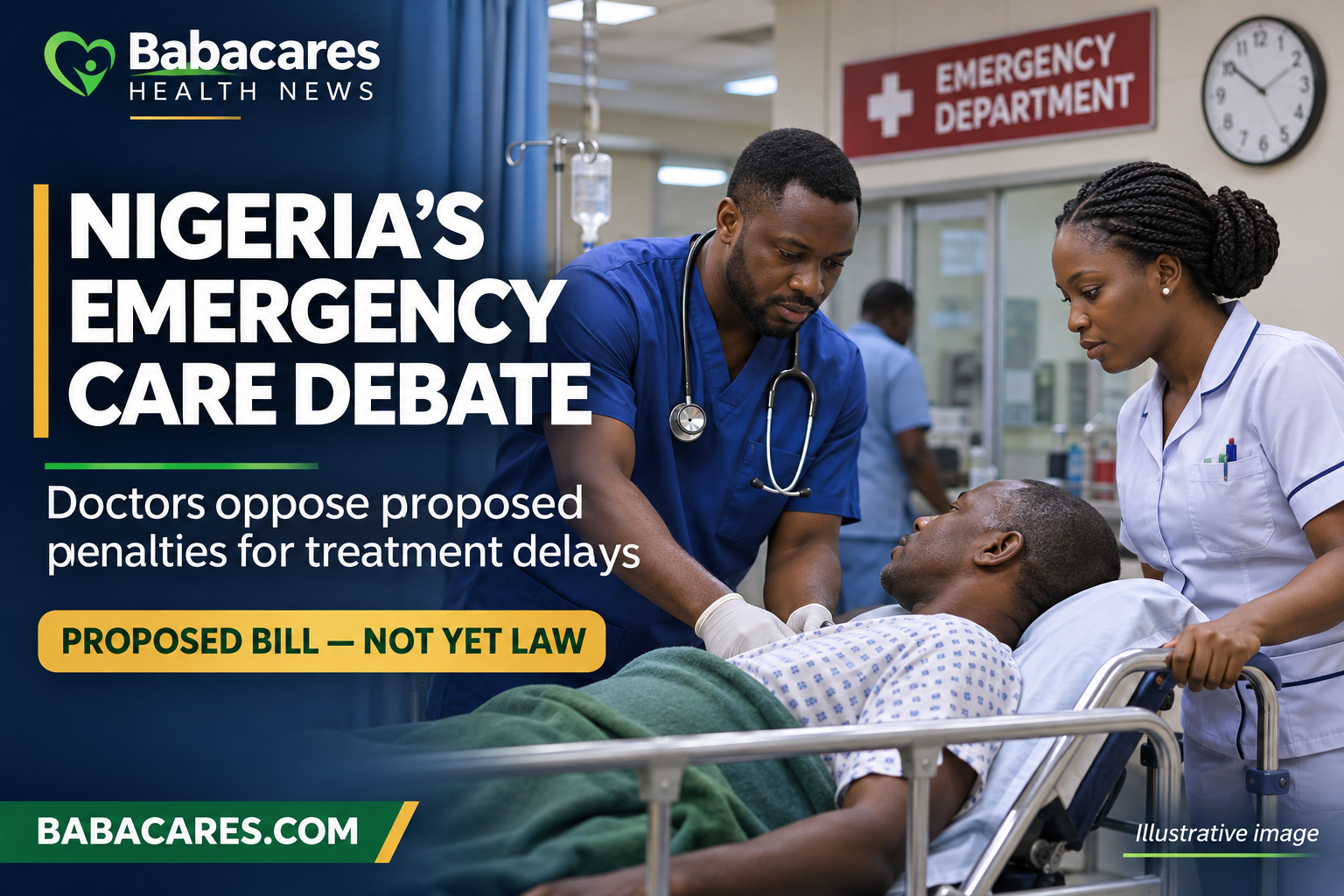
Emergency Care in Nigeria: Doctors Oppose Proposed Penalties, Call for Better Hospital Resources
By Babajide Moronfolu | Babacares
November 6, 2026
The Nigerian Association of Resident Doctors (NARD) has rejected proposed penalties for delays in emergency medical treatment, arguing that healthcare workers should not face criminal punishment for failures caused by poorly equipped and understaffed hospitals.
The controversy follows a Senate proposal to introduce clearer emergency-treatment timelines and penalties of up to ₦300,000, six months’ imprisonment, or both for violations. The bill passed second reading on November 4 and remains under legislative consideration. It has not become law.
The debate raises an important question for patients, families and healthcare professionals: how can Nigeria enforce timely emergency care while ensuring hospitals have the resources to deliver it?
What lawmakers are proposing
Sponsored by Senator Abdulaziz Musa Yar’Adua, representing Katsina Central, the proposed amendment to the National Health Act would introduce specific standards for assessing, stabilising and referring emergency patients.
According to reporting on the Senate proceedings, the proposed requirements include:
-
Beginning triage and initial assessment within 15 minutes of arrival.
-
Starting basic stabilisation within 30 minutes.
-
Beginning life-saving interventions immediately when a life-threatening condition is identified.
-
Assigning an available hospital bed within two hours for patients requiring admission.
-
Completing necessary transfers within three hours, subject to specified circumstances beyond the facility’s control.
The proposal also includes safeguards for practitioners who document resource limitations, follow referral procedures and report the circumstances to the appropriate authority. These provisions remain subject to further legislative scrutiny.
Why resident doctors are objecting
In a statement reported on November 6, NARD acknowledged the importance of prompt emergency treatment and protecting patients from avoidable harm.
However, the association argued that doctors often work with inadequate staffing, obsolete equipment, unreliable electricity and insufficient emergency supplies. It warned that additional criminal sanctions could worsen workforce departures and make an already difficult working environment more hostile.
NARD also acknowledged that the reported bill recognises resource constraints. Its concern is that protections must be clear and enforceable so that practitioners are not punished for circumstances beyond their reasonable control.
Nigeria already prohibits refusal of emergency treatment
An important distinction can be lost in the headlines: Nigeria already has a legal prohibition against refusing emergency medical treatment.
Section 20 of the National Health Act, 2014 prohibits healthcare providers, workers and establishments from refusing a person emergency treatment for any reason. It provides for a ₦100,000 fine, imprisonment of up to six months, or both upon conviction.
The proposed amendment would add more detailed operational standards and increase the maximum financial penalty. The six-month imprisonment provision therefore has an existing legal precedent; the debate concerns how expanded obligations and sanctions would operate.
Babacares perspective: accountability needs practical support
For a family arriving at an emergency department, the immediate concern is getting help. Clear treatment standards, effective complaints procedures and accountability for deliberate neglect are essential.
Healthcare workers also need the means to meet those standards. A deadline cannot supply missing oxygen, create an available hospital bed or provide an ambulance.
Babacares believes the legislative process should connect patient protection with practical investment: dependable emergency supplies, adequate staffing, functioning referral networks and funding arrangements that support urgent treatment.
Any final framework should distinguish deliberate refusal or abandonment from a documented inability to provide a particular service. That distinction must also preserve the duty to assess patients, provide available stabilisation and arrange appropriate referral.
Patients deserve timely care. Healthcare professionals deserve working conditions that make timely care possible. A stronger emergency-care system must deliver both.
READ MORE ON BABACARES.COM, SUBSCRIBE AND SHARE.
https://www.babacares.com/blog-details?details=1153&title=Emergency+Care+in+Nigeria%3A+Doctors+Oppose+Proposed+Penalties%2C+Call+for+Better+Hospital+Resources







Comments