

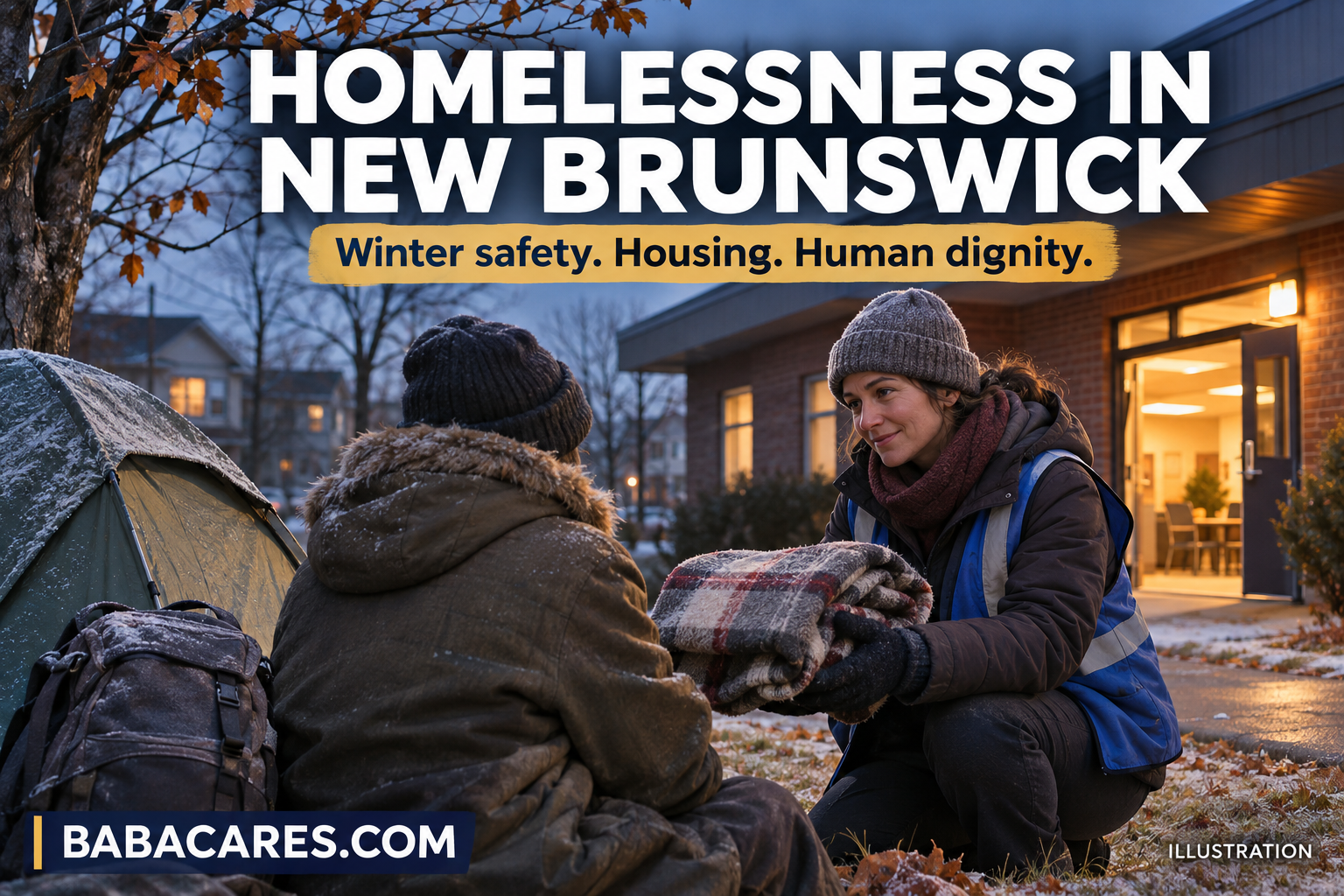
Rising Homelessness in New Brunswick Raises Concerns About Winter Safety
By Babacares
For someone without a safe place to sleep, the arrival of winter brings more than discomfort. It brings uncertainty about warmth, safety and survival.
Figures highlighted in a CTV News Atlantic report by Derek Haggett show the scale of homelessness in New Brunswick’s three largest cities—and the growing pressure on communities to respond.
What the figures show
According to Human Development Council data cited in the report, the number of people who experienced homelessness for at least one day during August was:
| City | People recorded |
|---|---|
| Moncton | 892 |
| Saint John | 551 |
| Fredericton | 352 |
These are monthly figures, rather than a count of everyone sleeping outdoors on a particular night. Moncton official Charles LeBlanc estimated that the city’s population experiencing homelessness could be closer to 1,000, with approximately 50 encampments. His estimate is separate from the recorded August data.
Behind the numbers are different lives
In Haggett’s reporting, community advocate John Renton described meeting people whose circumstances included job loss, relationship breakdown and difficult personal histories.
His account challenges the tendency to treat homelessness as one story with one cause. Each person brings different experiences, needs and barriers to finding a stable home.
Renton’s practical assistance—providing food and clothing, carrying naloxone and collecting discarded needles—also illustrates how community outreach can support both vulnerable people and neighbourhood safety.
Why homelessness is a public-health concern
Without reliable protection from the weather, staying warm and dry becomes a daily struggle.
Health Canada identifies people experiencing homelessness as particularly vulnerable to frostbite and hypothermia. Older adults and people with certain medical conditions also face increased risks, making winter protection especially important for those whose vulnerabilities overlap.
From a public-health perspective, emergency accommodation should therefore be considered part of protecting health, alongside access to food, hygiene and appropriate care.
Shelter offers immediate protection
Harvest House Atlantic executive director Leon Baker said in the report that shelter capacity was available at the time of the interview. He also outlined plans to add 20 beds in early December.
Those statements describe conditions and plans at the time of reporting; they should not be treated as confirmation of current bed availability. Baker also stressed the need for longer-term housing options and support beyond emergency shelter.
For Babacares, the policy implication is clear: winter shelter and permanent housing serve different, equally necessary purposes. One provides immediate protection; the other offers a foundation for rebuilding stability.
A stronger response would connect emergency accommodation with affordable housing, supportive housing where needed, accessible healthcare and help for people at risk of losing their homes.
Hope needs a practical response
Community kindness matters. A meal, warm clothing or a respectful conversation can make a difficult day more manageable.
But volunteers cannot carry the entire responsibility. Lasting progress requires coordinated action from governments, housing providers, healthcare services and community organizations.
The measure of success should extend beyond how many beds are opened during winter. It should include how many people move into safe homes—and receive the support to remain there.
Everyone deserves safety, dignity and somewhere to call home.
Source acknowledgement: Adapted from information in Derek Haggett’s CTV News Atlantic report supplied for this article, with additional public-health context from Health Canada.
READ MORE ON BABACARES.COM, SUBSCRIBE AND SHARE.
https://www.babacares.com/blog-details?details=1146&title=Rising+Homelessness+in+New+Brunswick+Raises+Concerns+About+Winter+Safety









Comments