

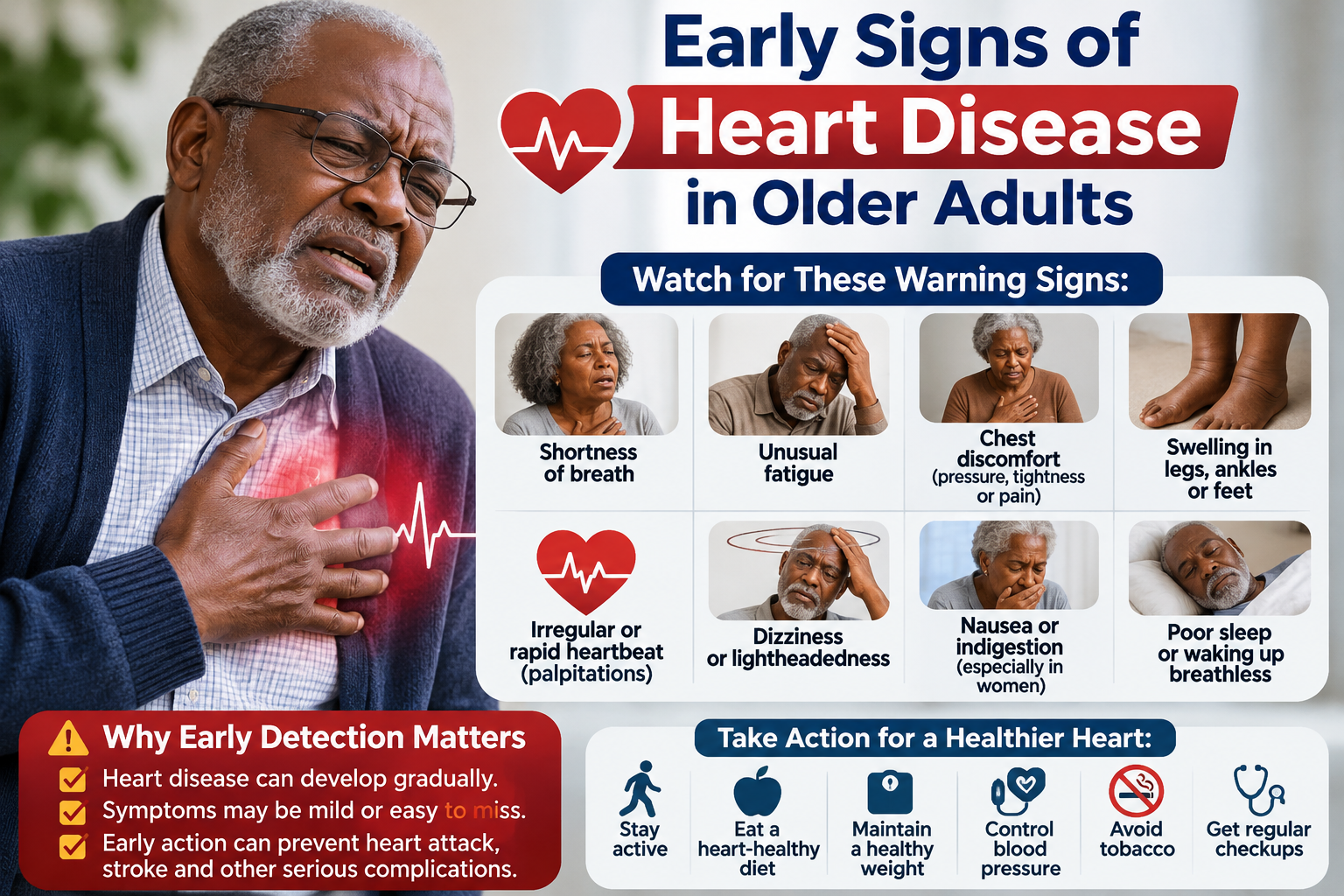
Early Signs of Heart Disease in Older Adults.
Heart disease remains one of the leading causes of illness and death worldwide, especially among older adults. The risk increases with age as blood vessels become less flexible, plaque builds up in arteries, and chronic conditions such as high blood pressure and diabetes become more common.
One of the most dangerous things about heart disease is that it often develops silently.
Many older adults ignore early warning signs or mistake them for “normal aging,” stress, fatigue, indigestion, or simply getting older. Unfortunately, by the time symptoms become severe, significant damage may already have occurred.
The good news is that early detection can save lives.
Recognizing the warning signs of heart disease can help older adults seek medical care early and improve outcomes.
What Is Heart Disease?
Cardiovascular Disease is a broad term covering conditions that affect the heart and blood vessels.
Examples include:
- coronary artery disease
- heart failure
- abnormal heart rhythms
- heart valve disease
These conditions can reduce blood flow and strain the heart.
Why Heart Disease Risk Increases With Age
Several age-related changes raise risk.
These include:
- stiffening arteries
- plaque buildup
- reduced circulation
- higher blood pressure
- slower recovery from stress
Risk also increases with:
- smoking
- obesity
- inactivity
- diabetes
- family history
Relevant entities: Hypertension, Type 2 Diabetes
Early Signs of Heart Disease
Some warning signs are obvious.
Others are subtle.
Here are symptoms older adults should never ignore.
1. Chest Discomfort
Chest discomfort is one of the most recognized warning signs.
It may feel like:
- pressure
- tightness
- heaviness
- squeezing
- burning
Some people describe it as indigestion.
Chest discomfort may worsen with physical activity or stress.
Never ignore persistent chest pain.
2. Shortness of Breath
Difficulty breathing may signal reduced heart function.
An older adult may notice:
- breathlessness while walking
- difficulty climbing stairs
- becoming winded easily
- trouble breathing when lying flat
Shortness of breath deserves medical attention.
3. Unusual Fatigue
Fatigue can be an early but overlooked symptom.
Warning signs include:
- extreme tiredness
- low energy
- exhaustion after minor effort
- reduced stamina
Sudden or unusual fatigue should not be dismissed.
4. Swelling in Legs, Feet, or Ankles
Swelling may indicate fluid retention.
This can happen when the heart does not pump efficiently.
Watch for:
- swollen feet
- ankle swelling
- tight shoes
- leg heaviness
Persistent swelling should be evaluated.
5. Irregular Heartbeat
Abnormal heart rhythm may feel like:
- fluttering
- pounding
- racing heartbeat
- skipped beats
Occasional palpitations may be harmless.
Persistent or severe symptoms need medical review.
6. Dizziness or Fainting
Poor circulation can reduce blood flow to the brain.
This may cause:
- dizziness
- lightheadedness
- fainting
- near-fainting
These symptoms should never be ignored.
7. Pain Beyond the Chest
Heart-related pain does not always stay in the chest.
It may spread to:
- jaw
- neck
- shoulder
- back
- arms
This is especially important during suspected heart attack.
8. Persistent Cough or Wheezing
Some heart conditions cause fluid buildup in the lungs.
This may lead to:
- chronic cough
- wheezing
- breathlessness
Persistent symptoms require evaluation.
Heart Attack Warning Signs
A heart attack is a medical emergency.
Seek urgent help for:
- chest pain or pressure
- pain spreading to arm or jaw
- severe shortness of breath
- sweating
- nausea
- sudden weakness
Call emergency services immediately.
Do not wait.
How to Reduce Heart Disease Risk
Healthy habits can dramatically reduce risk.
Stay Active
Exercise regularly.
Relevant entity: Walking
Eat Heart-Healthy Foods
Focus on whole foods.
Control Blood Pressure
Monitor regularly.
Manage Diabetes
Protect blood vessels.
Stop Smoking
Smoking damages arteries.
Get Regular Checkups
Prevention matters.
Final Thoughts
Heart disease in older adults often develops gradually and silently.
Early warning signs such as chest discomfort, shortness of breath, fatigue, swelling, palpitations, and dizziness should never be ignored.
Do not assume every symptom is “just aging.”
Listen to your body.
Early action can prevent serious complications and save lives.
When it comes to heart health, paying attention early can make all the difference.
Want to Learn More?
For more healthy-aging and wellness insights, search “Babajide Moronfolu” on Amazon and explore:
- Ageless Living: Unlock the Secrets to Staying Young as You Grow
- Do Not Grow Old Prematurely: Timeless Principles for Body, Mind, and Lifelong Vitality
References
https://www.babacares.com/blog-details?details=1141&title=Early+Signs+of+Heart+Disease+in+Older+Adults.








Comments