

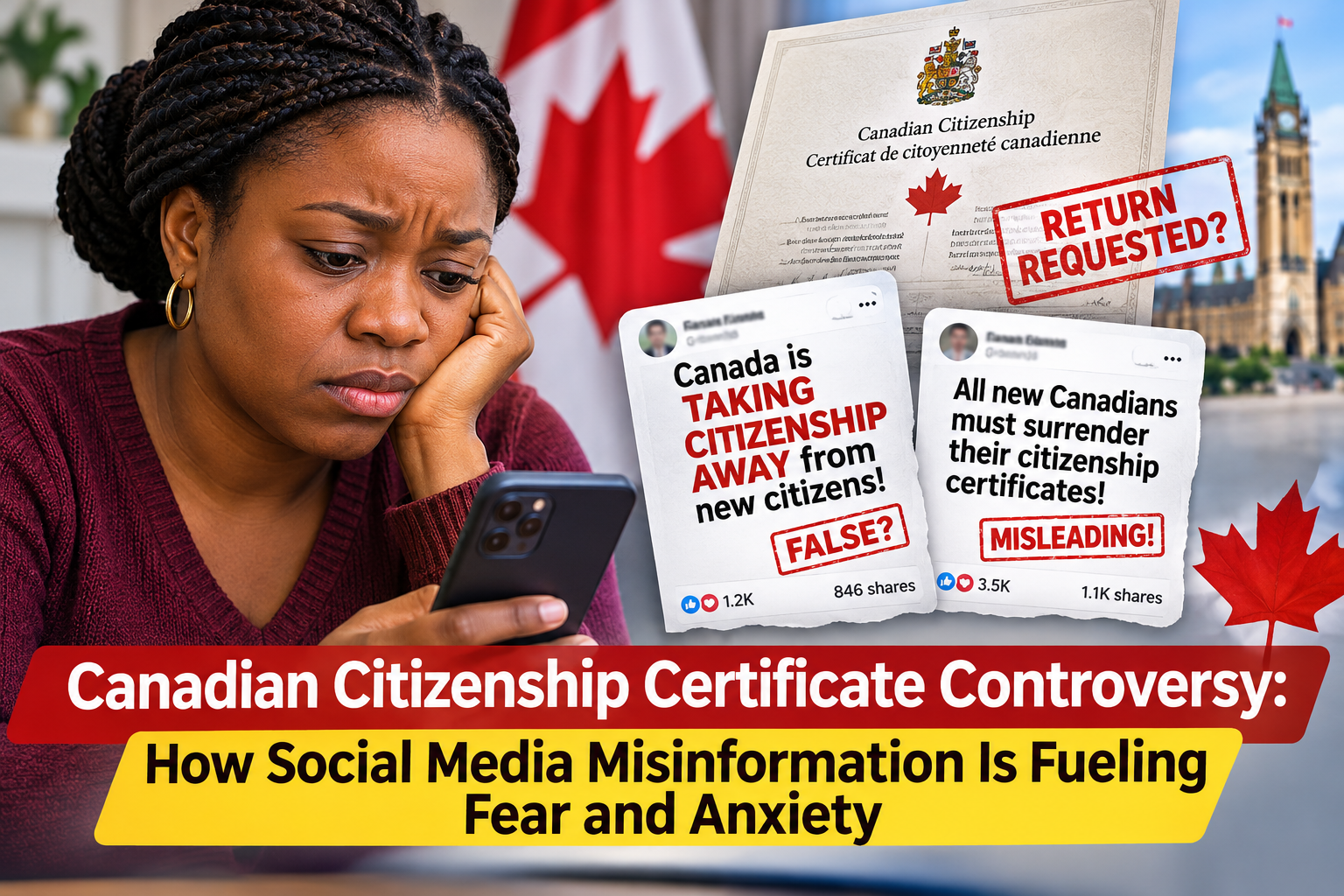
Canadian Citizenship Certificate Controversy: How Social Media Misinformation Is Fueling Fear and Anxiety.
For many immigrants, becoming a Canadian citizen represents years of sacrifice, uncertainty, perseverance and hope. Imagine finally receiving your citizenship certificate, celebrating with your family, and then encountering frightening social media posts suggesting that Canada is taking citizenship away from new citizens.
For some, such headlines are enough to trigger sleepless nights, anxiety and fears about their family's future.
But how much of this fear is justified, and how much is being amplified by misleading information?
In June 2026, Immigration, Refugees and Citizenship Canada (IRCC) requested the return of citizenship certificates from certain individuals whose documents had been issued under revised citizenship-by-descent rules.
Although the development was genuine, some social media discussions failed to explain an important distinction: the affected individuals were people claiming citizenship through Canadian ancestry, not newly naturalized Canadians generally.
That missing context can transform a legitimate news report into a source of unnecessary panic.
When Half-Truths Become Sources of Fear
Social media has become a major source of news for immigrant communities. Unfortunately, information often travels faster than verification.
A headline suggesting that Canada is demanding the return of citizenship certificates may attract attention, but without explaining who is affected and why, it can create a misleading impression.
For newly naturalized Canadians, especially former refugees and immigrants who have spent years navigating complex immigration procedures, such messages can revive painful memories of uncertainty.
Some may begin questioning whether their citizenship is secure, whether their Canadian passports remain valid, or whether they could suddenly lose the right to live in the country they now call home.
The problem is not simply misinformation. It is the emotional damage caused when incomplete information is presented as a universal threat.
What Actually Happened?
According to reports published in June and July 2026, IRCC identified 100 citizenship certificates issued under Bill C-3 that potentially lacked sufficient supporting documentation.
The affected cases involved citizenship by descent, where eligibility depends on qualifying Canadian family connections.
By June 30, IRCC reported that 33 of the 100 certificates had already been reinstated after further examination of existing records.
The department also acknowledged that unclear documentation guidance had contributed to the problem.
These facts matter because they demonstrate that the controversy was not a general campaign to strip recently naturalized Canadians of their citizenship.
The Mental Health Cost of Immigration-Related Fear
Immigration uncertainty can create significant psychological stress.
People who have experienced displacement, refugee proceedings, family separation or prolonged immigration processing may be especially sensitive to alarming reports about their legal status.
Repeated exposure to frightening and unverified information can contribute to:
-
Anxiety and persistent worry about immigration status
-
Sleeplessness and difficulty concentrating
-
Emotional distress and fear of family separation
-
Increased mistrust of government institutions
-
Unnecessary spending on legal consultations prompted by misleading claims
Not everyone exposed to such reports will experience these effects, but the potential emotional burden deserves attention.
For older immigrants and families who have worked hard to establish stability in Canada, citizenship often represents more than a legal document. It symbolizes security, belonging and peace of mind.
A Citizenship Certificate Is Not the Same as Citizenship Itself
One of the most important facts being overlooked in some online discussions is that a citizenship certificate serves as evidence of Canadian citizenship.
A request to return or review that document does not automatically mean citizenship has been legally revoked.
Canadian citizenship can be revoked in circumstances involving fraud, misrepresentation or knowingly concealing important information, but the law establishes formal procedures and opportunities to respond.
During the June 2026 review, IRCC indicated that affected individuals would retain their citizenship status while their cases were examined, although restrictions on citizenship documents and passport use could apply.
For Canadians who obtained citizenship through the regular naturalization process, the reported certificate review did not constitute a general threat to their citizenship.
Why Responsible Journalism Matters
This controversy highlights a growing responsibility for bloggers, journalists, influencers and social media commentators.
Before publishing alarming immigration news, content creators should ask whether the information is verified, who is actually affected, and whether the headline accurately reflects the facts.
Sensational reporting may attract clicks, but it can also create genuine emotional distress.
At Babacares, we believe public information should educate, clarify and empower rather than frighten.
This does not mean concealing legitimate government mistakes or discouraging public scrutiny. It means reporting developments accurately, explaining their implications and avoiding unnecessary generalizations.
What Should Canadian Citizens Do?
Anyone who receives an official letter from IRCC should carefully verify its authenticity, follow the instructions and deadlines, retain copies of relevant documents, and seek qualified immigration legal advice where necessary.
Those who have not received any notice should avoid assuming that viral social media posts apply to them.
Reliable information should come from official government communications, established news organizations and qualified immigration professionals.
Most importantly, do not allow an alarming headline to become a personal crisis before establishing the facts.
The Babacares Perspective
Canadian citizenship is a significant achievement, particularly for individuals who have overcome difficult immigration journeys.
The June 2026 certificate controversy raised legitimate questions about administrative procedures and government communication. However, it also exposed how easily incomplete information can generate fear among communities already familiar with immigration-related stress.
Public institutions must communicate clearly, while journalists and social media users must share information responsibly.
Fear spreads quickly, but accurate information can restore perspective.
For newly naturalized Canadians, the essential message is simple: a review affecting a specific category of citizenship-by-descent certificates should not be mistaken for a general revocation of Canadian citizenship.
Protect your peace of mind. Verify before believing, and think before sharing.
READ MORE ON BABACARES.COM, SUBSCRIBE AND SHARE.











Comments