

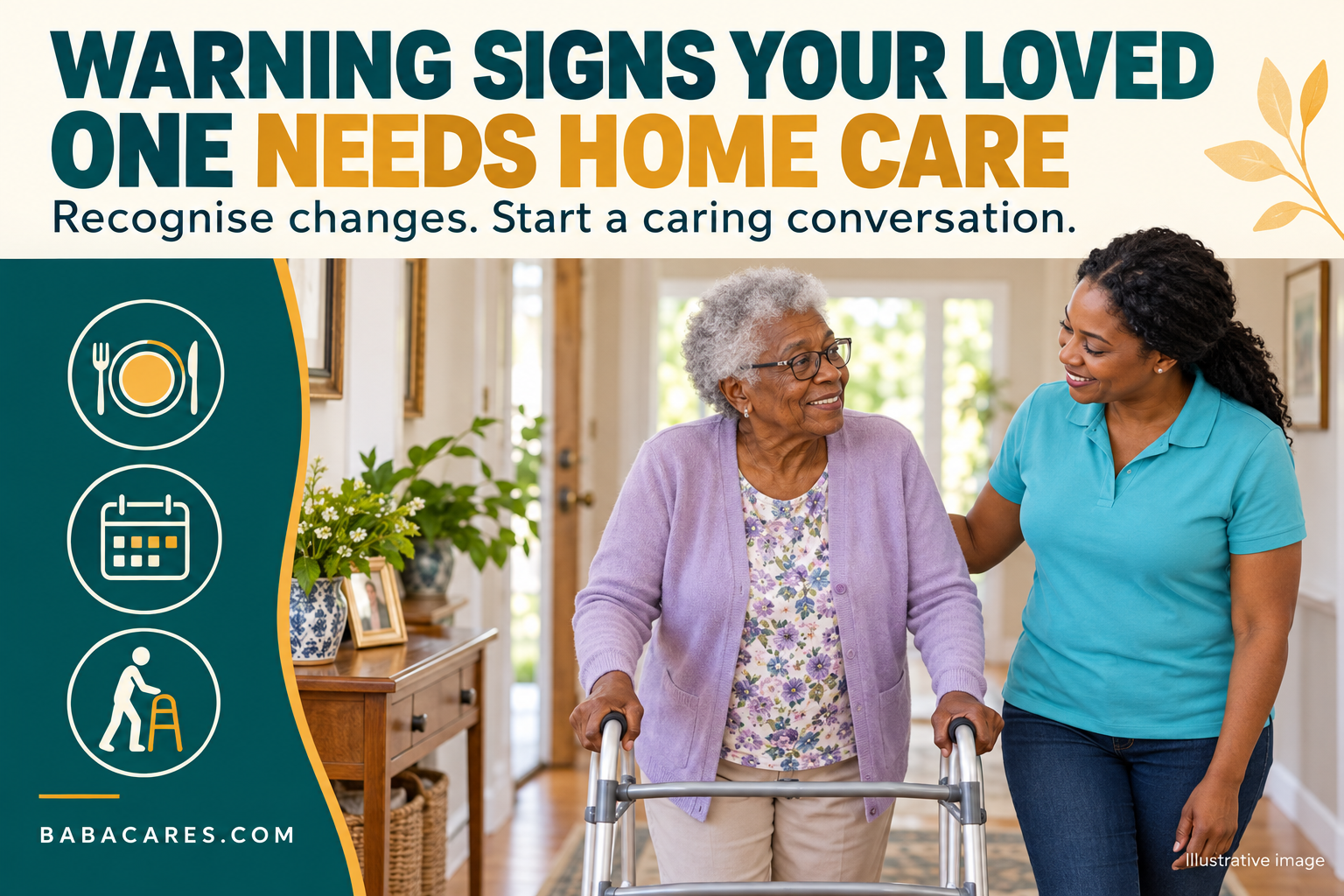
Warning Signs Your Loved One Needs Home Care.
Watching a parent, spouse, or loved one grow older can be emotionally challenging. Many families want to support aging loved ones while helping them remain independent for as long as possible. But there comes a time when independence may begin to decline, and extra support becomes necessary.
The challenge is that this change often happens gradually.
Small issues that seem harmless at first—missed medications, forgetfulness, poor hygiene, repeated falls, or difficulty moving around—can quietly signal a growing need for help.
Recognizing these warning signs early can improve safety, health, and quality of life.
Home care can provide essential support while allowing older adults to remain in the comfort and familiarity of their own homes.
What Is Home Care?
Home care refers to professional or non-professional support provided in a person’s home to help with daily living and health-related needs.
Home care may include:
- personal care
- bathing assistance
- dressing
- mobility support
- meal preparation
- medication reminders
- companionship
- light housekeeping
Home care helps older adults maintain dignity and independence.
Relevant concept: Activities of Daily Living
Warning Signs Your Loved One May Need Home Care
Here are common signs families should watch for.
1. Frequent Falls or Balance Problems
Falls are one of the clearest warning signs.
Watch for:
- repeated falls
- stumbling
- unsteady walking
- difficulty standing up
- fear of walking alone
Falls can lead to serious injuries.
Home care can improve safety and reduce fall risk.
2. Difficulty With Personal Hygiene
Has your loved one stopped bathing regularly?
Warning signs include:
- body odor
- unwashed hair
- dirty clothes
- poor grooming
- unchanged clothing for days
These changes may indicate physical or cognitive difficulty.
3. Forgetting Medications
Medication mistakes can be dangerous.
Watch for:
- missed doses
- taking extra doses
- confusion about medications
- expired prescriptions
Medication management is critical.
4. Memory Problems Are Getting Worse
Mild forgetfulness can happen with age.
But concerning signs include:
- forgetting familiar names
- repeated questions
- getting lost
- confusion about time
- leaving appliances on
These may signal cognitive decline.
Relevant entities: Dementia, Alzheimer's Disease
5. Poor Nutrition or Weight Loss
Look for signs such as:
- empty fridge
- spoiled food
- missed meals
- weight loss
- dehydration
Poor nutrition can worsen health quickly.
Relevant concept: Dehydration
6. Difficulty Moving Around
Mobility challenges often increase gradually.
Watch for:
- difficulty getting out of bed
- trouble climbing stairs
- needing furniture for support
- joint pain affecting movement
Reduced mobility increases dependence.
Relevant entity: Osteoarthritis
7. Home Is Becoming Unsafe
Look around the living environment.
Warning signs include:
- clutter
- poor housekeeping
- unpaid bills
- expired food
- unsafe bathroom setup
An unsafe home increases risk of injury.
8. Social Withdrawal or Loneliness
Some older adults become isolated.
Warning signs include:
- avoiding calls
- staying indoors constantly
- loss of interest in activities
- reduced social contact
Isolation affects both mental and physical health.
Relevant concepts: Social Isolation, Depression
9. Increased Caregiver Stress
Sometimes the warning sign is not only about the older adult—it is also about the family caregiver.
Ask:
- Are family members exhausted?
- Is caregiving becoming overwhelming?
- Is burnout developing?
Caregiver strain matters.
Relevant concept: Caregiver Burden
10. Recovery After Hospitalization
After surgery, illness, or hospitalization, extra support may be necessary.
Examples include recovery from:
- stroke
- fractures
- surgery
- infection
Relevant entity: Stroke
Temporary home care can aid recovery.
Benefits of Home Care
Home care can help older adults:
- remain independent
- improve safety
- reduce fall risk
- maintain dignity
- improve quality of life
It also provides peace of mind for families.
Final Thoughts
Recognizing when a loved one needs home care is not always easy.
Many families delay support because they fear taking away independence. But the right home care often does the opposite—it helps preserve independence safely.
Pay attention to warning signs such as falls, memory decline, poor hygiene, weight loss, mobility issues, and caregiver burnout.
Early support can prevent crises.
Seeking help is not failure.
It is an act of love, wisdom, and protection.
Want to Learn More?
For more caregiving, healthy-aging, and wellness insights, search “Babajide Moronfolu” on Amazon and explore:
- Ageless Living: Unlock the Secrets to Staying Young as You Grow
- Do Not Grow Old Prematurely: Timeless Principles for Body, Mind, and Lifelong Vitality
References
https://www.babacares.com/blog-details?details=1138&title=Warning+Signs+Your+Loved+One+Needs+Home+Care.











Comments