

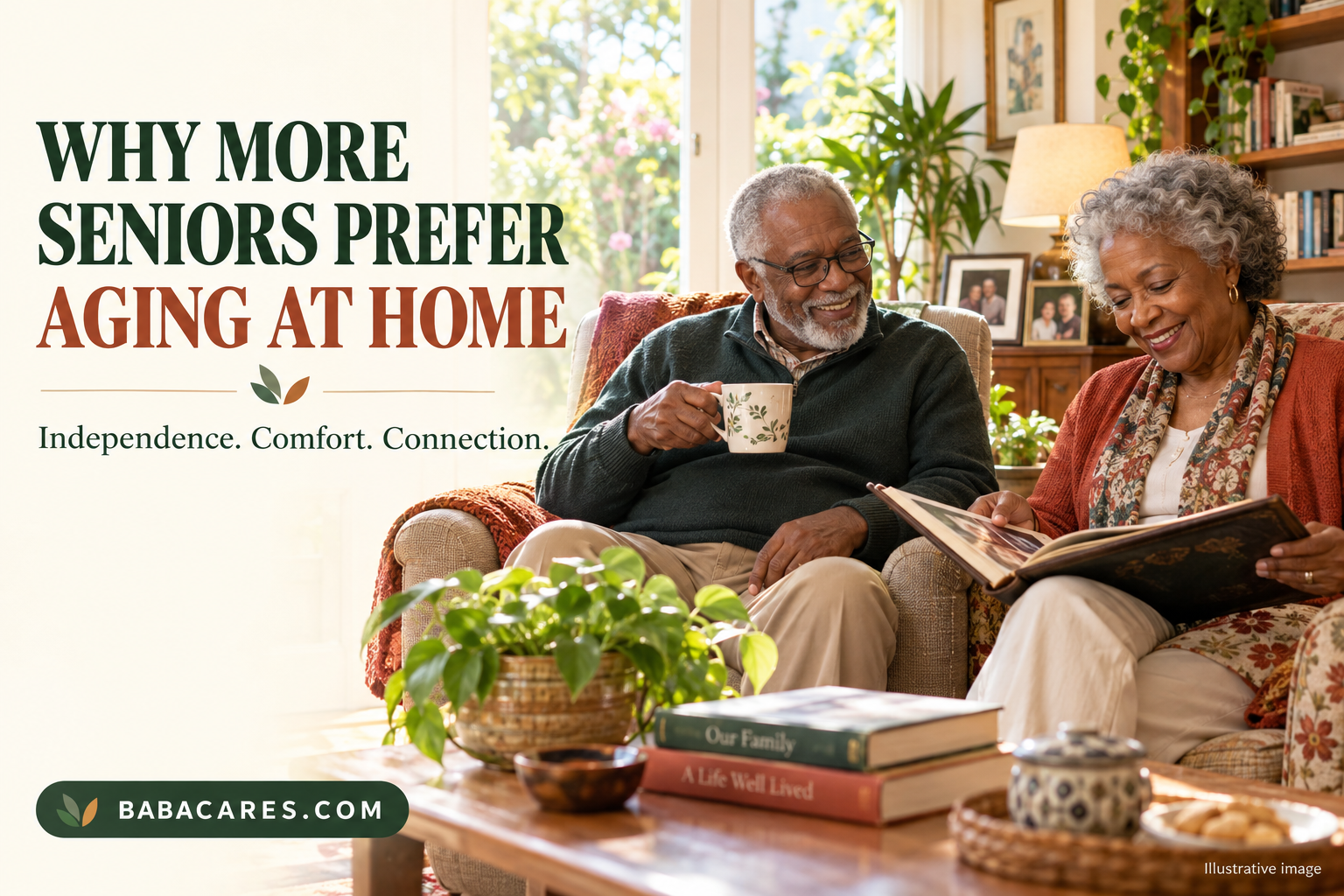
Why More Seniors Prefer Aging at Home.
Growing older brings important decisions about health, safety, lifestyle, and care. One of the biggest questions many families face is this: Where should an older adult receive care as they age?
For a growing number of seniors, the answer is clear—they want to remain at home.
Rather than moving into assisted living facilities, retirement homes, or long-term care institutions, many older adults prefer to age at home, also called aging in place.
This preference is growing worldwide, and for good reason.
Home offers more than shelter. It represents familiarity, independence, comfort, memories, and identity. For many seniors, remaining at home supports emotional well-being and quality of life.
What Is Aging at Home?
Aging at home or aging in place means continuing to live safely and independently in one’s own home for as long as possible, even when health or mobility needs change.
Support may come from:
- family caregivers
- home care workers
- nurses
- community programs
- assistive devices
Relevant concept: Aging in Place
The goal is to maintain dignity, comfort, and independence.
Why More Seniors Prefer Aging at Home
There are many reasons behind this growing preference.
1. Home Provides Comfort and Familiarity
Home is deeply personal.
It holds:
- memories
- routines
- emotional security
- familiar surroundings
Many seniors feel calmer and happier in familiar spaces.
Simple things matter:
- sleeping in their own bed
- sitting in a favorite chair
- seeing familiar neighbors
Familiarity reduces stress.
2. Aging at Home Preserves Independence
Independence matters greatly to older adults.
Many seniors want control over:
- daily routines
- meal choices
- sleep schedules
- visitors
- personal activities
Remaining at home helps preserve autonomy.
This supports dignity and self-worth.
3. Emotional Well-Being Improves
Being forced to relocate can feel overwhelming.
Moving away from home may trigger:
- sadness
- anxiety
- loneliness
- grief
- confusion
Relevant entities: Depression, Anxiety Disorder
Home often supports emotional stability.
4. Familiar Environments Help Cognitive Health
For seniors with memory problems, familiar surroundings are especially valuable.
Consistency helps reduce confusion.
This can benefit people living with:
- Dementia
- Alzheimer's Disease
Familiar spaces may reduce disorientation and agitation.
5. Home Care Has Become More Accessible
Today, more services are available to support aging at home.
These may include:
- personal support workers
- nursing visits
- physiotherapy
- meal delivery
- medication support
- companionship
This makes home care more practical than ever.
6. Family Involvement Is Easier
Aging at home often allows stronger family participation.
Family members may help with:
- visits
- errands
- transportation
- emotional support
- caregiving coordination
This can strengthen connection.
7. Better Quality of Life
Many seniors simply feel happier at home.
They may enjoy:
- gardening
- cooking
- hobbies
- pets
- community connections
These routines support joy and purpose.
Relevant concept: Purpose in Life
Quality of life matters as much as medical care.
Challenges of Aging at Home
Aging at home is beneficial, but it requires planning.
Potential challenges include:
- fall risk
- caregiver burnout
- home safety issues
- mobility limitations
- medical complexity
Relevant concepts: Caregiver Burden, Activities of Daily Living
Families should plan proactively.
How to Make Aging at Home Safer
Helpful strategies include:
Improve Home Safety
Reduce fall hazards.
Add Support Services
Use home care when needed.
Monitor Health
Stay on top of medical needs.
Encourage Social Connection
Prevent isolation.
Relevant concept: Social Isolation
Planning improves success.
Final Thoughts
More seniors prefer aging at home because home represents far more than a physical space.
It offers familiarity, independence, dignity, emotional comfort, and a stronger sense of identity.
For many older adults, aging at home supports both physical and emotional well-being.
With proper planning, family support, and professional care when needed, many seniors can safely remain where they feel most comfortable.
Aging at home is not simply about staying in a house.
It is about preserving the feeling of home while growing older with dignity and grace.
Want to Learn More?
For more caregiving, healthy-aging, and family wellness insights, search “Babajide Moronfolu” on Amazon and explore:
- Ageless Living: Unlock the Secrets to Staying Young as You Grow
- Do Not Grow Old Prematurely: Timeless Principles for Body, Mind, and Lifelong Vitality
References
- National Institute on Aging – Aging in Place
- Canadian Centre for Caregiving Excellence
- AARP – Aging in Place
- World Health Organization – Healthy Ageing









Comments