

GUS AT 104: A TORTOISE’S RECOVERY AND A LESSON IN VALUING OLDER LIVES
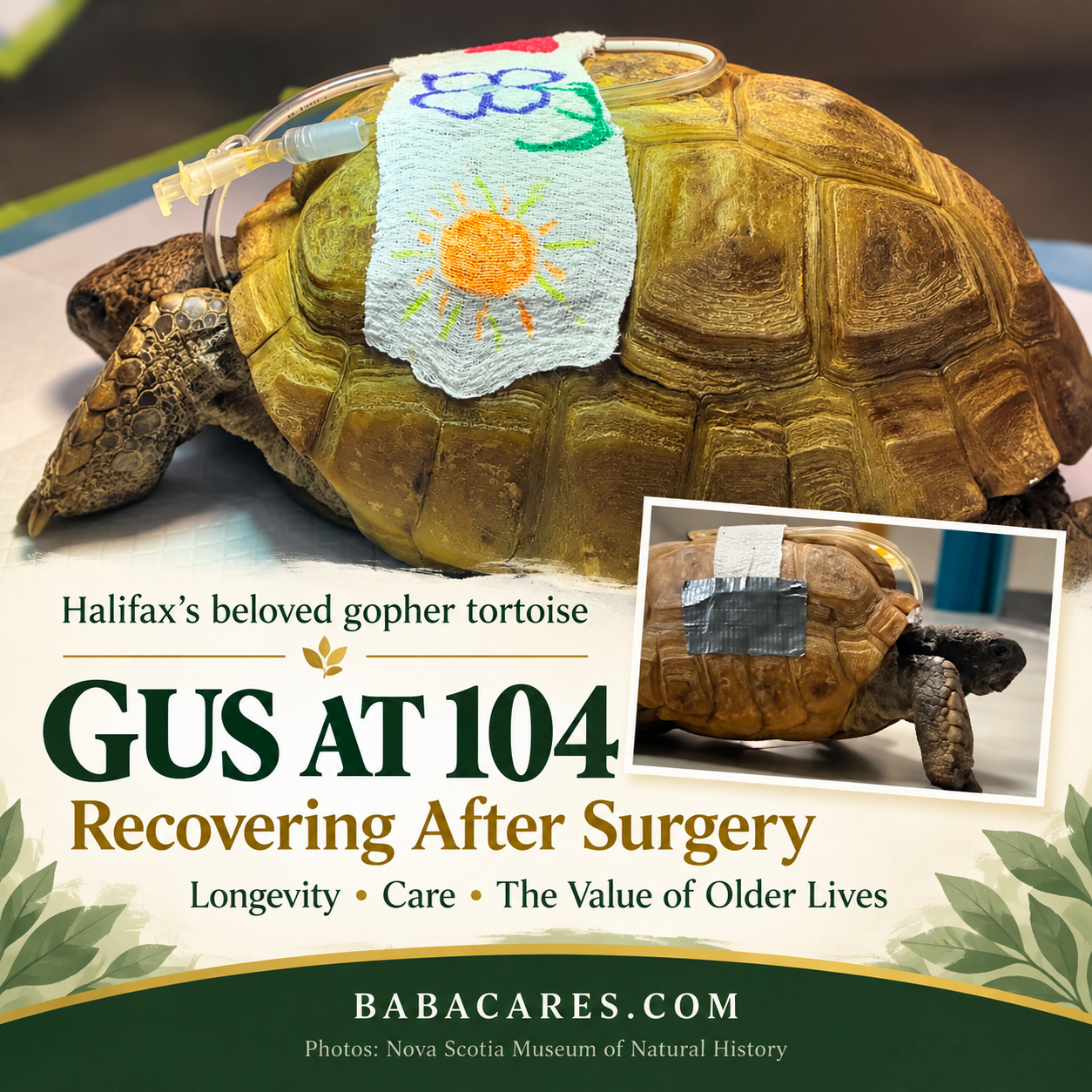
At 104 years old, Gus the gopher tortoise is recovering from surgery—and reminding admirers around the world that an older life can continue to inspire curiosity, affection and care.
Gus, believed to be the world’s oldest living gopher tortoise, has lived at Nova Scotia’s Museum of Natural History in Halifax since 1942. For generations, he has delighted visitors and become a cherished connection between children, parents and grandparents.
Recovery takes patience
On October 13, 2026, veterinarians successfully removed a bladder stone that had been monitored since 2009. A recent scan showed it had grown and was pressing on nearby tissues. Advances in veterinary surgery allowed the team to remove it through soft tissue near a rear leg, avoiding cutting through his shell.
The Weather Network reported on October 30 that Gus was making progress but remained away from public display while regaining strength and working towards eating independently. Visitors can leave letters at the museum as he recovers.
Why tortoises matter
Gus’s contribution is educational: his presence gives visitors an opportunity to learn about wildlife, longevity and responsible animal care.
In the wild, gopher tortoises also perform an essential ecological role. Their burrows provide shelter and other benefits to more than 350 species, helping protect animals from harsh weather and fire. This makes them a “keystone species”—one whose presence supports many others.
A slow-moving animal can have a far-reaching impact.
What his story invites us to consider about ageing
Tortoises and humans age differently, so Gus’s remarkable lifespan is not a formula for human longevity. His story nevertheless offers a meaningful reflection on how we treat older lives.
The attention given to his comfort and recovery invites us to consider the patience, companionship and individual care we offer older people.
Older adults contribute through family support, mentorship, cultural knowledge, volunteering and everyday relationships. When illness or disability changes what someone can do, their worth remains.
Being valued should never depend on staying productive.
A life worth caring for
For more than eight decades, Gus has helped create memories at the museum. Today, as he rests behind the scenes, his wellbeing takes priority over his public appearances.
That is a lesson worth carrying into our communities: celebrate longevity, recognise continuing contributions and make room for rest, recovery and support.
At Babacares, we wish Gus a steady recovery. His story reminds us that growing older deserves care, dignity and belonging.
subscribe and share.
https://www.babacares.com/blog-details?details=1133&title=GUS+AT+104%3A+A+TORTOISE%E2%80%99S+RECOVERY+AND+A+LESSON+IN+VALUING+OLDER+LIVES









Comments