

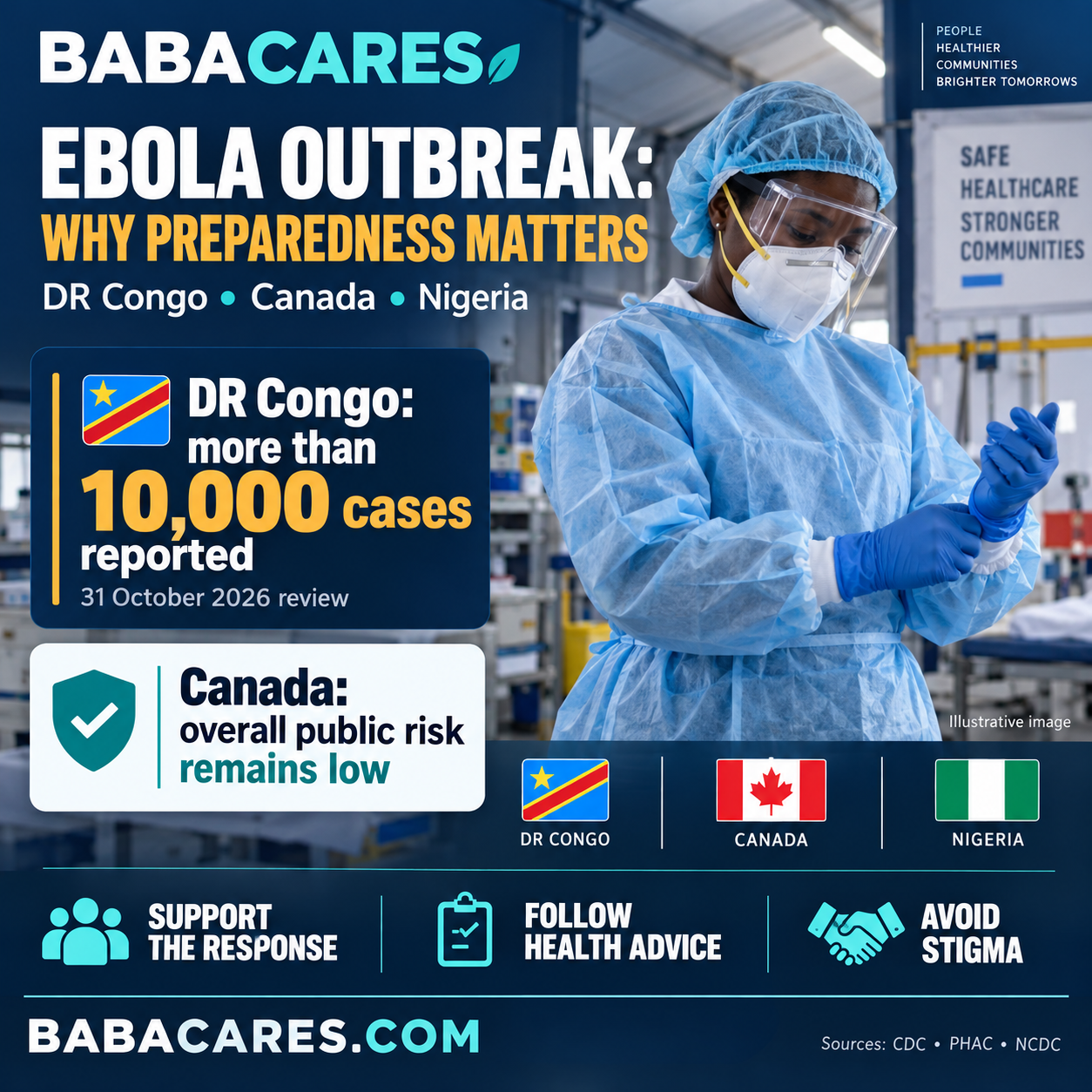
Ebola Cases Pass 10,000: Why Canada and Nigeria Must Stay Prepared
By Babacares | October 31, 2026
The growing Ebola emergency in the Democratic Republic of the Congo is a reminder that protecting health requires action beyond national borders. With confirmed infections exceeding 10,000 and deaths now reported above 5,000, the priority is to strengthen treatment, protect healthcare workers and prevent further spread. ABC News
The CBC headline shared with Babacares highlights a warning about possible cross-border transmission and the need for greater international support. That warning should not be interpreted as meaning everyone faces the same immediate risk. Canadian public-health authorities continue to assess the overall risk to people in Canada as low. walktotheplace.com
What the numbers show
The U.S. Centers for Disease Control and Prevention recorded 10,305 confirmed cases and 4,996 confirmed deaths across the outbreak as of October 28. The Democratic Republic of the Congo accounted for 10,274 cases and 4,992 deaths.
Subsequent reporting on October 31, citing newer government figures, said deaths in the DRC had surpassed 5,000. These figures reflect different reporting dates, rather than necessarily conflicting accounts. CDC
Why international concern is growing
The outbreak involves Bundibugyo virus, one of the viruses that cause Ebola disease. Canada’s public-health assessment notes imported cases in Kenya and Nigeria, demonstrating the importance of recognising infections quickly and following up exposed contacts.
Its October 27 situation summary reported no evidence of wider community transmission outside the DRC. However, continued geographic spread could change risk assessments. Canada.ca
What this means for Canada
The Public Health Agency of Canada says the overall risk remains low. If an imported case occurred, onward transmission would be expected to be limited by prompt detection, infection-control measures and contact management.
Ebola is not spread through the air. Transmission requires contact with infected body fluids or tissues, or contaminated materials. Healthcare workers, caregivers and people participating in unsafe burial practices face particular exposure risks. Canada.ca
Canada has also extended temporary Ebola-related border measures until November 27, 2026. Requirements depend on recent travel history and eligibility to enter Canada. Travellers should check official guidance before departure. travel.gc.ca
What this means for Nigeria
Nigeria’s response must remain focused on surveillance, contact tracing and safe clinical care.
The latest NCDC report reviewed, dated October 29, recorded one confirmed case, 62 contacts under follow-up and no additional confirmed cases. Those findings are encouraging, but they do not mean monitoring can stop. www.ncdc.gov.ng
Hospitals and clinics should maintain readiness to recognise suspected cases, obtain exposure histories and arrange safe assessment. Communities can help by cooperating with health teams and avoiding stigma.
Why vaccine development matters
There are currently no approved vaccines or specific treatments for Bundibugyo virus disease, according to Canadian travel-health guidance. Early supportive care can nevertheless improve survival.
Vaccines available for other forms of Ebola should not be assumed to protect against Bundibugyo. Research is progressing, including vaccine trials in Canada, but investigational products are not the same as an approved, widely available vaccine. travel.gc.ca
Protect yourself without spreading fear
If you develop symptoms after a possible exposure, contact public-health authorities before arriving at a healthcare facility. Describe your symptoms, travel history and possible contact with an infected person. In Nigeria, NCDC lists 6232 as its toll-free reporting number. www.ncdc.gov.ng
The strongest response combines timely medical care, accurate information and practical support for affected communities. Helping contain the outbreak where transmission is occurring protects lives there and reduces risks elsewhere.
References
- CDC: Ebola Outbreak—Current Situation.
- Associated Press / ABC News: Congo’s Ebola deaths top 5,000.
- Public Health Agency of Canada: Updated Ebola risk assessment.
- Government of Canada: Ebola travel-health notice.
- NCDC: Disease situation reports.
READ MORE ON BABACARES.COM, SUBSCRIBE AND SHARE.
https://www.babacares.com/blog-details?details=1130&title=Ebola+Cases+Pass+10%2C000%3A+Why+Canada+and+Nigeria+Must+Stay+Prepared











Comments