

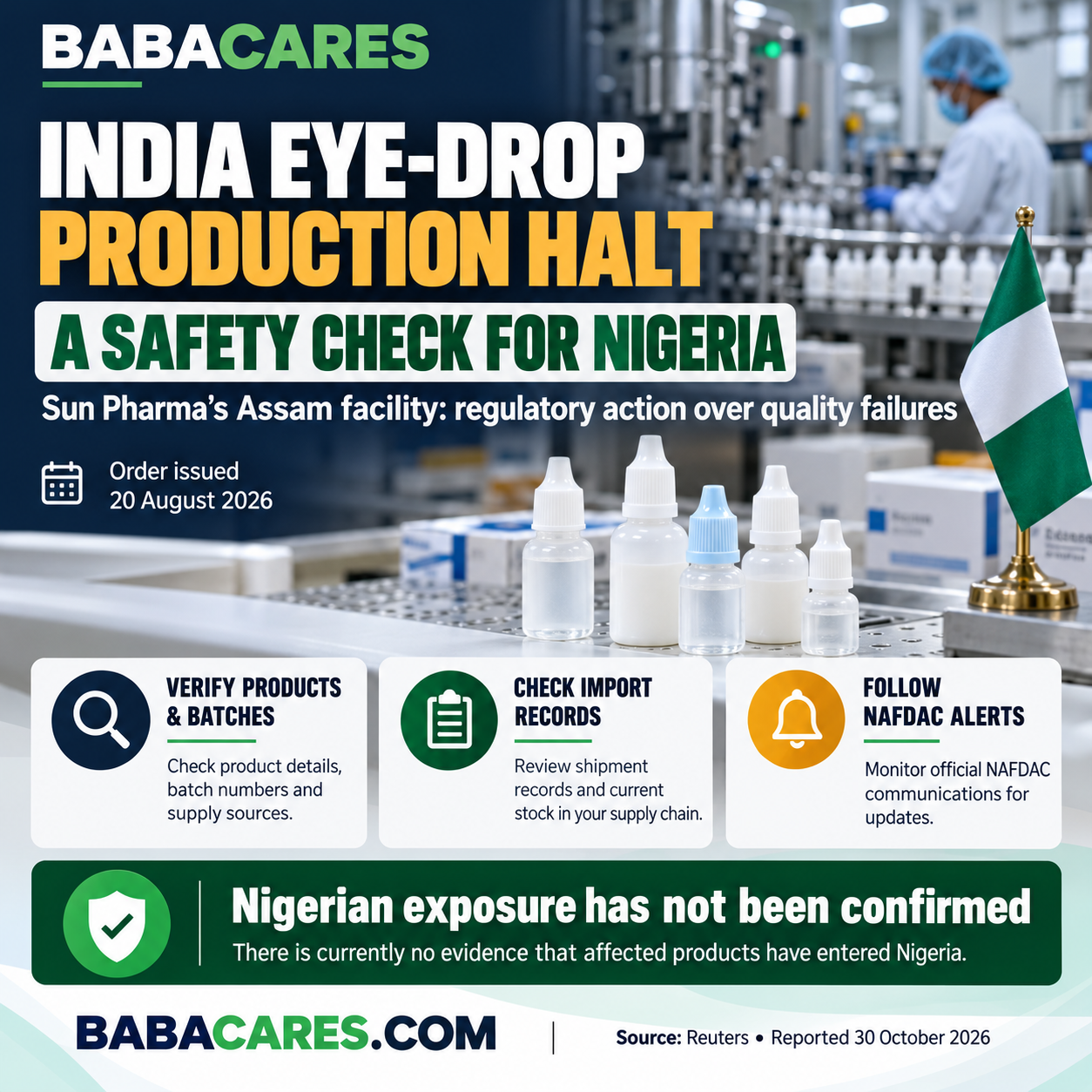
India’s Eye-Drop Production Halt: A Safety Warning for Nigerian Medicine Importers and Regulators
By Babacares | October 30, 2026
Nigeria’s pharmaceutical importers and medicine regulators should urgently examine their supply chains following reports that Indian authorities stopped eye-care medicine production at a Sun Pharmaceutical Industries facility over quality failures.
This is a call for preventive checks—not confirmation that affected products have entered Nigeria. The reporting reviewed does not establish whether the products were exported to Nigeria or whether Nigerian patients have been harmed.
What happened in India?
Reuters reported on October 30 that Indian regulators issued an order on August 20 stopping the manufacture, sale and distribution of ophthalmic products from Sun Pharma’s Assam facility after inspectors identified failures in its quality management system.
The action followed a voluntary withdrawal of approximately 11 eye-care brands. Regulators also sought information concerning 332 batches of ophthalmic suspension products. A company compliance report is under review. www.reuters.com
Products mentioned in reporting include Lotepred, Brinzotim, Nepalact OD, Nepalact-Z and Depopred. However, it remains unclear whether every withdrawn product was contaminated or whether the products were exported. The action should not be interpreted as a finding against every medicine manufactured by Sun Pharma. m.economictimes.com
Why Nigerians should pay attention
Eye drops must be sterile. Medicines applied directly to the eyes bypass some of the body’s natural defences, and contamination can cause infections that may threaten vision. This explains why manufacturing controls and prompt recall communication matter. www.fda.gov
For Nigeria, the immediate question is whether any products connected to the affected facility or withdrawal are present in import records, warehouses, hospitals or pharmacies.
A warning to pharmaceutical importers and distributors
Importers should obtain written clarification from manufacturers about affected products, manufacturing sites and batches, then compare that information with shipment and distribution records.
Any stock confirmed as affected should be separated from saleable inventory, reported to NAFDAC and handled according to the agency’s instructions. Records should allow distributors to trace supplies to individual hospitals, pharmacies and other customers.
NAFDAC’s guidelines require imported medicines to be registered and state that pharmaceutical consignments must not be sold or distributed without satisfactory clearance by the agency. nafdac.gov.ng
These requirements should be supported by continuing checks when an overseas manufacturer faces regulatory action.
What NAFDAC, SON and other agencies should do
NAFDAC should lead the pharmaceutical response. Babacares recommends that the agency seek the Indian inspection and withdrawal details, check Nigerian import and registration records, and publish clear product-specific advice if Nigerian stock is implicated.
The Standards Organisation of Nigeria has a supporting coordination role within its mandate. Medicines are excluded from SON’s SONCAP import conformity scheme, so SONCAP certification should not be presented as a substitute for NAFDAC’s pharmaceutical controls. Relevant intelligence should reach the appropriate medicine regulator promptly. Standards Organisation of Nigeria
Nigeria Customs, working with NAFDAC, should use verified product and shipment information to identify suspect consignments. Pharmacy regulators, professional associations and hospital procurement teams should help communicate any confirmed restrictions and arrange safe alternatives for patients.
These are recommended preventive actions, rather than a claim that Nigerian agencies have already issued a recall connected to this incident.
Advice for patients
Patients should ask a pharmacist to check the product name, batch number and manufacturing site if concerned about their eye drops.
Do not use a product confirmed as recalled. Contact your eye-care professional promptly for a replacement so that necessary treatment continues safely.
Seek urgent medical assessment for eye pain, discharge, worsening redness or changes in vision after using eye drops. Wash hands before application and avoid touching the bottle tip to the eye, fingers or other surfaces. www.fda.gov
Nigeria’s response should combine vigilance with precise communication. Patients need to know which products require action, while importers and regulators must ensure that any affected medicine can be identified and removed quickly.
References
- Reuters — October 30, 2026: India orders Sun Pharma to halt eye-care drug production at plant after quality lapses.
- The Economic Times / Reuters: Report on the Assam facility order and product withdrawal.
- NAFDAC: Guidelines for clearing imported finished pharmaceutical products at Nigerian ports.
- Standards Organisation of Nigeria: SONCAP scope and exclusions.
- U.S. Food and Drug Administration: What You Should Know About Eye Drops.
- NAFDAC: Official recalls and safety alerts.
READ MORE ON BABACARES.COM, SUBSCRIBE AND SHARE.
https://www.babacares.com/blog-details?details=1127&title=India%E2%80%99s+Eye-Drop+Production+Halt%3A+A+Safety+Warning+for+Nigerian+Medicine+Importers+and+Regulators








Comments