

Yemen: Oxygen Shortages Put Patients at Risk as Taiz Hospitals Struggle to Keep Operating
October 29, 2026 | Babacares
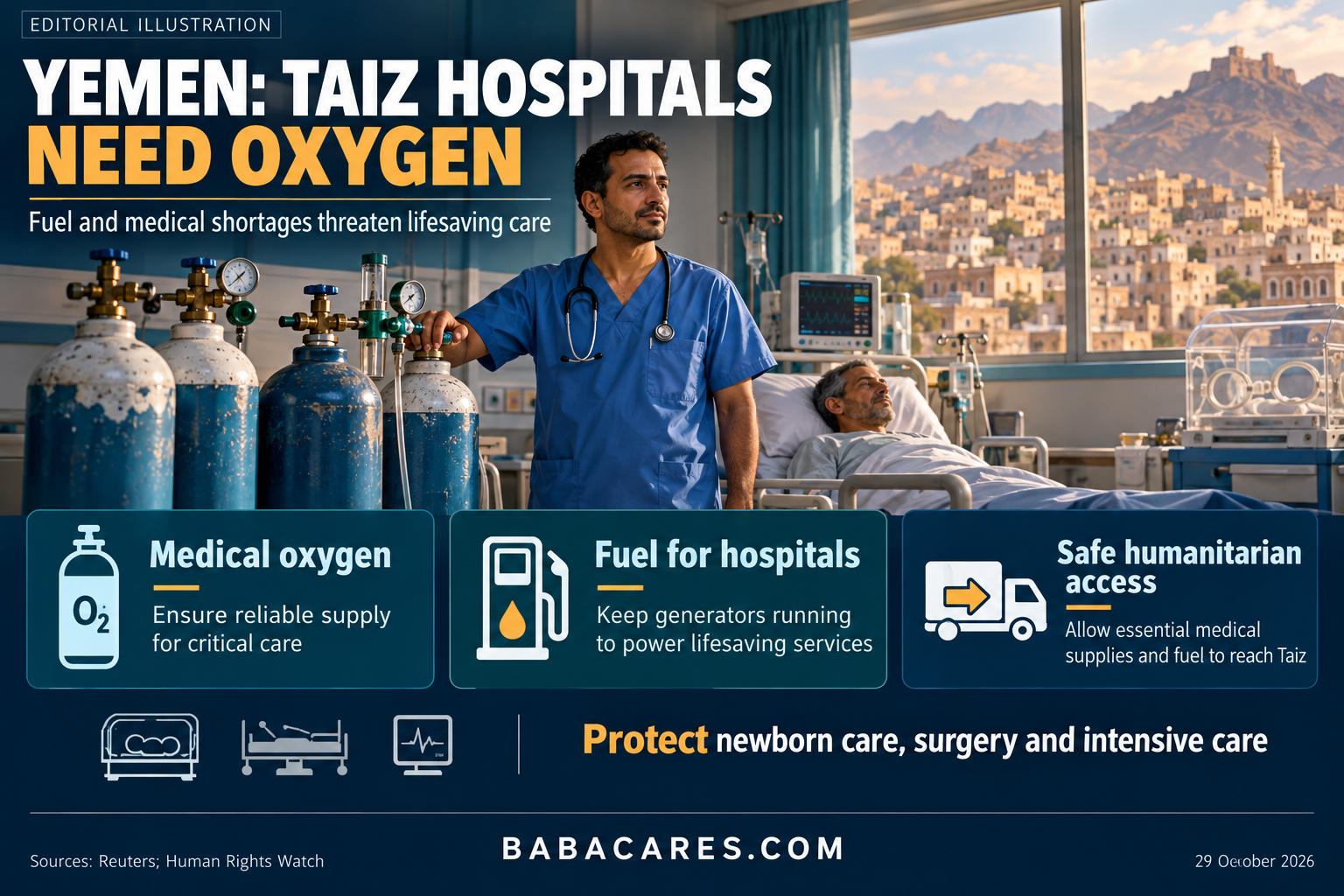
For a newborn needing breathing support or a critically ill patient awaiting surgery, medical oxygen can be essential to survival. In Yemen’s Taiz, shortages of oxygen, fuel and medicines are threatening hospitals’ ability to provide that care.
Reuters reports that fighting and restricted supply routes have left health facilities struggling to treat wounded people while maintaining essential services. Medical staff are working amid shortages of basic supplies, with civilian access to treatment increasingly difficult.
Newborn care under pressure
At the Yemeni-Swedish Hospital for Maternity and Childhood, fuel shortages forced staff to reduce the number of operating incubators from 40 to 10, Reuters reported on October 26. Staff warned that continued shortages could force the facility to stop operating.
The same report, citing WHO, identified 42 health facilities in Taiz city facing acute shortages of fuel, oxygen, medicines and medical supplies. These figures describe reported conditions at that time, rather than a live count of functioning equipment today.
Why fuel and oxygen shortages are linked
Fuel keeps hospital generators, oxygen-production equipment and ambulances operating. When supplies run low, the consequences can reach operating theatres, intensive care units and neonatal services.
Human Rights Watch documented accounts from health workers describing oxygen shortages, interrupted services and patients unable to reach treatment because transport was unavailable or unaffordable. One doctor reported that a facility had stopped operating for three days after running out of diesel.
Patients face barriers before reaching hospital
Road closures and fighting have made transporting medical supplies into Taiz more difficult and expensive. People needing continuing treatment—including those with kidney disease, cancer and other chronic conditions—also face obstacles reaching facilities.
Human Rights Watch attributes the worsening restrictions to Houthi forces blocking major supply routes. The Houthis have disputed descriptions of a siege, saying humanitarian routes remain open.
A wider public-health crisis
The danger extends beyond hospital wards. Fuel shortages disrupt water pumping and waste collection, while displacement puts additional pressure on food, shelter and sanitation.
Associated Press reporting describes families rationing drinking water as supplies shrink and prices rise. These conditions increase concerns about cholera and other waterborne illnesses; they should not be confused with confirmation of a new outbreak.
What urgently needs to happen
The immediate priorities are reliable deliveries of medical oxygen, fuel, medicines and essential supplies, alongside safe access for patients, ambulances, health workers and humanitarian teams.
Assistance must also sustain maternity care, dialysis, clean-water services and treatment for chronic illnesses. Protecting hospitals includes keeping the systems around them functioning.
Taiz’s crisis shows how conflict can threaten life without a patient being directly injured: an interrupted oxygen supply, a stalled ambulance or an inaccessible dialysis appointment can carry serious consequences.
Keeping essential healthcare operating must remain an urgent humanitarian priority.
READ MORE ON BABACARES.COM, SUBSCRIBE AND SHARE.
https://www.babacares.com/blog-details?details=1123&title=Yemen%3A+Oxygen+Shortages+Put+Patients+at+Risk+as+Taiz+Hospitals+Struggle+to+Keep+Operating







Comments