

Emergency Bags and Bleeding Control: What Every Household Should Know
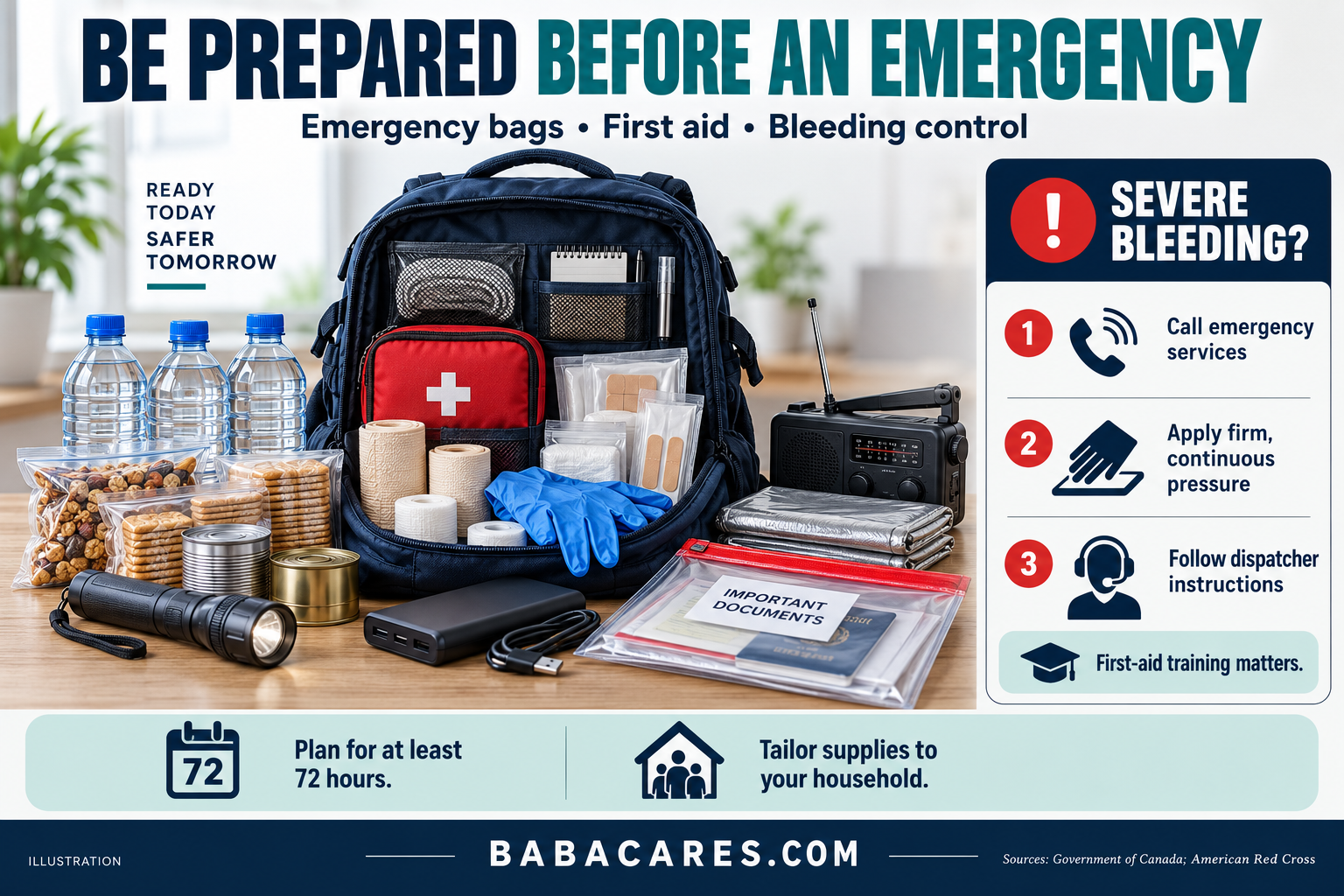
An emergency rarely gives families time to prepare. Having essential supplies organised—and knowing how to use them—can make a difference when someone is injured or must leave home quickly.
Screenshots from a social media post labelled “Stella Immanuel M.D.” show an emergency bag and a product branded BleedStop. They raise a useful question: what belongs in an emergency kit, and what should people do when someone is bleeding?
The screenshots alone do not establish the product’s effectiveness or the full advice given in the video. Independent first-aid guidance provides the foundation for safe action.
Start with a practical emergency bag
A “go bag” is a portable collection of essentials that can be picked up quickly during an evacuation.
Canada’s emergency preparedness guidance recommends supplies for at least 72 hours, tailored to household members’ needs. Useful items include:
-
Drinking water and non-perishable food.
-
A first-aid kit with gauze, bandages, tape and disposable gloves.
-
Prescription medicines, a medication list and necessary medical equipment.
-
A flashlight, radio, batteries and charged power bank.
-
Copies of identification, emergency contacts and some cash.
-
Clothing, hygiene supplies and items needed by children or pets.
Check expiry dates regularly and keep the bag accessible. Build it gradually if cost is a concern.
When bleeding becomes an emergency
Heavy, continuous or spurting bleeding requires immediate action. A person who becomes pale, cold, dizzy or less responsive may be developing shock—a life-threatening condition.
Call emergency services immediately and apply firm, continuous direct pressure to the wound, using gauze or a clean cloth. Use disposable gloves if available. Do not delay pressure while searching for a particular product.
For life-threatening bleeding from an arm or leg that direct pressure does not control, a commercial tourniquet may be needed. Learn its correct use through recognised first-aid training and follow emergency dispatchers’ instructions.
Where do bleeding-control products fit?
Some haemostatic dressings contain substances that help blood clot. First-aid guidelines recognise them as an addition to direct pressure in appropriate circumstances.
However, products differ. A powder, ordinary gauze and a haemostatic dressing should not be assumed to have identical uses. Follow the specific product’s instructions and do not treat a social media demonstration as a substitute for training or emergency care.
External bleeding-control products also cannot treat internal bleeding. Serious internal bleeding requires urgent hospital treatment, even when there is little visible blood.
Supplies work best alongside skills
A well-stocked bag is valuable, but family members should also know where it is, whom to call and how to provide basic first aid safely.
For households, workplaces, churches and community organisations, practical preparation means combining accessible supplies, an emergency plan and recognised first-aid training.
Prepare before an emergency—and seek help promptly when one occurs.
READ MORE ON BABACARES.COM, SUBSCRIBE AND SHARE.
https://www.babacares.com/blog-details?details=1118&title=Emergency+Bags+and+Bleeding+Control%3A+What+Every+Household+Should+Know









Comments