

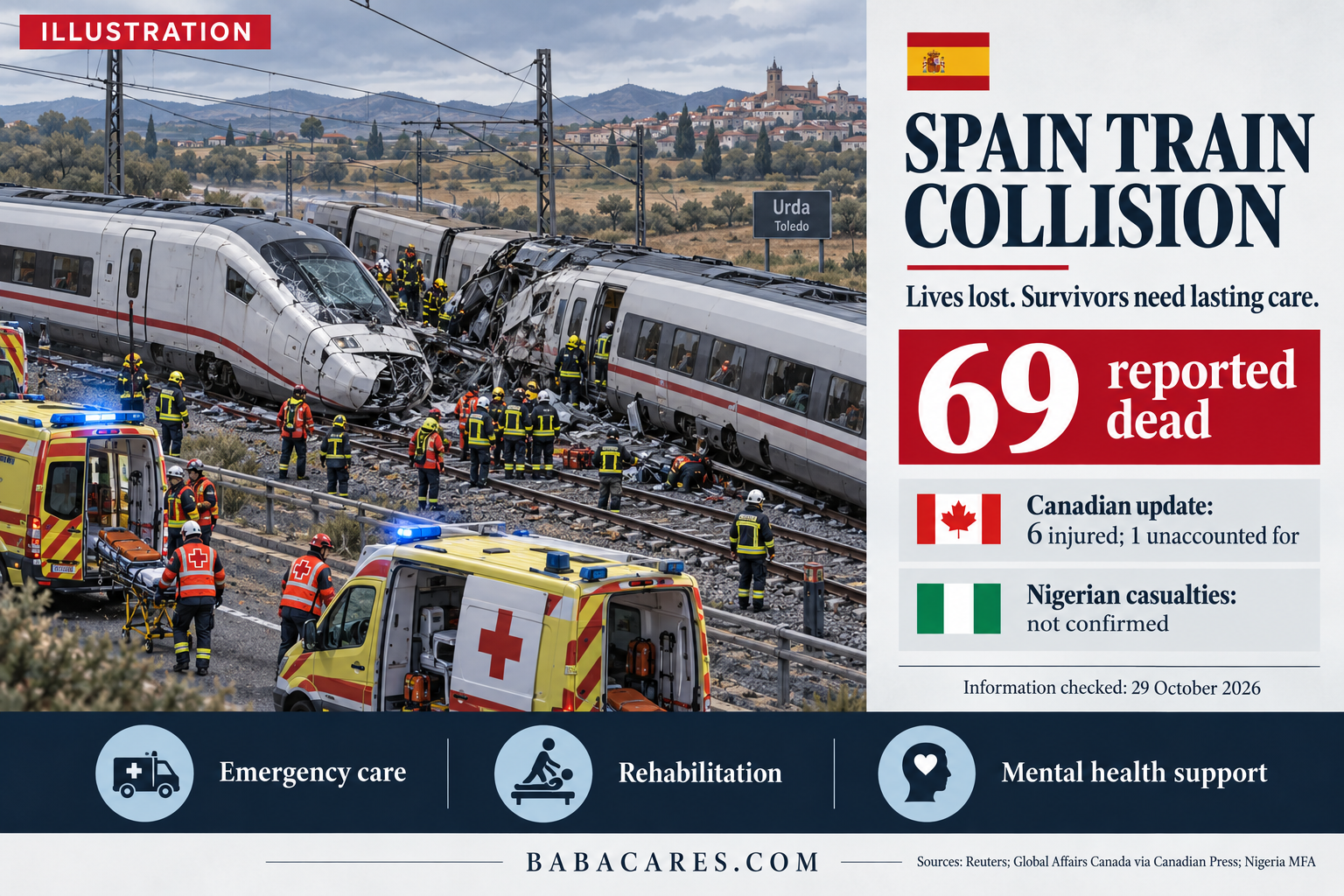
Spain Train Collision: Death Toll Reaches 69, Six Canadians Injured as Recovery Efforts Continue
Updated October 29, 2026
Spain is mourning after two high-speed trains collided near Urda, in Toledo province, on October 28, leaving at least 69 people dead. Rescue teams continued searching damaged carriages on Thursday, while dozens of injured passengers remained in hospital.
The tragedy has raised urgent questions about railway safety—and the physical and psychological care survivors will need.
What happened?
A Renfe train struck the rear of a stationary Iryo train while both were travelling from Madrid towards Seville. Authorities reported 397 passengers aboard the Renfe service and 147 on the Iryo train. Several carriages derailed, and services on the affected corridor were suspended.
Spain’s transport minister, Óscar Puente, said a signalling failure had stopped trains, but the Renfe service was subsequently authorised to resume at normal speed. These are preliminary findings: the investigation must establish responsibility and the full sequence of failures. Spain declared three days of national mourning.
Were Nigerians or Canadians affected?
Canadians: Global Affairs Canada’s latest statement located for this report, issued Wednesday, confirmed six Canadians injured and a seventh person unaccounted for. Canadian officials were providing consular assistance. Being unaccounted for does not establish that someone has died.
Nigerians: No verified number of Nigerian passengers killed, injured or missing was found in the sources reviewed. Nigeria’s Ministry of Foreign Affairs issued condolences on October 29, but its published statement did not identify Nigerian casualties. The position remains unconfirmed; it should not be reported as “no Nigerians affected.”
The health implications extend beyond visible injuries
Major collisions can cause serious head, spinal, chest and abdominal injuries. Survivors need appropriate medical assessment, including when injuries are not immediately obvious. First-aid guidance stresses early emergency assistance and avoiding unnecessary movement of people with suspected spinal injuries.
After a head impact, symptoms can emerge hours or days later. A worsening headache, repeated vomiting, confusion, seizures or difficulty staying awake require urgent medical attention.
Recovery also includes mental health. Survivors, bereaved relatives and responders may experience nightmares, intrusive memories, anxiety or sleep problems. Some develop post-traumatic stress disorder; distressing symptoms deserve professional support, particularly when they disrupt daily life.
Practical precautions during a rail emergency
Passenger precautions cannot replace reliable signalling and safe operating procedures. However, people caught in an emergency can take steps to protect themselves and others:
-
Call 112 in Spain for ambulance, fire or police assistance. Give the location and describe the emergency.
-
Protect your own safety before helping. Avoid entering unstable wreckage or other dangerous areas.
-
For severe external bleeding, apply firm direct pressure with a dressing or clean cloth.
-
Keep someone with a suspected neck or back injury still, unless immediate danger requires movement. Follow emergency dispatchers’ instructions.
Travellers should check current information directly with their rail operator before departure. Families seeking a missing passenger should provide identifying details and journey information through official police, railway or consular channels.
For those affected, recovery will require sustained medical care, rehabilitation and emotional support. A transparent investigation and effective safety improvements must accompany that care.
Casualty figures and information about affected nationalities may change as identification and official enquiries continue.
READ MORE ON BABACARES.COM, SUBSCRIBE AND SHARE.
https://www.babacares.com/blog-details?details=1115&title=Spain+Train+Collision%3A+Death+Toll+Reaches+69%2C+Six+Canadians+Injured+as+Recovery+Efforts+Continue










Comments