

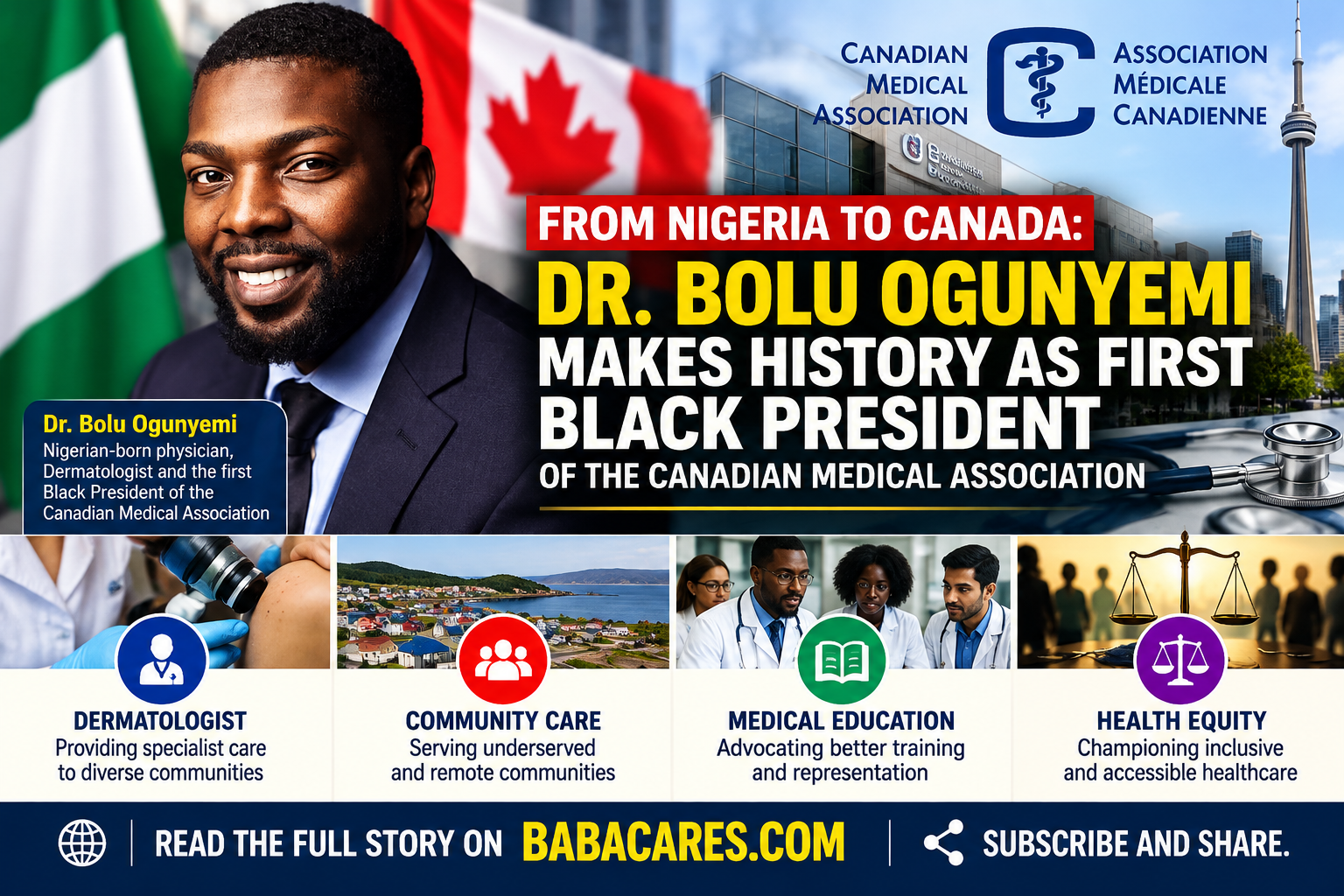
From Nigeria to Canadian Medical History: Dr. Bolu Ogunyemi Becomes First Black President of the Canadian Medical Association
From a Nigerian Childhood to Canadian Medical Leadership
Dr. Bolu Ogunyemi's journey began in Nigeria before his family relocated to Newfoundland and Labrador in the late 1980s.
His parents were among the early African immigrant families to settle in the province.
His father became Newfoundland and Labrador's first epilepsy specialist, while his mother established a business serving the African community.
Growing up in a relatively small immigrant community, Ogunyemi experienced the challenges and opportunities associated with cultural diversity.
Rather than allowing his background to limit his ambitions, he pursued medicine and developed a career combining clinical excellence, education, advocacy and healthcare leadership.
Building a Distinguished Medical Career
Ogunyemi studied sociology and medical sciences at Western University before earning his medical degree from Memorial University in 2013.
He subsequently completed specialist training in dermatology at the University of British Columbia.
Today, he practises as a dermatologist in St. John's and serves as a clinical associate professor at Memorial University.
His work extends beyond urban hospitals. Since 2018, he has provided specialist dermatology services to patients in Labrador, helping people in remote communities access medical expertise that might otherwise require lengthy and expensive travel.
He has also served as Memorial University's inaugural Assistant Dean of Social Accountability, contributing to initiatives addressing health equity, Indigenous health, diversity and community engagement.
Why His Presidency Matters
The Canadian Medical Association represents physicians and advocates for improvements in Canada's healthcare system.
As president, Ogunyemi serves as a national spokesperson for the medical profession and contributes to discussions about healthcare policy, professional challenges and patient care.
His leadership priorities include:
-
Improving access to primary healthcare.
-
Supporting physicians and reducing administrative burdens.
-
Strengthening community-based healthcare services.
-
Encouraging responsible use of medical technology and artificial intelligence.
-
Promoting equitable healthcare for people from diverse backgrounds.
These priorities come at a time when Canada continues to address difficulties accessing family doctors, healthcare workforce pressures and disparities between urban and rural medical services.
A Voice for Diversity in Medicine
Ogunyemi has consistently advocated for healthcare systems that recognize the different backgrounds and needs of patients.
His work in dermatology has also highlighted an important clinical concern: medical training has historically relied heavily on examples involving lighter skin tones.
Certain skin conditions can appear differently on darker skin, potentially contributing to delayed or inaccurate diagnosis when healthcare professionals lack appropriate training.
By promoting greater representation in medical education, Ogunyemi has contributed to discussions about improving diagnostic accuracy and reducing healthcare disparities.
His appointment also carries symbolic significance for Black medical students, immigrant professionals and young people aspiring to leadership positions.
Lessons for Nigeria and the African Diaspora
Dr. Ogunyemi's achievement demonstrates the contributions Nigerian-trained and Nigerian-origin professionals can make to international healthcare systems.
It also raises important questions about the opportunities available to healthcare professionals within Nigeria.
While many Nigerian doctors seek opportunities abroad because of professional and economic challenges, stronger healthcare infrastructure, better working conditions, research opportunities and leadership development could help Nigeria retain and develop more medical talent.
There are also opportunities for knowledge exchange and collaboration between Nigerian healthcare institutions and professionals working internationally.
Ogunyemi's career illustrates the value of professional mentorship, inclusive institutions and sustained investment in education.
Babacares Perspective: Representation Must Lead to Better Healthcare
Dr. Bolu Ogunyemi's achievement deserves recognition, not only because he has broken a historic leadership barrier but also because of the healthcare priorities he brings to the position.
For patients, the ultimate value of medical leadership lies in improved access to treatment, better health outcomes and stronger relationships between healthcare professionals and the communities they serve.
His commitment to rural healthcare, diversity in medical education and community-based services provides important lessons for healthcare systems in Canada, Nigeria and beyond.
The story also reminds young African professionals that migration does not erase their identity or diminish their potential to contribute meaningfully to their adopted countries.
Dr. Ogunyemi's journey from Nigeria to the presidency of the Canadian Medical Association is a story of professional achievement, representation and service.
His historic appointment is worth celebrating. The lasting impact of his leadership will be determined by the improvements it helps bring to patients and communities.
READ MORE ON BABACARES.COM, SUBSCRIBE AND SHARE.









Comments