

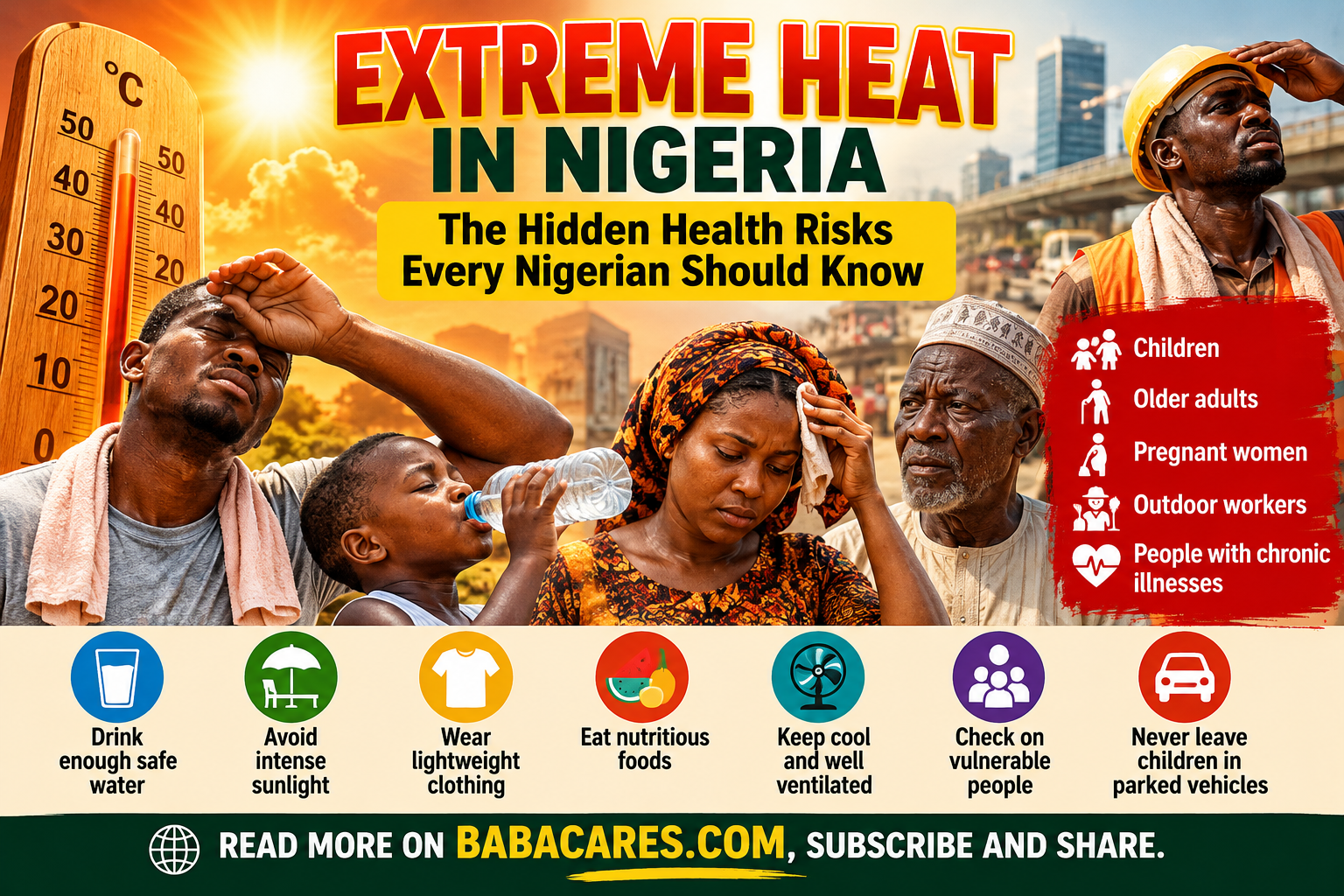
Extreme Heat in Nigeria: The Hidden Health Risks Every Nigerian Should Know.
Extreme heat is more than an uncomfortable weather condition. It is a growing public-health concern that can affect people of all ages, from young children and pregnant women to older adults, traders, farmers, drivers, and outdoor workers.
Across Nigeria, many people spend long hours under the sun, travel in poorly ventilated vehicles, work in open markets, or live in homes with limited access to electricity and cooling systems.
When temperatures become dangerously high, these everyday conditions can increase the risk of dehydration, heat exhaustion, heatstroke, and complications from existing health conditions.
With changing climate patterns and concerns about El Niño, Nigerians need to understand how extreme heat affects the body and what they can do to stay safe.
What Does El Niño Mean for Nigeria?
El Niño is a natural climate phenomenon associated with unusually warm ocean temperatures in parts of the Pacific Ocean. It can influence weather patterns across different regions of the world.
However, El Niño does not automatically mean that every part of Nigeria will experience extreme heat at the same time. Conditions vary by location, season, and other climate factors.
For Nigerians, the important issue is to pay attention to local weather forecasts and heat warnings from the Nigerian Meteorological Agency (NiMet).
How Extreme Heat Affects Human Health
When the body becomes too hot, it attempts to cool itself through sweating and increased blood circulation near the skin.
Prolonged exposure to high temperatures, particularly when combined with dehydration, can overwhelm the body's cooling mechanisms.
This may lead to:
1. Dehydration: Excessive loss of body fluids, causing thirst, dizziness, weakness, headaches, and reduced urination.
2. Heat exhaustion: A condition associated with heavy sweating, nausea, fatigue, dizziness, and sometimes fainting.
3. Heatstroke: A life-threatening medical emergency that may cause confusion, seizures, unconsciousness, and organ damage.
4. Cardiovascular stress: Extreme heat places additional demands on the heart and circulatory system, particularly in people with heart disease or high blood pressure.
5. Kidney problems: Repeated dehydration and heat exposure can contribute to kidney injury, especially among people working long hours in hot environments.
Who Is Most Vulnerable?
Although extreme heat can affect anyone, certain groups face greater risks:
-
Children: Their bodies are less efficient at regulating temperature, and they depend on adults for hydration and protection.
-
Older adults: Aging can reduce the body's ability to regulate heat, while certain medications may increase vulnerability.
-
Pregnant women: High temperatures can increase physiological stress and are associated with some adverse pregnancy outcomes.
-
Outdoor workers: Farmers, construction workers, street traders, traffic officers, and commercial drivers may experience prolonged heat exposure.
-
People with chronic illnesses: Individuals living with diabetes, kidney disease, heart conditions, or respiratory illnesses may experience additional complications.
Warning Signs Nigerians Should Never Ignore
Heat-related illness can develop gradually or suddenly.
Watch for excessive sweating, severe thirst, dizziness, headaches, nausea, weakness, muscle cramps, and unusual fatigue.
Confusion, collapse, seizures, or loss of consciousness during extreme heat are emergency warning signs.
Move the affected person to a cooler place, begin cooling them with water and fanning, and seek emergency medical assistance immediately. Do not force fluids into someone who is confused or unconscious.
How Nigerians Can Protect Themselves
Drink enough safe water. Do not wait until you become extremely thirsty. People who work outdoors may need more frequent fluid intake.
Reduce exposure to intense afternoon heat. Where possible, schedule strenuous activities for cooler periods.
Wear suitable clothing. Lightweight, loose-fitting clothes can help the body release heat.
Improve ventilation and access to cooling. Use shaded areas, fans where effective, and cooler public spaces when available. During very high temperatures, fans alone may not provide sufficient protection.
Eat nutritious meals. Water-rich fruits and vegetables can contribute to hydration, although they do not replace drinking water.
Check on vulnerable people. Children, older adults, pregnant women, and people living alone may need additional support.
Never leave children or vulnerable adults inside parked vehicles. Vehicle interiors can become dangerously hot within minutes.
Government and Employers Also Have Responsibilities
Extreme heat should not be treated solely as an individual responsibility.
Nigeria needs stronger public-health education, reliable weather warnings, safe drinking-water access, and heat-protection measures in schools, workplaces, markets, hospitals, and public transportation.
Employers should provide reasonable rest breaks, drinking water, and shaded or cooled areas for workers exposed to high temperatures.
Schools should ensure that children have access to safe water and that outdoor activities are adjusted during dangerous heat.
Public-health authorities should work with NiMet to communicate localized warnings and practical safety advice in English and Nigerian languages.
Babacares Perspective: Extreme Heat Is a Public-Health Issue
In Nigeria, extreme heat is often regarded as something people must simply endure. But prolonged exposure can have serious consequences, particularly where poverty, overcrowding, unreliable electricity, and limited access to healthcare make protection difficult.
Heat-related illnesses are often preventable when people recognize the risks and act early.
Protecting Nigerians requires personal awareness, community support, responsible employers, and coordinated government action.
As temperatures rise and weather patterns change, the message is simple:
Stay hydrated. Reduce unnecessary heat exposure. Recognize the warning signs. Protect vulnerable people.
Extreme heat should never be allowed to become a silent threat to Nigerian lives.
READ MORE ON BABACARES.COM, SUBSCRIBE AND SHARE.
References
-
World Health Organization — Heat and Health
https://www.who.int/news-room/fact-sheets/detail/climate-change-heat-and-health -
World Meteorological Organization — El Niño and La Niña Updates
https://wmo.int -
Nigerian Meteorological Agency — Weather Forecasts and Climate Information
https://nimet.gov.ng -
World Health Organization — Climate Change and Health
https://www.who.int/health-topics/climate-change
https://www.babacares.com/blog-details?details=1109&title=Extreme+Heat+in+Nigeria%3A+The+Hidden+Health+Risks+Every+Nigerian+Should+Know










Comments