

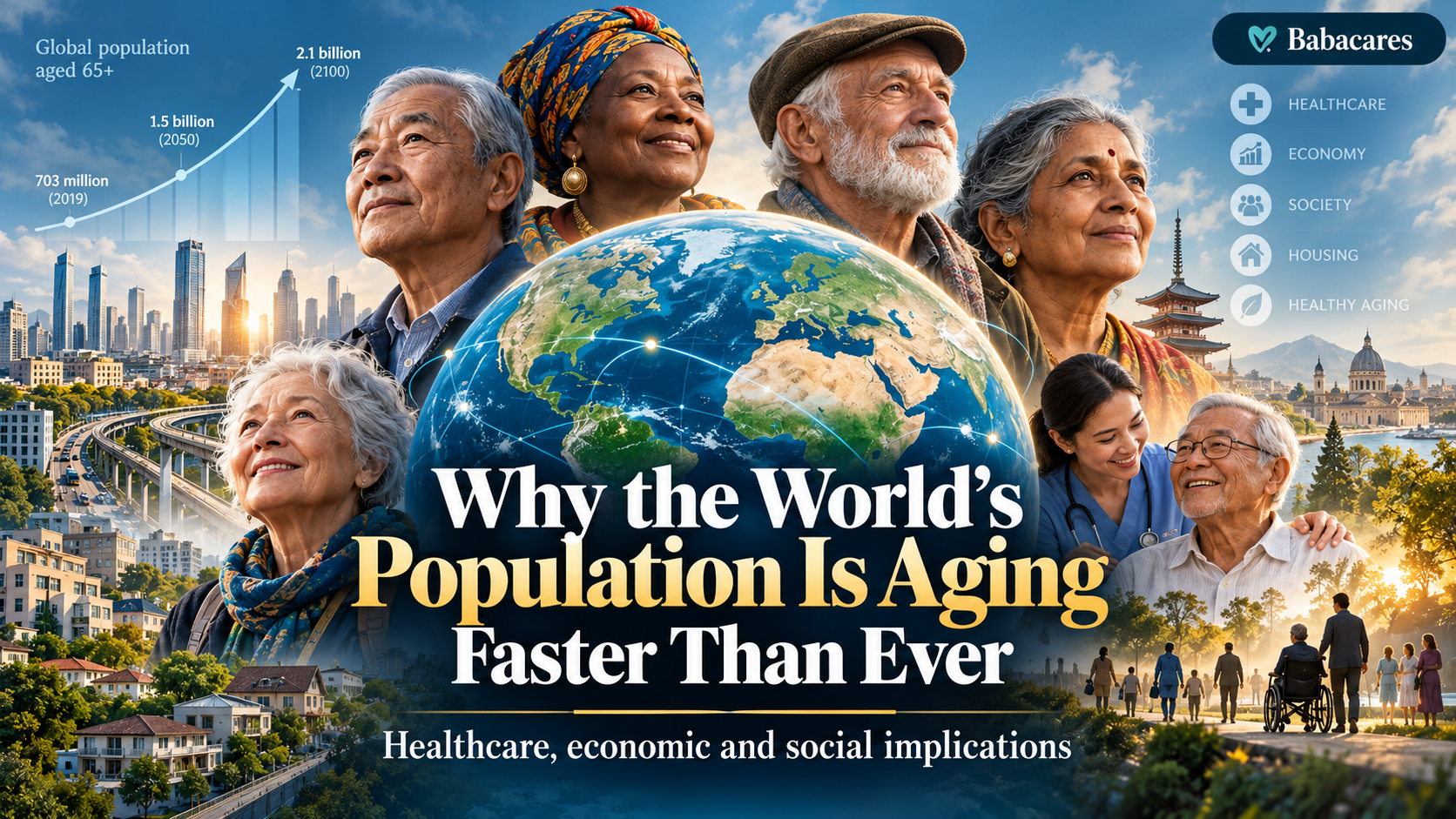
WHY THE WORLD’S POPULATION IS AGING FASTER THAN EVER: THE HEALTHCARE AND ECONOMIC IMPLICATIONS
As people live longer and birth rates decline, countries face growing pressure to improve healthcare, support older adults and prepare for a changing workforce.
The world is growing older at an unprecedented pace, creating major changes in healthcare, economies, employment and family life.
According to the World Health Organization (WHO), by 2030, one in six people worldwide will be aged 60 or older. By 2050, that population is projected to reach 2.1 billion, nearly double its 2020 level.
Why is the world aging?
Two major factors are responsible:
1. Longer life expectancy: Advances in medicine, vaccination, sanitation, nutrition and disease prevention mean more people are surviving into old age.
2. Declining birth rates: Rising living costs, delayed parenthood, urbanization and changing family preferences have contributed to fewer births in many countries.
Japan, Italy, Germany, Portugal and South Korea are among countries where older adults already represent a substantial proportion of the population.
Canada reaches a significant milestone
According to Statistics Canada, people aged 65 and older accounted for approximately 20% of Canada's population in July 2026, reflecting the country's growing need for elder care and age-friendly services.
This development places increasing importance on home care, long-term care, rehabilitation and personal support workers (PSWs).
Healthcare systems face growing pressure
As populations age, demand is likely to increase for services addressing diabetes, arthritis, dementia, cardiovascular diseases and mobility challenges.
However, aging does not automatically mean illness or dependence. Many older adults remain healthy, active and productive.
The priority should be healthy aging — helping people maintain independence, dignity and quality of life for as long as possible.
The economic and family challenges
Population aging also places pressure on pension systems, healthcare funding and labour markets.
Meanwhile, smaller families, migration and rising living costs make it increasingly difficult for relatives to provide care for aging parents.
Governments must strengthen community healthcare, support caregivers and develop sustainable retirement policies.
What about Nigeria and Africa?
Although Nigeria has a relatively young population, it must prepare for an increase in older adults.
Limited access to geriatric healthcare, inadequate pension coverage and heavy reliance on family caregivers could create serious challenges.
Investment in preventive healthcare, community-based elder care and social protection should begin now.
Aging also creates opportunities
An older population is not necessarily a burden.
Older adults contribute valuable knowledge, experience and skills. Population aging can also stimulate investment in healthcare innovation, assistive technology, accessible housing and the growing silver economy.
The Babacares perspective
The real challenge is not that people are living longer, but whether societies are prepared to support them.
Governments must invest in preventive healthcare, strengthen home and community care, support frontline caregivers and create environments where older adults can live safely and independently.
Aging is inevitable, but an aging crisis is not.
The ultimate goal should not simply be to add years to life, but to add health, dignity, security and purpose to those years.
READ MORE ON BABACARES.COM, SUBSCRIBE AND SHARE.
References
https://www.babacares.com/blog-details?details=1105&title=WHY+THE+WORLD%E2%80%99S+POPULATION+IS+AGING+FASTER+THAN+EVER%3A+THE+HEALTHCARE+AND+ECONOMIC+IMPLICATIONS










Comments