

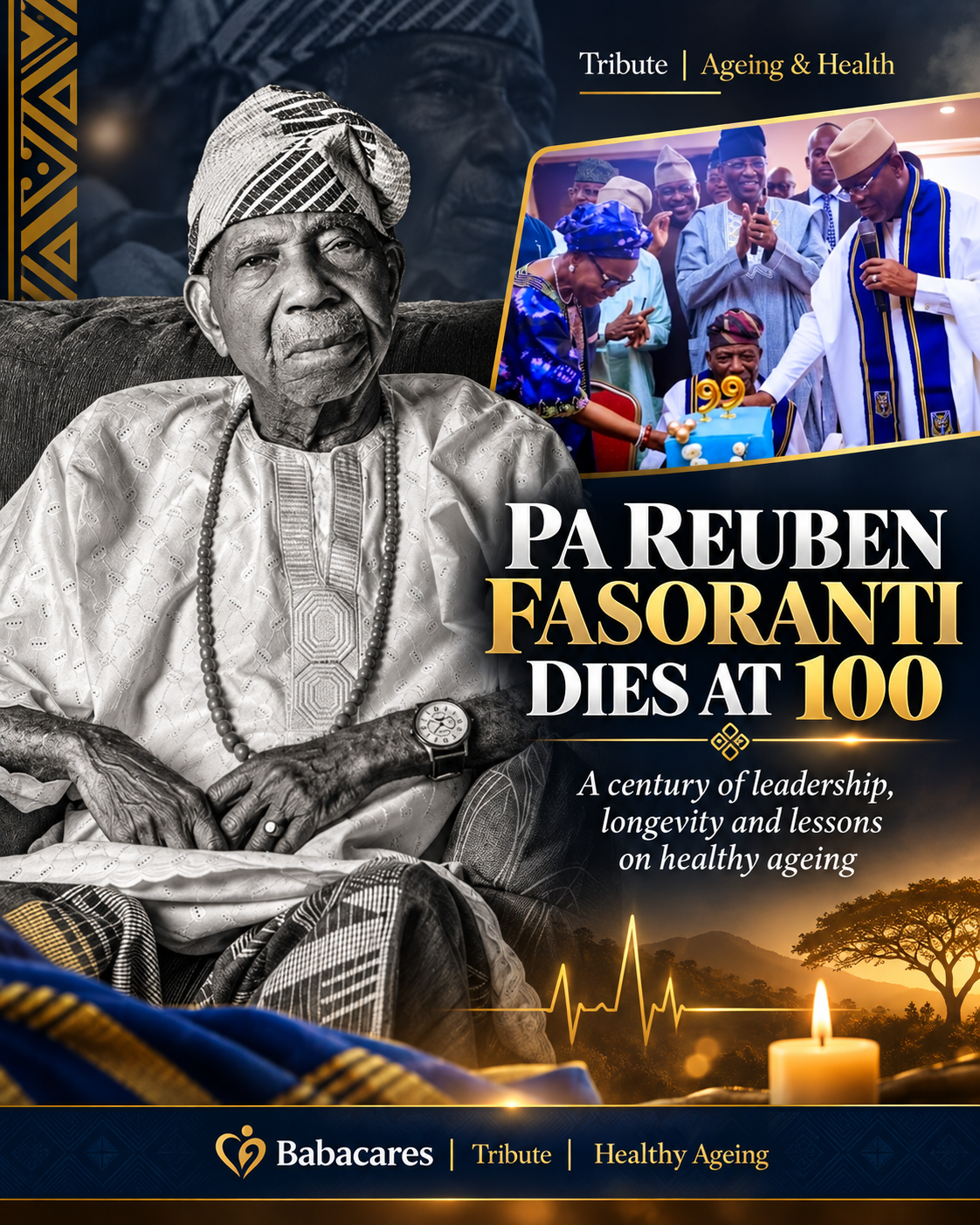
Pa Reuben Fasoranti Dies at 100: A Century of Leadership, Longevity and Lessons on Healthy Ageing
As Nigeria mourns the revered Afenifere leader, his passing offers an opportunity to reflect on longevity, the dignity of older persons and the importance of building a society where people can age with quality healthcare, respect and purpose.
What does it truly mean to live for 100 years? Is longevity simply about surviving many decades, or about living those years with dignity, purpose and meaningful contributions to society?
These questions come into focus following the passing of Pa Reuben Famuyide Fasoranti, the revered national leader of Afenifere, who died on Tuesday, October 20, 2026, at the remarkable age of 100.
His death was announced by Ondo State Governor Lucky Aiyedatiwa, who described the elder statesman as a man of wisdom, integrity and exceptional commitment to the development of Ondo State, Yorubaland and Nigeria.
For Babacares, his passing is more than the loss of an influential political figure. It provides an important opportunity to examine ageing, longevity, healthcare for older adults and how society treats its elderly population.
A CENTURY OF LEADERSHIP AND PUBLIC SERVICE
Born on May 11, 1926, Pa Fasoranti lived through some of the most defining periods in Nigeria's history, from colonial rule to independence, military administrations and democratic transitions.
An educationist before becoming a political leader, he devoted much of his early professional life to teaching and school administration.
He later served as Commissioner for Finance in the old Ondo State under Governor Michael Adekunle Ajasin between 1979 and 1983.
As a prominent leader of Afenifere, he continued to participate in national discussions on democracy, governance, federalism and the political future of Nigeria.
Governor Aiyedatiwa paid tribute to his contributions to public life, particularly his commitment to justice, principled leadership and the advancement of his community.
His century-long life reminds us that older people can remain valuable sources of knowledge, history and experience across generations.
LIVING TO 100: WHAT DOES SCIENCE SAY ABOUT HEALTHY AGEING?
Reaching 100 is an extraordinary milestone, but living longer does not necessarily mean living healthier.
According to the World Health Organization (WHO), healthy ageing involves maintaining the physical and mental abilities that allow older people to live meaningful lives.
This includes the ability to move around safely, make decisions, maintain relationships, meet personal needs and participate in community life.
Longevity is influenced by several factors, including genetics, lifestyle, environmental conditions, access to healthcare and social support.
Importantly, Babacares has not established Pa Fasoranti's personal medical history or the specific factors responsible for his longevity. His age should therefore not be presented as evidence of any particular diet, treatment or lifestyle practice.
Nevertheless, his remarkable lifespan provides an opportunity to discuss the broader science of ageing.
FIVE IMPORTANT LESSONS ABOUT HEALTHY AGEING
1. Regular healthcare becomes increasingly important
As people grow older, they may face increased risks of hypertension, diabetes, cardiovascular disease, reduced mobility and other chronic conditions.
Regular medical assessments, appropriate screening, medication reviews and early treatment can help older adults maintain their health and independence.
2. Nutrition matters throughout life
Balanced meals containing vegetables, fruits, adequate protein, whole grains and other nutritious foods support health in older age.
Good nutrition can help preserve muscle strength, support immune function and reduce the risk of malnutrition.
3. Physical activity helps maintain independence
Age-appropriate physical activity, including walking, balance exercises and strength-building activities, can help older adults maintain mobility and reduce their risk of falls.
Activities should be adapted to each person's abilities and medical circumstances.
4. Social relationships support mental and emotional wellbeing
Family involvement, friendships and meaningful social interactions can help reduce loneliness and isolation.
WHO recognizes loneliness and social isolation as important public-health concerns affecting older adults.
5. Purpose and community participation matter
Retirement or advanced age should not automatically mean withdrawal from society.
Older people may continue contributing through mentorship, family relationships, volunteering, cultural leadership and community activities.
Maintaining opportunities for participation can support dignity, independence and wellbeing.
NIGERIA MUST PREPARE FOR AN AGEING POPULATION
Pa Fasoranti's passing also raises a question that deserves greater national attention:
Is Nigeria doing enough to support people who live into their seventies, eighties, nineties and beyond?
Many older Nigerians face challenges accessing affordable healthcare, medications, reliable pensions, suitable housing and long-term care.
For those living in rural communities, transportation difficulties and limited access to specialist services may create additional obstacles.
Families often provide much of the support older relatives need, but caregivers themselves may experience emotional, physical and financial pressures.
Nigeria needs stronger age-friendly primary healthcare services, community-based support, affordable treatment for chronic conditions, rehabilitation services and appropriate long-term care.
Healthy ageing should not be a privilege available only to wealthy families.
THE GLOBAL AGEING CHALLENGE
According to the WHO, the number of people aged 60 and older worldwide is projected to reach approximately 2.1 billion by 2050.
The organization also projects that about 80% of older people will live in low- and middle-income countries by that year.
This means that countries such as Nigeria must prepare for increasing demand for healthcare, social support, accessible housing and services that allow older people to maintain independence.
The challenge is not simply helping people live longer.
It is helping them live better throughout those additional years.
BABACARES PERSPECTIVE: CELEBRATE THE ELDERLY WHILE THEY ARE ALIVE
In many Nigerian communities, elderly people are celebrated during birthdays and remembered with elaborate tributes after death.
But genuine respect must go beyond ceremonies and public praise.
It should include regular healthcare, protection against neglect and abuse, emotional companionship, financial security and opportunities to remain involved in family and community life.
Our parents and grandparents deserve attention, not only when they become ill or reach extraordinary ages.
A society that values its elderly must demonstrate that respect through practical care and supportive policies.
CONCLUSION: BEYOND 100 YEARS, A LEGACY OF SERVICE
The passing of Pa Reuben Famuyide Fasoranti marks the end of a remarkable chapter in Nigeria's political and social history.
His contributions to education, public administration and Yoruba socio-political leadership will remain part of his legacy.
But his passing also reminds us of a responsibility shared by individuals, families, healthcare professionals and governments: to ensure that ageing is accompanied by dignity, compassion and appropriate support.
Living to 100 is remarkable. Living with dignity, purpose and access to quality care should be the aspiration for everyone, regardless of how many years they live.
Babacares extends heartfelt condolences to the Fasoranti family, the people of Ondo State, Afenifere and Nigerians mourning this elder statesman.
PA REUBEN FAMUYIDE FASORANTI (1926–2026)
May his soul rest in peace.
READ MORE ON BABACARES.COM, SUBSCRIBE AND SHARE.
References
-
Punch Newspapers — Afenifere Leader Reuben Fasoranti Dies at 100. October 20, 2026.
Punch Newspapers
-
Premium Times — Afenifere Leader Dies at 100.
Premium Times Nigeria
-
World Health Organization — Ageing and Health. Evidence on population ageing and healthy living.
World Health Organization
-
WHO — Healthy Ageing and Functional Ability.
World Health Organization
-
WHO — Reducing Social Isolation and Loneliness Among Older People.
World Health Organization
-
WHO Guidelines on Physical Activity and Sedentary Behaviour.
NCBI Bookshelf
Editorial clarification: Pa Fasoranti's reported death at 100 has been confirmed through the Ondo State governor's announcement and Nigerian news reporting. The discussion of healthy ageing is based on WHO guidance and general public-health evidence, not on claims about his individual health, medical conditions or cause of death.
https://www.babacares.com/blog-details?details=1092&title=Pa+Reuben+Fasoranti+Dies+at+100%3A+A+Century+of+Leadership%2C+Longevity+and+Lessons+on+Healthy+Ageing









Comments