

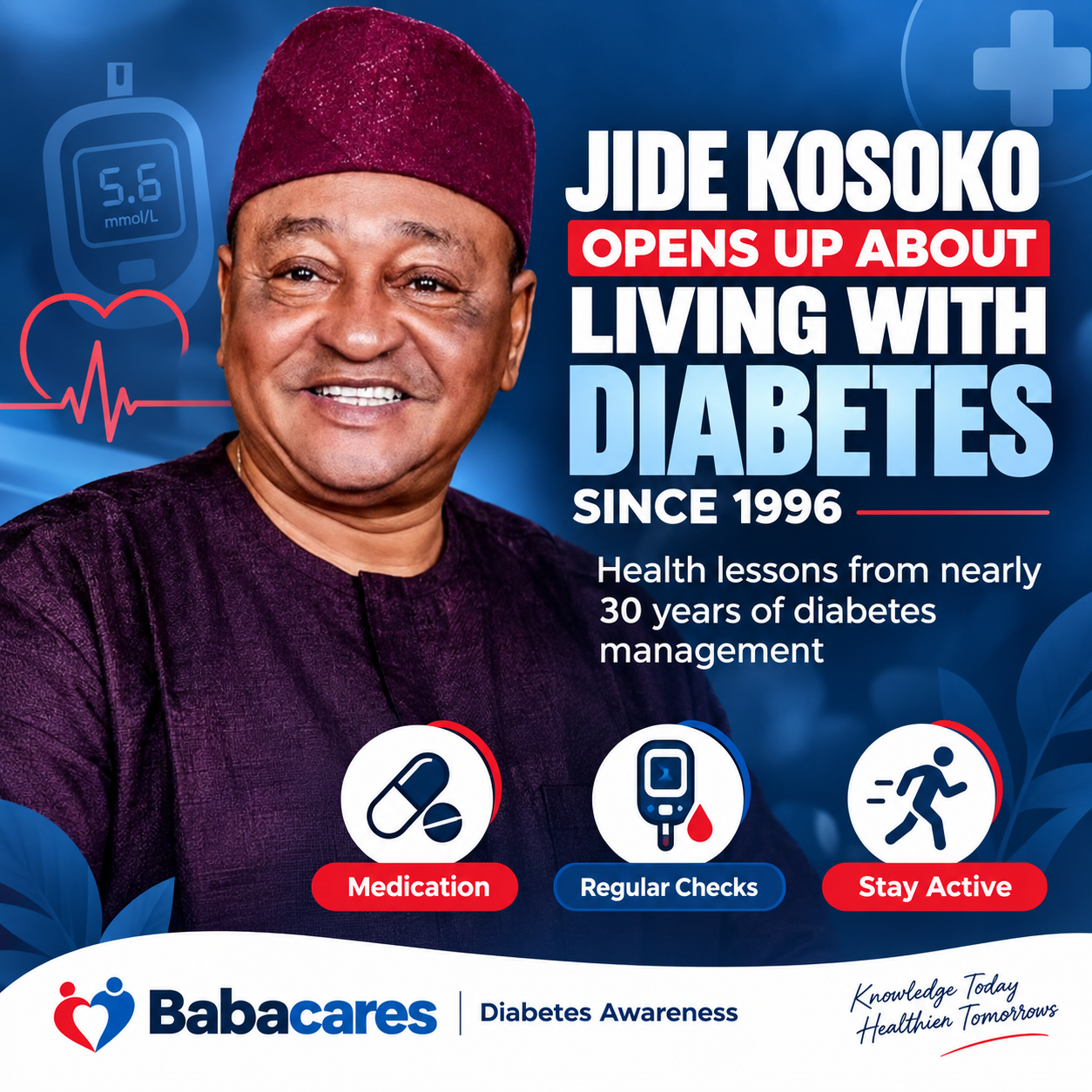
JIDE KOSOKO REVEALS 30-YEAR BATTLE WITH DIABETES: HOW HE HAS MANAGED THE CONDITION SINCE 1996
BABACARES | DIABETES AWARENESS, PREVENTIVE HEALTHCARE & HEALTHY AGING
October 18, 2026
Imagine living with diabetes for 30 years while maintaining a career in one of Africa's most demanding entertainment industries.
For many Nigerians, a diagnosis of diabetes brings fear, uncertainty, and questions about the future.
Can I still live a fulfilling life? Will I develop complications? How do I manage this condition for decades?
Veteran Nollywood actor Jide Kosoko has offered a personal perspective on these questions after revealing that he has been living with diabetes since 1996.
At 72, the respected actor says his experience has taught him to pay close attention to his health, understand his body's signals, and take his condition seriously.
His disclosure provides an opportunity to discuss a crucial public health message: Diabetes is a serious chronic condition, but with appropriate treatment, monitoring, and support, many people can live long and productive lives.
What Jide Kosoko actually said
In an interview reported by Punch on October 18, 2026, Kosoko disclosed that he had been diabetic since 1996.
Reflecting on how familiar he has become with his condition, he said:
“I became diabetic in 1996; I understand my health better than some doctors do.”
He immediately clarified that he was not claiming complete medical expertise, but emphasizing his determination to understand and manage his health.
His statement is significant because it highlights the importance of patients becoming active participants in their healthcare.
However, personal experience should complement—not replace—professional medical advice.
How has Kosoko managed diabetes for three decades?
According to Premium Times, which reported additional excerpts from his interview on actress Biola Adebayo's Talk To B podcast, Kosoko discussed several approaches to managing his health.
1. He pays attention to his body
Kosoko explained that living with diabetes for many years has made him more conscious of changes in how he feels.
He described recognizing when he might need rest or attention to his blood sugar.
This kind of self-awareness can help people identify possible problems early.
However, symptoms alone cannot reliably determine blood glucose levels. Regular monitoring is essential, especially for people at risk of hypoglycaemia, or low blood sugar.
2. He takes medication seriously
The actor referred to using medication as part of managing his diabetes.
This is important because diabetes treatment frequently requires a combination of healthy lifestyle practices and prescribed medication.
His exact medicines, doses, treatment schedule, and current glucose measurements have not been publicly established in the reviewed reports.
3. He values regular medical tests
Kosoko emphasized the importance of medical testing and understanding one's health.
Diabetes can gradually damage blood vessels and organs, sometimes before noticeable symptoms develop.
Regular checkups help healthcare professionals identify problems earlier and adjust treatment where necessary.
4. He stays active
Kosoko credited his daily activities with helping him maintain his health.
Physical activity can improve blood glucose management, cardiovascular fitness, physical functioning, and overall well-being.
However, the appropriate level of exercise should reflect each person's age, health, medication, and risk of complications.
5. He is cautious about claims that herbal remedies can cure diabetes
Perhaps one of the most important lessons from his interview is his rejection of claims that herbal products can simply cure the condition.
This is particularly relevant in Nigeria, where some individuals may abandon prescribed treatment in favour of unproven remedies.
There is no reliable evidence that an advertised herbal mixture can universally cure diabetes.
Some herbal products may also interact with diabetes medications or cause harmful effects.
Kosoko's reported comments underscore the importance of evidence-based treatment and informed self-management.
What exactly is diabetes?
Diabetes is a chronic condition in which the body cannot adequately regulate blood glucose, commonly called blood sugar.
This may happen because the pancreas produces insufficient insulin or because the body cannot use insulin effectively.
The two main types are:
Type 1 diabetes: An autoimmune condition in which the body produces little or no insulin. People with type 1 diabetes require insulin treatment.
Type 2 diabetes: A condition in which the body becomes resistant to insulin and may gradually produce insufficient amounts. It is the most common form of diabetes.
The available reports do not specify which type Kosoko has. We should therefore avoid assuming his diagnosis or treatment requirements.
According to the World Health Organization, approximately 830 million people worldwide were living with diabetes in 2022, compared with 200 million in 1990.
Why diabetes management matters
Poorly controlled diabetes can lead to serious complications, including heart disease, stroke, kidney disease, vision loss, nerve damage, and foot ulcers.
However, appropriate blood glucose management, blood pressure control, treatment adherence, and regular screening can substantially reduce these risks.
The World Health Organization emphasizes that effective diabetes care requires continuous monitoring, appropriate medication where necessary, and long-term healthcare follow-up.
Seven practical lessons for Nigerians living with diabetes
Kosoko's experience provides an opportunity to remind Nigerians about the importance of long-term diabetes management.
1. Monitor your blood sugar. Follow your healthcare professional's advice on home monitoring and HbA1c tests, which reflect average blood glucose over approximately two to three months.
2. Take prescribed medication consistently. Do not stop or adjust treatment without medical guidance, even when you feel well.
3. Eat balanced meals. Beans, vegetables, whole grains, and other nutritious foods can form part of a diabetes-friendly Nigerian diet. Portion sizes, carbohydrates, and individual needs matter.
4. Stay physically active. Walking, dancing, and suitable strengthening exercises can help manage blood glucose and cardiovascular health.
5. Attend regular medical appointments. These should include appropriate monitoring for eye, kidney, nerve, and foot complications.
6. Learn to recognize low blood sugar. Sweating, shakiness, hunger, confusion, or unusual weakness may indicate hypoglycaemia. Confirm with a glucose test when possible and follow an individualized treatment plan.
7. Be cautious about miracle cures. Seek evidence-based healthcare and discuss supplements or herbal products with qualified professionals.
These principles are consistent with guidance from WHO and Diabetes Canada.
Kosoko's additional message about medical screening
Beyond diabetes, the actor reportedly discussed undergoing investigations intended to detect possible cancer.
He also spoke about the emotional concerns associated with medical procedures involving sedation.
Reports indicate that he has considered establishing a foundation to help colleagues who cannot afford important medical tests.
This raises another important issue for Nigeria's entertainment industry.
Actors, musicians, broadcasters, and other creative professionals often work irregular schedules, travel extensively, and face demanding professional expectations.
Accessible medical screening, health insurance, preventive care, and appropriate follow-up services are important for professionals in every industry.
The Babacares perspective: Living with diabetes is not the end of life
As a healthcare professional, I find Kosoko's public disclosure particularly important.
Too often, Nigerians associate diabetes with inevitable deterioration or death.
That perception can create unnecessary fear and sometimes discourage people from seeking timely diagnosis.
Kosoko's reported experience demonstrates that diabetes management can continue over many decades.
But an important distinction must be made.
His continued professional activity does not prove that he has no diabetes-related complications, nor does it establish that a particular treatment works for everyone.
What we can learn from his statements is the value of staying informed, participating actively in medical care, taking prescribed treatment seriously, and avoiding unsupported health claims.
In Nigeria, many people struggle to afford medication, glucose-testing supplies, laboratory investigations, and regular medical appointments.
For that reason, diabetes prevention and management must also become a stronger public health priority.
Education alone is not enough if people cannot access the healthcare they need.
Final thoughts: Thirty years of living with diabetes
Jide Kosoko's disclosure deserves attention not because diabetes has disappeared from his life, but because he has spoken openly about managing a chronic condition over approximately three decades.
His story presents a valuable opportunity to educate Nigerians about diabetes, challenge misinformation, and encourage preventive healthcare.
At Babacares, our message is simple:
A diagnosis of diabetes should lead to informed action, appropriate treatment, and ongoing support—not hopelessness.
Know your blood sugar.
Understand your condition.
Follow professional medical advice.
Take your medication as prescribed.
And never gamble with your health because someone promises an instant cure.
Living longer matters. Living healthier, with dignity and purpose, matters just as much.
Babacares — Promoting Healthy Aging, Preventive Healthcare and Better Living.
References
-
Punch — I've been diabetic since 1996, Jide Kosoko. October 18, 2026. Primary report of his disclosure.
-
Premium Times — How I've managed diabetes for 30 years, Jide Kosoko. October 18, 2026. Additional comments on medication, personal awareness, medical testing, and herbal remedies.
-
The Guardian Nigeria — I've been diabetic since 1996, Jide Kosoko. October 18, 2026.
-
World Health Organization — Diabetes: Questions and Answers. September 1, 2026.
-
Diabetes Canada — Medication Management. Information about safe and consistent diabetes treatment.
Editorial clarification: The sources report comments from African A-List and Talk To B interview excerpts. They do not establish that both reports came from the same recording. The clinical guidance in this article is general medical information, not a disclosure of Kosoko's private treatment records.
https://www.babacares.com/blog-details?details=1082&title=JIDE+KOSOKO+REVEALS+30-YEAR+BATTLE+WITH+DIABETES%3A+HOW+HE+HAS+MANAGED+THE+CONDITION+SINCE+1996











Comments