

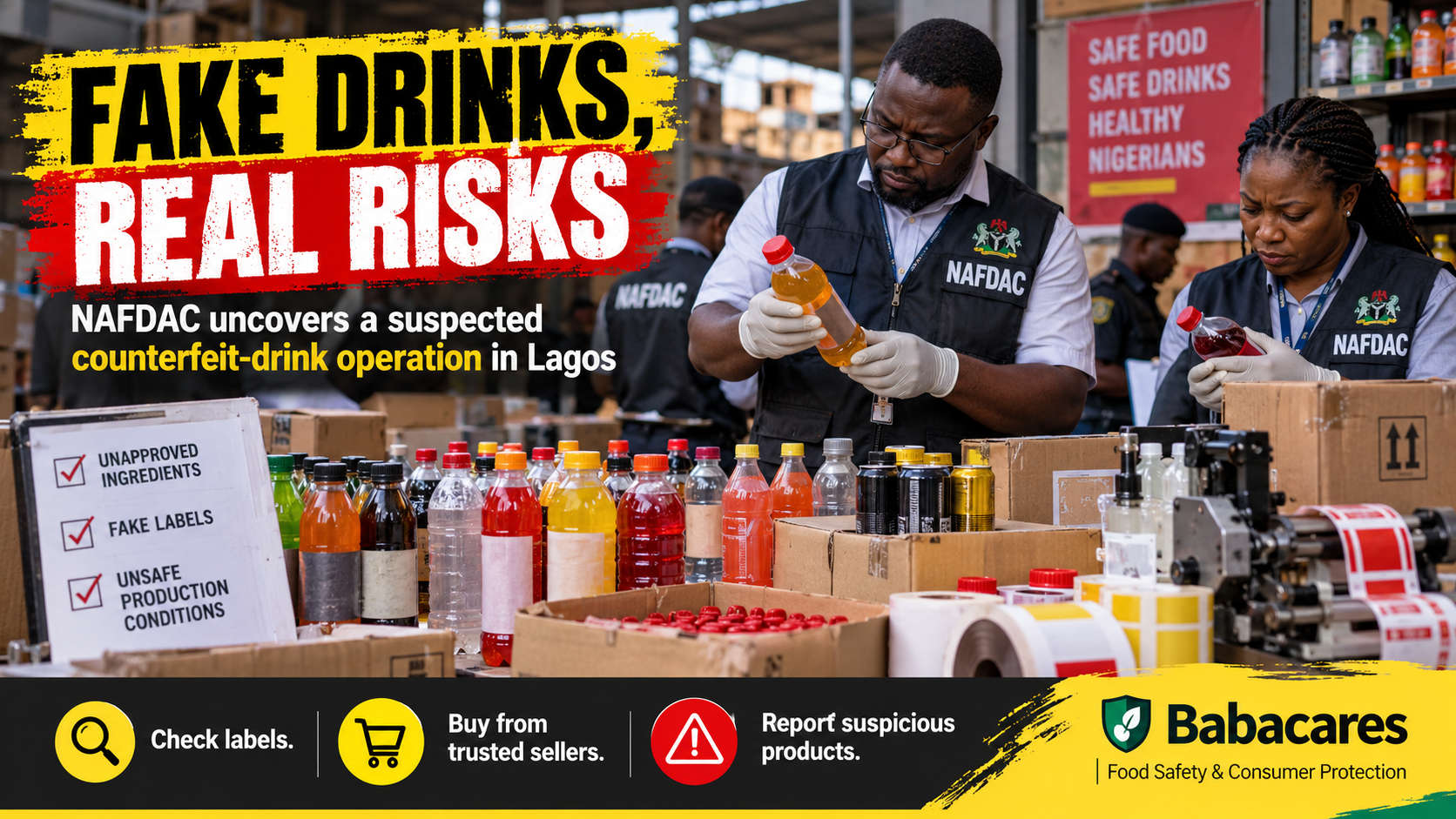
NAFDAC UNCOVERS SUSPECTED FAKE-DRINK OPERATION IN LAGOS: THE HIDDEN HEALTH RISKS FOR NIGERIAN CONSUMERS
Babacares | Food Safety, Consumer Protection and Public Health
What if the expensive whisky, energy drink or wine you purchased was not what its label claimed?
Imagine buying a familiar beverage from a shop or supermarket, believing it is genuine, only to discover that its packaging has been tampered with or its expiry information altered.
This is the concern raised by a recent enforcement operation by Nigeria's National Agency for Food and Drug Administration and Control (NAFDAC).
On October 13, 2026, NAFDAC announced the discovery of a suspected counterfeit beverage operation at Zamfara Plaza, BBA Trade Fair Complex, Lagos State.
According to the agency, suspects were allegedly involved in changing expiry labels and repackaging beverages to make them appear suitable for sale.
Two suspects were arrested during the operation.
WHAT DID NAFDAC DISCOVER?
Reports from Punch and other Nigerian media outlets indicated that NAFDAC officers discovered suspected counterfeit and relabelled beverages, including energy drinks, whisky and tequila.
Investigators reportedly encountered bottles, packaging materials, labels and other items associated with the suspected operation.
Subsequent reports described a wider enforcement exercise involving more than 20 illegal stores and products reportedly valued at over ₦2 billion.
These findings remain allegations and reported enforcement discoveries. The arrests do not establish the criminal guilt of those involved.
WHY THIS IS A PUBLIC HEALTH CONCERN
As a healthcare professional, I am particularly concerned about the potential health consequences of counterfeit and improperly handled beverages.
Consumers may face risks associated with:
-
Undisclosed or contaminated ingredients.
-
Unsafe storage and handling conditions.
-
Altered expiry dates.
-
Unknown alcohol concentrations.
-
Toxic substances in improperly manufactured alcoholic beverages.
For example, methanol contamination in alcoholic drinks can cause serious poisoning, including visual impairment, organ damage and death.
However, there is no basis to conclude that methanol was found in the drinks seized during this particular operation without laboratory confirmation.
WHAT SHOULD CONSUMERS LOOK OUT FOR?
Consumers should take precautions when purchasing beverages.
Check packaging carefully for signs of tampering, unusual seals, suspicious labels and altered expiry dates.
Buy from reputable retailers and be cautious when branded drinks are offered at unusually low prices.
Importantly, counterfeit products can sometimes appear convincing. Visual inspection alone cannot establish that a beverage is genuine or safe.
Anyone who becomes seriously unwell after consuming a suspicious beverage should seek urgent medical attention.
THE BABACARES PERSPECTIVE
Counterfeit beverages are not simply a commercial problem.
They represent a potential threat to consumer health and confidence in Nigeria's food and beverage supply chain.
NAFDAC's enforcement activities are important, but lasting protection requires effective market surveillance, independent laboratory testing, responsible retail practices and public awareness.
Manufacturers must also strengthen product authentication systems to help consumers distinguish genuine products from counterfeits.
No Nigerian should have to gamble with their health simply because they purchased a familiar beverage.
The contents of a bottle should match what its label promises.
Consumers deserve safety, transparency and accountability.
Stay informed. Check what you buy. Report suspicious products.
Babacares — Protecting Health Through Awareness, Education and Accountability.
REFERENCES
1. Punch Newspapers. (October 13, 2026). VIDEO: NAFDAC uncovers fake drinks factory in Lagos, arrests two.
https://punchng.com/video-nafdac-uncovers-fake-drinks-factory-in-lagos-arrests-two/
2. Channels Television. (October 14, 2026). Report on NAFDAC's enforcement operation involving suspected counterfeit alcoholic beverages at the Lagos Trade Fair Complex.
3. National Agency for Food and Drug Administration and Control (NAFDAC). Official agency website, safety alerts and public information.
4. World Health Organization (WHO). Information on methanol poisoning, food safety and the health risks associated with unsafe alcoholic beverages.






Comments