

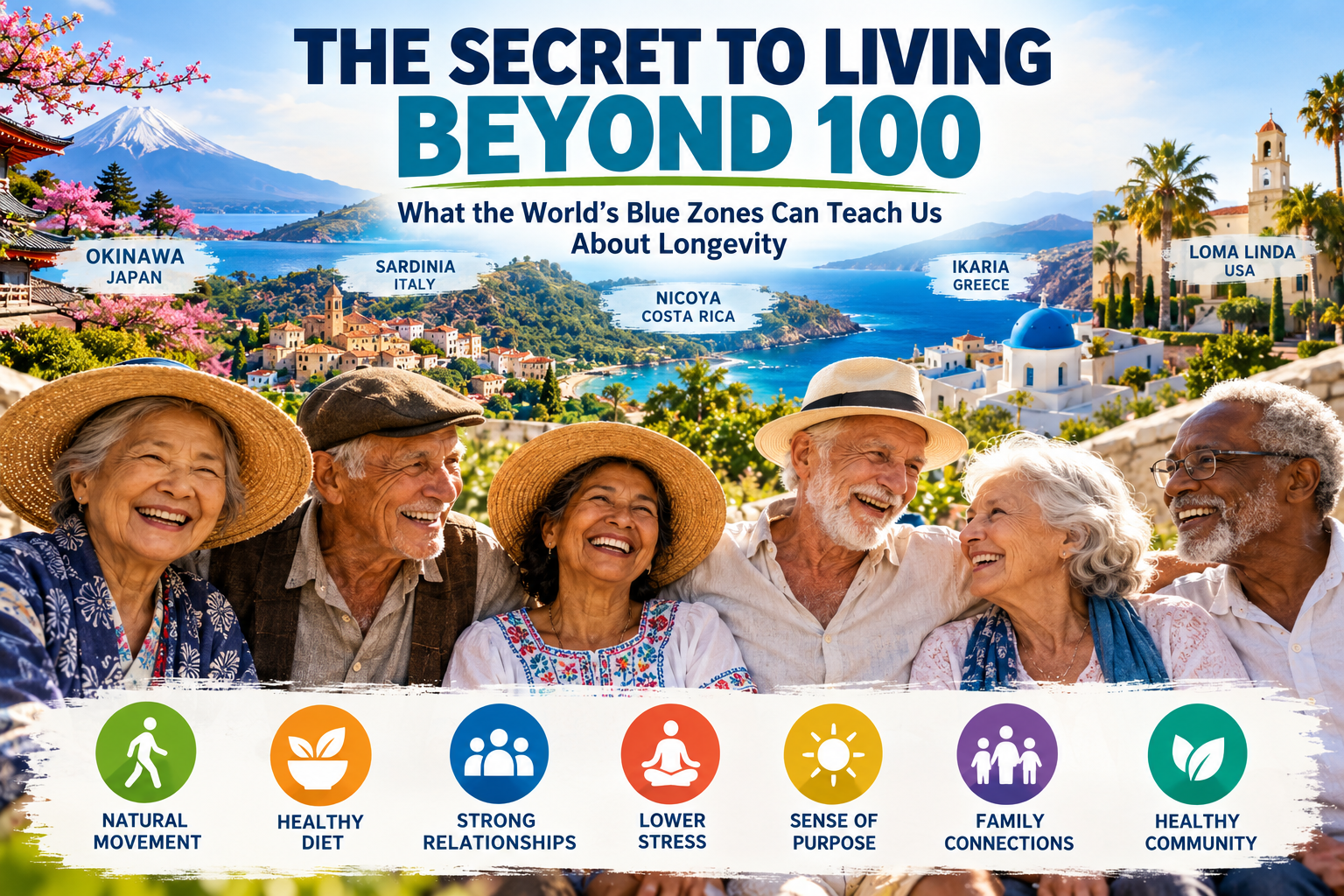
THE SECRET TO LIVING BEYOND 100: WHAT THE WORLD’S BLUE ZONES CAN TEACH US ABOUT LONGEVITY
By Babajide Moronfolu | Healthcare Professional, Author & Babacares
Why do some people live into their 90s and beyond 100, remaining mentally sharp, physically active, and enjoying life, while others begin struggling with serious health challenges much earlier?
As a healthcare professional, this is one question I have asked myself repeatedly over the years.
What makes the difference? Is it genetics, lifestyle, nutrition, environment, access to healthcare, or something science is still trying to understand?
I have encountered older people whose strength, alertness, independence, and enthusiasm for life make you almost forget their age. Yet I have also seen people much younger struggle with chronic illnesses, memory problems, and declining physical health.
These contrasting experiences have always fascinated me.
In fact, my curiosity about aging, combined with my passion for helping people live healthier and more fulfilling lives, was among the motivations that inspired me to write my book, AGELESS LIVING: Unlock the Secrets to Staying Young as You Grow, now available through Amazon searches and other international book platforms.
In this book, I explore practical ways of maintaining physical health, mental well-being, emotional resilience, vitality, and purpose as we grow older.
But my curiosity did not end with publishing the book.
I continued asking myself why certain communities around the world appear to have unusually high numbers of people living into their 90s and beyond 100.
That curiosity brought me to a fascinating concept known as BLUE ZONES.
I have decided to share this article because I believe the knowledge of healthy aging should not be reserved for scientists or healthcare professionals alone.
It is something every individual, family, and community deserves to understand.
And perhaps, after reading this article, you may be encouraged to explore my book Ageless Living to discover more about the choices that can help us age with vitality, dignity, and purpose.
WHAT EXACTLY ARE BLUE ZONES?
Blue Zones are geographic regions associated with unusually high concentrations of people living to advanced ages, particularly 90 and 100 years and beyond.
The concept was popularized by longevity researcher Dan Buettner through work associated with National Geographic and demographic researchers.
Researchers have examined the dietary habits, physical activities, family relationships, social environments, and cultural traditions of people living in these communities.
Their findings suggest that longevity may be influenced by a combination of genetics, lifestyle, environment, and social support.
The traditional Blue Zones framework identifies five communities that have attracted international attention.
THE FIVE FAMOUS BLUE ZONES
1. OKINAWA, JAPAN — THE POWER OF PURPOSE AND CONNECTION
Okinawa has historically been associated with exceptional longevity, particularly among older women.
Traditional Okinawan diets include sweet potatoes, vegetables, legumes, and soy-based foods.
Many older residents also maintain strong social networks, including friendship groups known as moai.
Another important cultural concept is ikigai, which describes having a reason or purpose for living.
The lesson: Maintaining meaningful relationships, eating nutritious foods, and having a sense of purpose may support healthier aging.
2. SARDINIA, ITALY — MOVEMENT AND FAMILY BONDS
Certain mountainous communities in Sardinia are known for exceptional longevity, including among men.
Traditionally, many residents remained physically active through farming, walking, and everyday household activities.
Family relationships, community participation, and diets containing vegetables, legumes, and whole grains are also important features.
The lesson: Physical activity does not always require expensive gym memberships. Incorporating movement into daily life can make a meaningful difference.
3. NICOYA PENINSULA, COSTA RICA — SIMPLE LIVING AND HEALTHY FOOD
The Nicoya Peninsula has attracted attention for its history of exceptional longevity.
Traditional meals often include beans, corn, squash, and fruits.
Older residents may continue participating in family activities, household responsibilities, and community life.
The cultural idea of plan de vida reflects having a meaningful reason to live.
The lesson: Simple nutritious meals, daily movement, and supportive relationships can contribute to a healthier lifestyle.
4. IKARIA, GREECE — REST, NUTRITION AND COMMUNITY
Ikaria is a Greek island associated with an unusual number of long-lived residents.
Traditional lifestyles include Mediterranean dietary patterns featuring vegetables, legumes, olive oil, and other minimally processed foods.
Community gatherings, social relationships, walking, and periods of rest also feature in descriptions of life on the island.
The lesson: Healthy nutrition, social connection, movement, and adequate rest are valuable components of healthy aging.
5. LOMA LINDA, CALIFORNIA — FAITH AND HEALTHY HABITS
Loma Linda is associated with longevity research involving Seventh-day Adventists.
Many members of this community emphasize plant-focused diets, regular physical activity, abstinence from smoking, and strong religious and community relationships.
Observing a weekly day of rest is another common practice.
The lesson: Consistent healthy behaviors, preventive healthcare, rest, and strong social networks can support long-term well-being.
Scientific note: These are the five communities in the popular Blue Zones model. Demographic research uses stricter age-validation criteria, and more recent research has also identified Martinique as an emerging Blue Zone. The longevity evidence does not establish that every traditional habit directly causes people to live longer.
NINE LESSONS WE CAN LEARN FROM BLUE ZONES
Researchers and Blue Zones advocates have identified several recurring lifestyle patterns, popularly described as the Power 9.
Although these practices cannot guarantee exceptional longevity, many align with established healthy-aging recommendations.
1. MOVE NATURALLY
Walking, gardening, climbing stairs, cooking, and household activities keep the body moving.
Regular physical activity supports cardiovascular health, mobility, muscle strength, and balance.
2. LIVE WITH PURPOSE
Whether through family responsibilities, mentorship, volunteering, work, faith, or community service, having meaningful goals can support emotional well-being.
3. MANAGE STRESS
Chronic stress can negatively affect physical and mental health.
Prayer, meditation, social interaction, relaxation, and adequate rest are examples of healthy coping practices.
4. EAT MINDFULLY
Traditional Okinawan culture includes the concept of hara hachi bu, commonly interpreted as stopping eating before becoming completely full.
The wider lesson is to avoid habitual overeating and pay attention to portion sizes.
5. EAT MORE PLANT-BASED FOODS
Vegetables, fruits, beans, whole grains, nuts, and legumes are important components of nutritious eating patterns.
6. AVOID HARMFUL ALCOHOL USE
Although some Blue Zone communities traditionally consume wine, alcohol is not necessary for longevity.
People who do not drink should not begin drinking for supposed health benefits.
7. BELONG TO A SUPPORTIVE COMMUNITY
Religious, spiritual, cultural, and community organizations can provide companionship, emotional support, and a sense of belonging.
8. VALUE FAMILY CONNECTIONS
Regular contact between generations can strengthen relationships and help older adults feel supported and included.
9. BUILD HEALTHY SOCIAL CIRCLES
The people around us can influence our habits, attitudes, and overall well-being.
Having friends who encourage healthy living can be a valuable source of support.
WHAT DOES SCIENCE REALLY SAY ABOUT BLUE ZONES?
While the Blue Zones concept offers valuable lessons, it is important to distinguish scientific evidence from popular longevity claims.
Researchers have raised questions about the accuracy of some historical records used to establish extreme ages in certain populations.
Other demographic scientists have defended the age-validation procedures used in established Blue Zone research.
A 2025 review published in The Gerontologist addressed these concerns and explained how researchers verify exceptional longevity through multiple documentary sources.
This debate is important because living in a Blue Zone does not automatically guarantee a lifespan of 100 years, and no single diet, habit, or lifestyle can eliminate the risks associated with aging.
However, there is substantial scientific evidence supporting many broader healthy-aging practices, particularly regular physical activity, good nutrition, avoiding tobacco, managing chronic illnesses, and maintaining supportive social relationships.
The World Health Organization also recognizes loneliness and social isolation as significant public health concerns that can affect health and quality of life.
The broader lesson is clear: healthy aging is influenced by many interconnected factors, not one magical secret.
WHAT CAN NIGERIA AND AFRICA LEARN FROM BLUE ZONES?
This is perhaps the most important question for me as a healthcare professional and advocate for healthy aging.
Do we really need to travel to Japan, Italy, or Costa Rica to learn how to age well?
Not necessarily.
Africa already possesses valuable cultural traditions that share similarities with several Blue Zone principles.
Consider our extended family systems, traditional diets, community gatherings, and the respected roles older adults have historically played in society.
In many Nigerian communities, grandparents have been teachers, storytellers, family advisers, caregivers, and custodians of cultural knowledge.
These relationships can provide older adults with companionship and a sense of purpose.
Our traditional foods also offer opportunities for nutritious eating.
Beans, moi-moi, vegetables, okra, fruits, whole grains, and other locally available ingredients can contribute to balanced diets when prepared appropriately.
We do not necessarily need expensive imported foods or miracle supplements to develop healthier eating habits.
However, modern lifestyles present serious challenges.
Urbanization, prolonged sitting, inadequate preventive healthcare, financial insecurity, unhealthy dietary patterns, and social isolation may undermine healthy aging.
For many older Nigerians, access to geriatric healthcare, reliable medication, social support, and financial security remains a concern.
If we want more Africans to age well, healthy aging must become a public health priority—not merely a personal responsibility.
We need stronger primary healthcare systems, better management of hypertension and diabetes, accessible geriatric services, safer environments for physical activity, and communities that support older adults.
THE SILENT THREAT OF LONELINESS IN OLD AGE
One of the most important lessons associated with Blue Zones is the value of human relationships.
An older adult may have adequate food, medication, and housing but still experience significant loneliness.
Imagine an elderly mother living alone while her children reside in different countries.
She may have financial support but little meaningful daily interaction.
This situation is increasingly relevant as migration and changing family structures affect traditional support systems.
According to the World Health Organization, loneliness and social isolation can seriously affect physical health, mental health, and overall well-being.
This is why healthy aging must go beyond prescribing medications.
Sometimes, regular visits, shared meals, supportive friendships, and meaningful conversations can make an important difference.
A society that wants its citizens to live longer must also ensure that older people have reasons to feel connected, valued, and included.
CAN WE CREATE OUR OWN BLUE ZONES?
Yes—at least in the sense of building healthier personal habits and more supportive communities.
We cannot guarantee that adopting Blue Zone-inspired practices will make us live to 100.
But we can begin making choices that improve our chances of enjoying healthier lives.
Start with practical steps:
-
Move more throughout the day and engage in age-appropriate exercise.
-
Eat nutritious, balanced meals.
-
Maintain healthy relationships with family and friends.
-
Get adequate sleep and manage stress.
-
Keep your mind active through learning and meaningful activities.
-
Monitor blood pressure, blood sugar, and other health risks.
-
Avoid tobacco and harmful alcohol use.
-
Participate in community activities.
-
Find meaningful ways to contribute to society.
And remember that the ability to adopt these habits may depend on health, income, disability, safety, and access to appropriate support.
Healthy aging is not about blaming people for illness. It is about creating opportunities for everyone to enjoy the best possible quality of life.
THE BABACARES PERSPECTIVE: LONGEVITY IS NOT JUST ABOUT AGE
When I wrote Ageless Living, one of the ideas that motivated me was that growing older should not automatically mean surrendering vitality, independence, happiness, or purpose.
Of course, aging is a natural biological process, and many people will experience illnesses or disabilities as they grow older.
But this does not mean that life loses its meaning or that healthy aging becomes impossible.
I believe we must shift our attention from lifespan alone to healthspan.
Lifespan is how long we live.
Healthspan describes the years we spend in good health.
Both matter, but quality of life deserves much greater attention in conversations about longevity.
At Babacares, we believe that older adults deserve not only medical care, but dignity, respect, inclusion, emotional support, and opportunities to remain actively involved in society.
This is a message that policymakers, healthcare professionals, families, and communities must take seriously.
FINAL THOUGHTS: THE REAL SECRET TO LONGEVITY
The world's Blue Zones remind us that healthy aging may depend on more than expensive medical treatments, anti-aging supplements, or genetic inheritance.
Our everyday choices matter.
Our relationships matter.
Our environment matters.
And the healthcare systems and communities supporting us matter just as much.
Not everyone will live to 100.
Not everyone will become a Super-Ager.
But we can all work toward building healthier lives and more supportive communities.
Move naturally. Eat wisely. Stay connected. Live with purpose. Prioritize preventive healthcare.
These practices may not guarantee a century of life, but they can contribute to improved health and well-being.
A PERSONAL INVITATION: READ MY BOOK, AGELESS LIVING
If this article has encouraged you to reflect on your health, your lifestyle, or how you wish to grow older, I warmly invite you to read my book:
AGELESS LIVING: Unlock the Secrets to Staying Young as You Grow
By Babajide Moronfolu
In this book, I share insights into physical wellness, mental resilience, emotional balance, and the importance of living with purpose.
My hope is that readers will become more intentional about their health and recognize that preparing for healthy aging should begin long before old age arrives.
You do not have to wait until you are 60, 70, or 80 to begin.
The steps you take today may influence the quality of life you enjoy tomorrow.
You can find my book here:
📘 Ageless Living — Paperback on Lulu
📗 Ageless Living — eBook on Lulu
📚 Search for Ageless Living by Babajide Moronfolu on Amazon
The goal is not simply to grow older. It is to grow older with dignity, vitality, resilience, and purpose.
Babacares — Promoting Healthy Aging, Longevity and Better Living.
REFERENCES AND FURTHER READING
-
Moronfolu, B. (2025). Ageless Living: Unlock the Secrets to Staying Young as You Grow. Lulu Publishing. (Author's book; recommended further reading.)
-
Blue Zones — Power 9: Lifestyle Habits of the World's Longest-Lived People.
-
Austad, S. N., & Pes, G. M. (2025). The Validity of Blue Zones Demography: A Response to Critiques. The Gerontologist. Read the scientific article.
-
Blue Zone, a Demographic Concept and Beyond (2025). Read the scientific review.
-
World Health Organization — Reducing Social Isolation and Loneliness Among Older People.
© Babacares | Healthy Aging, Longevity & Public Health
https://www.babacares.com/blog-details?details=1079&title=THE+SECRET+TO+LIVING+BEYOND+100%3A+WHAT+THE+WORLD%E2%80%99S+BLUE+ZONES+CAN+TEACH+US+ABOUT+LONGEVITY






Comments