

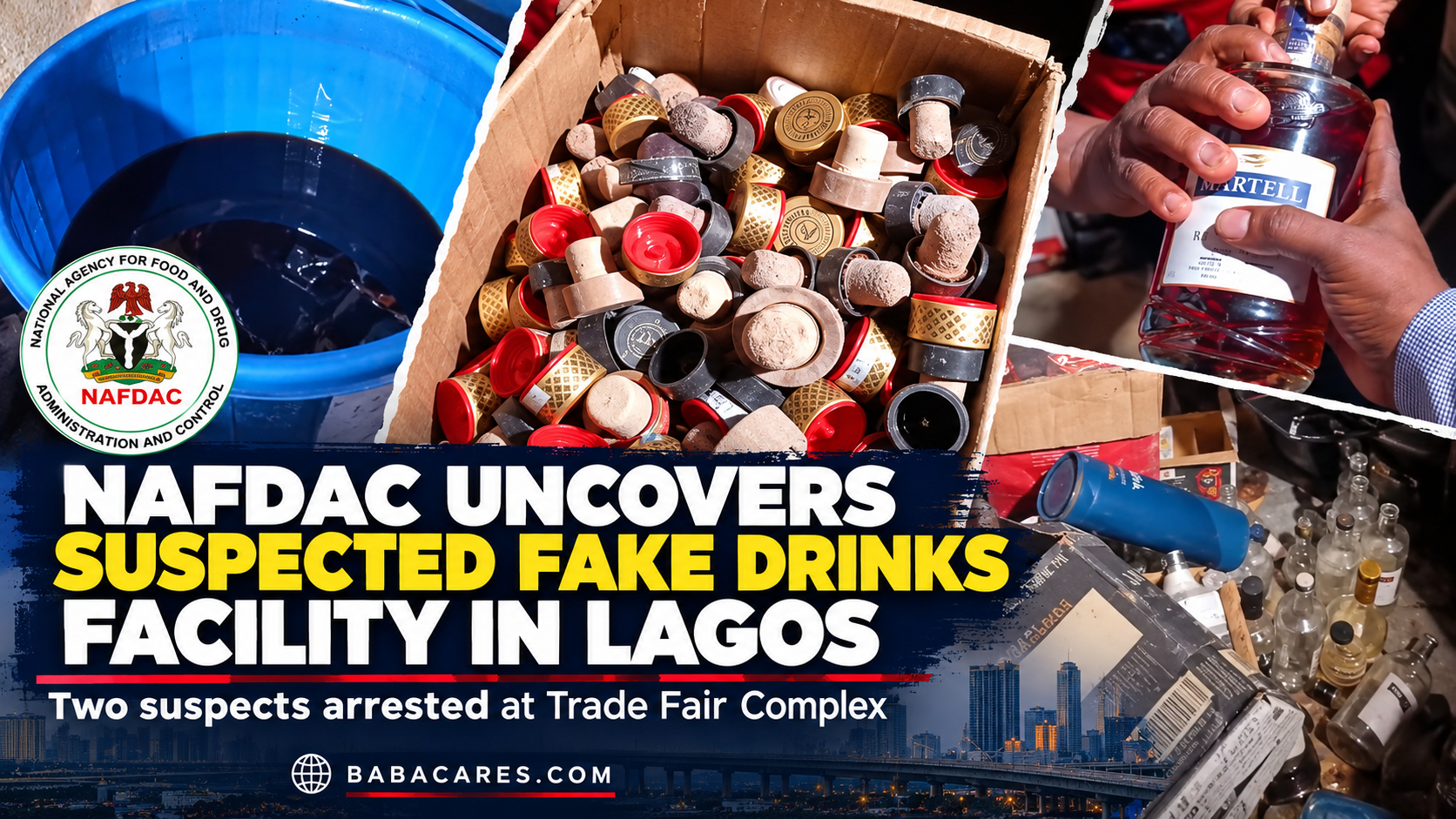
NAFDAC UNCOVERS SUSPECTED FAKE DRINKS FACTORY IN LAGOS,Arrests Two: Growing Health Concerns Over Adulterated Products in Nigeria:
BABACARES HEALTH INVESTIGATION | October 13, 2026
NAFDAC discovers a suspected counterfeit drinks facility at Lagos Trade Fair Complex. Babacares examines the public health risks and Nigeria's growing battle against adulterated products.
By Babajide Moronfolu | Babacares.com
Another disturbing discovery, another warning to Nigerians
How many times must Nigerians discover that the products they purchase, consume and trust may have been tampered with before counterfeit production is treated as a major public health emergency?
On Tuesday, October 13, 2026, Nigeria's National Agency for Food and Drug Administration and Control (NAFDAC) announced the discovery of a suspected counterfeit drinks production facility at Zamfara Plaza, BBA Trade Fair Complex, Lagos State.
According to NAFDAC, two suspects were arrested at the facility while allegedly revalidating energy drinks and popular wine and whisky brands.
Video footage released by the agency showed bottles, caps, corks, packaging materials and equipment found at the location. News reports also described suspected relabelling of expired drinks.
The discovery has been corroborated by several Nigerian news organisations, including TheCable, Punch and Vanguard.
This is not the first warning from Babacares
For some time, Babacares has raised concerns about adulterated and counterfeit consumer products in Nigeria.
Recently, we examined public allegations surrounding popular milk brands, including Peak Milk and Three Crowns, following a viral video in which a Nigerian mother questioned the quality of products trusted by families for generations.
We emphasised the importance of distinguishing genuine consumer complaints from scientifically established cases of adulteration. A viral allegation alone does not establish that a brand's products are unsafe.
Earlier, Babacares reported on NAFDAC's February 2025 enforcement operations in major medicine markets in Onitsha, Aba and Lagos, where authorities uncovered suspected illegal pharmaceutical activities and seized large quantities of medicines.
Our concern then was straightforward: What happens when products intended to nourish, refresh or heal people become potential threats to their health?
Today, the suspected counterfeit drinks operation uncovered in Lagos reinforces the need for that conversation.
The incidents involve different products and allegations, and they should not be treated as evidence of one connected criminal operation. However, they highlight the same underlying challenge: the importance of protecting Nigeria's consumer supply chains.
What exactly did NAFDAC discover?
Reports from the October 13 operation suggest that investigators encountered materials potentially associated with the repackaging and relabelling of beverages.
Footage showed discarded bottle caps, containers, labels and bottles associated with well-known international drinks.
Some media reports named products such as Bullet Energy Drink, Jameson and Don Julio among beverages identified or discussed during the operation.
This does not mean the legitimate manufacturers of those brands were involved or that genuine products sold through authorised channels are unsafe.
The allegations concern possible illegal handling, repackaging and misrepresentation by third parties.
NAFDAC has indicated that further investigation will establish the full extent of the suspected activities.
The two individuals arrested remain suspects, and the allegations against them must be established through the appropriate legal process.
The hidden health dangers of counterfeit and adulterated drinks
The danger is not simply that someone may pay for an expensive whisky and receive a cheaper substitute.
The bigger concern is what might be inside the bottle.
1. Toxic alcohol exposure
Illegally manufactured or adulterated alcoholic beverages may contain dangerous substances, including methanol. Methanol poisoning can cause severe metabolic disturbances, blindness, organ damage and death.
However, the discovery of a suspected counterfeit drinks facility does not automatically establish that methanol or any particular toxin was present. Laboratory testing is needed.
2. Microbial contamination
Beverages handled or repackaged under unhygienic conditions can become contaminated by microorganisms, potentially causing gastrointestinal illness.
3. Chemical contamination
The use of unsuitable cleaning substances, processing chemicals or non-food-grade containers can introduce harmful contaminants into drinks.
4. Misleading expiry dates
Changing expiry or best-before information may conceal important details about a product's age, storage history or quality.
A date change alone does not establish that a drink is toxic, but it undermines traceability and the manufacturer's quality controls.
5. Uncertainty about ingredients
Consumers may have no reliable way of knowing whether a repackaged drink contains the ingredients, alcohol concentration or other substances indicated on its label.
These risks make effective inspections and laboratory analysis essential.
Arresting suspects is important, but what happens to the distribution network?
NAFDAC deserves recognition for identifying the suspected operation and taking enforcement action.
Nevertheless, Babacares believes that uncovering one facility should be the beginning of a broader investigation.
Who supplied the bottles? Where did the drinks come from? Were any products already sold to consumers? Which wholesalers, retailers or hospitality establishments might have received them?
These are critical questions because removing one illegal operation may not eliminate products that have already entered commercial circulation.
Reports indicate that NAFDAC intends to investigate the source of recovered materials and the people potentially responsible for financing or directing the alleged activities.
Where evidence warrants it, product tracing, public alerts and targeted recalls should follow.
The role of government, manufacturers and consumers
Combating adulteration requires more than occasional raids.
Regulators need sustained market surveillance, accessible reporting channels, adequately equipped laboratories and transparent publication of confirmed findings.
Manufacturers also have a responsibility to make product authentication easier and strengthen the security of their distribution networks.
Consumers, meanwhile, should take reasonable precautions:
-
Purchase drinks and other consumables from reputable sellers.
-
Check seals, labels, batch numbers and date markings for signs of tampering.
-
Be cautious of unusually low prices for expensive branded products.
-
Avoid consuming beverages with suspicious packaging, unexpected odours or an uncertain source.
-
Report suspicious products and sellers to NAFDAC rather than circulating unverified accusations online.
Importantly, counterfeit alcoholic beverages cannot always be identified by appearance, smell or taste. A genuine-looking bottle is not proof of safety.
Anyone experiencing severe headache, vomiting, visual changes, confusion or breathing difficulties after drinking suspicious alcohol should seek emergency medical attention immediately.
Nigeria needs a stronger culture of product safety
At Babacares, we believe that product safety should not be a privilege reserved for people who can afford expensive goods or shop in exclusive supermarkets.
Every Nigerian deserves confidence that the products they purchase have been produced, stored and distributed according to appropriate safety standards.
Technology may eventually play a greater role through secure product identification, traceability systems and validated screening tools. But innovation cannot replace effective regulation, independent testing and accountability.
The greatest danger is allowing consumers to become accustomed to repeated stories of counterfeit medicines, questionable food products and adulterated beverages.
A country cannot protect public health if consumers must constantly wonder whether the next bottle, packet or medicine they purchase is genuine.
Babacares' final word
The latest NAFDAC discovery in Lagos must not become another headline that disappears after a few days.
Nigerians deserve answers about the scale of the suspected operation, the laboratory findings, whether affected products reached the public and what action will prevent a recurrence.
We commend the enforcement officers involved, while urging the agency to publish verified findings and provide practical consumer guidance as the investigation progresses.
The fight against counterfeit products is not merely a regulatory responsibility. It is a fight for public confidence, consumer protection and human lives.
Because when counterfeiters compromise the safety of what people consume, everyone becomes a potential victim.
Babacares.com — Promoting Healthy Living, Consumer Safety and Public Health Awareness.







Comments