

HOW TO BECOME POOR: 15 DAILY HABITS THAT CAN DESTROY YOUR FINANCES AND DAMAGE YOUR MENTAL HEALTH.
By Babajide Moronfolu | Babacares.com
Do you want to become poor, financially frustrated, emotionally exhausted, and constantly worried about tomorrow?
Then congratulations! There are several everyday habits you can cultivate to make that possible.
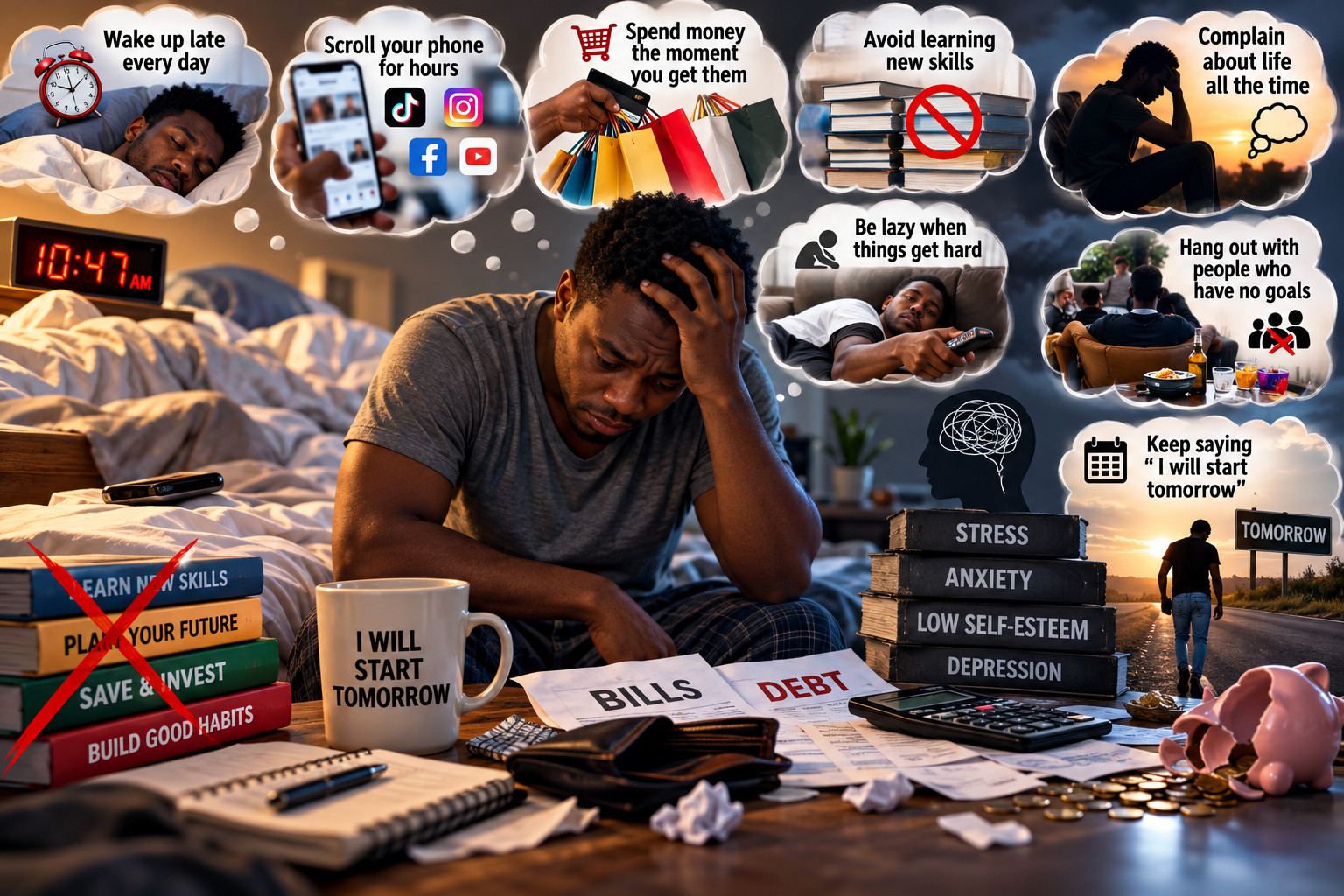
Wake up late without a plan. Scroll through your phone for hours. Spend money the moment you receive it. Avoid learning new skills. Surround yourself with people who discourage ambition. Complain about everything. And, most importantly, keep telling yourself, "I will start tomorrow."
Sounds familiar?
The uncomfortable truth is that many people develop habits that quietly undermine their financial well-being and psychological health.
But there is something we must establish from the beginning.
Poverty is not a mental illness, and poverty is not proof of laziness.
Millions of hardworking individuals struggle because of unemployment, inadequate wages, disability, illness, discrimination, economic instability, or circumstances beyond their control.
Similarly, depression, anxiety, fatigue, and difficulty getting out of bed can be symptoms of genuine health conditions rather than evidence of poor discipline.
Nevertheless, certain behaviours, especially when repeated over many years, can make financial insecurity and emotional distress more difficult to overcome.
And that is where this discussion becomes important.
15 HABITS THAT CAN KEEP YOU FINANCIALLY BROKE AND EMOTIONALLY DRAINED
1. Wake Up Late Every Day Without Purpose
Forget planning your day. Stay in bed and allow important responsibilities to pile up.
When tasks remain unfinished, guilt and frustration may begin to develop.
Over time, constantly feeling behind schedule can increase stress and reduce confidence.
Mental health connection: Poor sleep routines and lack of structure may contribute to fatigue, difficulty concentrating, and emotional distress.
However, waking up late is not inherently unhealthy. Adequate sleep and a consistent routine matter more than the specific hour you wake up.
2. Scroll Through Your Phone for Hours
Spend your mornings watching other people's achievements, expensive cars, beautiful houses, and luxury holidays.
Compare their carefully selected social media highlights with your everyday struggles.
Soon, you may begin asking yourself why everybody else appears to be succeeding while you remain stuck.
Mental health connection: Problematic social media use can encourage unhealthy comparisons, disrupt sleep, and contribute to feelings of inadequacy or anxiety.
Your phone can educate you, connect you, and help you earn money. But excessive, unproductive use can consume valuable time and affect emotional well-being.
3. Spend Everything You Earn
The moment your salary arrives, start spending.
Don't bother about savings, financial emergencies, or retirement.
Buy unnecessary things, accumulate expensive subscriptions, and use borrowed money to maintain appearances.
Then spend the final days of every month worrying about how to pay your bills.
Mental health connection: Financial insecurity can contribute to chronic stress, anxiety, sleep disturbances, and relationship conflict.
The temporary excitement of buying something new may soon be replaced by the emotional burden of debt.
4. Avoid Learning New Skills
Tell yourself that you are too old to learn.
Ignore changes in technology, new professional requirements, and opportunities to develop yourself.
As the workplace evolves, your options may become increasingly limited.
Mental health connection: Feeling professionally stuck or unable to adapt can affect confidence and increase worries about future employment.
Learning something new can provide a sense of progress, competence, and personal achievement.
5. Complain About Everything
Blame everybody for your problems.
Never look for solutions within your control.
Although some complaints are legitimate and necessary, constant negative rumination without constructive action can leave a person feeling helpless.
Mental health connection: Repetitive negative thinking is associated with anxiety and depression.
It is healthy to express frustration, but it is also important to distinguish between problems we can influence and those requiring wider social or institutional change.
6. Give Up When Things Become Difficult
Abandon every project after the first disappointment.
Quit learning because it is challenging.
Stop applying for jobs because the first few employers did not respond.
Mental health connection: Repeated setbacks can lower confidence, especially when someone begins to believe that their actions make no difference.
Developing resilience, seeking support, and adjusting strategies can help restore a sense of control.
7. Surround Yourself With People Who Discourage Your Progress
Spend your time with people who ridicule your goals, encourage reckless spending, or constantly discourage positive change.
Never seek relationships with people who inspire you to grow.
Mental health connection: Unsupportive relationships can increase emotional stress and isolation, while healthy social connections can support psychological well-being.
You do not need wealthy friends. You need people who respect your aspirations and encourage responsible decisions.
8. Keep Saying, "I Will Start Tomorrow"
Tomorrow, you will start saving.
Tomorrow, you will return to school.
Tomorrow, you will update your résumé.
Tomorrow, you will address your mounting debts.
But tomorrow never seems to arrive.
Mental health connection: Procrastination can create a cycle of anxiety, guilt, and avoidance.
Sometimes procrastination is also a response to depression, anxiety, burnout, or feeling overwhelmed. In those cases, support may be more helpful than self-criticism.
9. Borrow Money to Impress Others
Spend beyond your means because you want people to believe you are successful.
Drive a car you can barely afford. Buy designer clothing on credit. Finance celebrations that leave you struggling financially.
Mental health connection: Debt can create feelings of shame, fear, tension, and persistent financial insecurity.
There is a difference between living comfortably and living to impress.
10. Never Prepare a Budget
Avoid checking your bank statements.
Never calculate your monthly expenses.
Spend freely and then wonder why you cannot meet your financial obligations.
Mental health connection: Financial uncertainty can increase anxiety. A realistic budget may help people feel more informed and in control, although budgeting alone cannot solve an inadequate income.
11. Neglect Your Physical and Mental Health
Ignore persistent stress, poor sleep, emotional exhaustion, and concerning health symptoms.
Avoid preventive healthcare.
Mental health connection: Physical and mental health influence one another. Chronic stress can affect sleep, concentration, mood, and everyday functioning.
Seeking medical or psychological support early may help prevent some difficulties from worsening.
12. Refuse to Plan for Financial Emergencies
Assume your employment, income, and circumstances will never change.
Avoid savings, insurance reviews, or contingency planning where these are affordable.
Mental health connection: Having no financial safety net can heighten fear during unexpected events such as job loss, illness, or family emergencies.
Even modest financial preparation may help reduce uncertainty.
13. Reject Advice and Constructive Criticism
Convince yourself that nobody can teach you anything.
Refuse guidance and continue repeating avoidable mistakes.
Mental health connection: Rigid thinking and unhealthy defensiveness may interfere with problem-solving and relationships.
Being open to learning can improve adaptability and confidence.
14. Compare Your Life With Everybody Else's
At 30, compare yourself with friends who own houses.
At 45, compare yourself with colleagues who have successful businesses.
At 60, compare your retirement savings with those of people who enjoyed very different opportunities.
Mental health connection: Persistent negative comparisons can contribute to dissatisfaction, low self-worth, and emotional distress.
Remember that two people of the same age may have very different circumstances and responsibilities.
15. Live Without Goals or Direction
Never think about your future.
Never develop personal, professional, financial, or health goals.
Just move from one day to another without considering what you want to accomplish.
Mental health connection: A lack of purpose may be associated with reduced motivation and well-being. Setting realistic, meaningful goals can provide direction and a sense of achievement.
THE HIDDEN DANGER: WHEN FINANCIAL POVERTY BECOMES AN EMOTIONAL BURDEN
One of the most important issues in this discussion is the relationship between money and mental health.
Imagine someone who receives a salary but spends most of it immediately.
As the month progresses, the bills begin arriving.
Rent is due. Credit card payments are outstanding. School expenses are approaching. The car needs repairs.
Suddenly, the person begins struggling to sleep.
Anxiety increases.
Concentration declines.
Family relationships become tense.
Eventually, the individual may find it difficult to make decisions, organize finances, or pursue new opportunities.
And the cycle continues.
This is not merely speculation.
Research published in Science in 2020 examined the two-way relationship between poverty and common mental health conditions, including depression and anxiety.
The findings indicate that poverty can contribute to psychological distress, while mental health difficulties can also make it harder to earn income and achieve financial stability.
Canada's Public Health Agency similarly recognizes a cycle in which financial insecurity and poor mental health can reinforce one another.
In simple terms, financial hardship can affect mental health, and poor mental health can make financial hardship more difficult to escape.
Neither condition should be treated as a personal failure.
THE VICIOUS CYCLE OF FINANCIAL STRESS AND POOR MENTAL HEALTH
-
Financial pressure increases daily worry.
-
Prolonged stress disrupts sleep, concentration, and emotional well-being.
-
Emotional exhaustion makes planning and decision-making more difficult.
-
Avoidance, impulsive spending, or withdrawal may worsen existing financial difficulties.
-
Increased financial insecurity produces further stress.
Breaking this cycle may require both personal changes and practical support, including adequate income, accessible healthcare, debt counselling, family support, and mental health services.
WHY THIS MATTERS EVEN MORE AS WE GROW OLDER
As someone passionate about healthy aging, I believe this discussion becomes particularly important when we consider life after 50 and 60.
Retirement is not simply about stopping work.
It is about maintaining dignity, financial security, independence, physical health, and emotional well-being.
Imagine reaching retirement age with significant debt, inadequate savings, poor health, and few reliable sources of support.
The consequences may extend beyond financial hardship.
A person may develop persistent anxiety about housing, healthcare, food, or becoming financially dependent on children and relatives.
For some older adults, prolonged financial stress can contribute to social withdrawal and emotional distress.
However, retirement difficulties are not always the result of poor planning. Caregiving responsibilities, low lifetime earnings, disability, and other structural disadvantages can prevent people from accumulating savings.
Therefore, financial education must be accompanied by compassionate social policies and appropriate support for older adults.
HOW TO BREAK THE CYCLE AND PROTECT YOUR MENTAL HEALTH
There is good news.
You do not need to transform your entire life in one day.
Begin by making small, realistic changes.
First, regain control of your time. Establish a manageable daily routine with sufficient sleep, purposeful activities, and periods of rest.
Second, examine your relationship with technology. Reduce unnecessary scrolling and use some of that time for learning, social connection, or physical activity.
Third, understand your finances. Review your income, expenses, and debts without judging yourself. Seek professional debt advice when necessary.
Fourth, invest in lifelong learning. Whether you are 25 or 65, acquiring useful knowledge can improve confidence and create opportunities.
Fifth, protect your relationships. Surround yourself with people who offer encouragement, realistic advice, and emotional support.
Sixth, take mental health seriously. Persistent sadness, anxiety, loss of motivation, sleep problems, or difficulty functioning deserve attention. Consulting a healthcare professional is a sign of responsible self-care.
Finally, stop postponing manageable changes. Choose one action you can take today, however small.
Progress is more sustainable when goals are realistic and adjusted to personal circumstances.
FINAL THOUGHT: YOU CAN LOSE MORE THAN MONEY
Perhaps the greatest danger of destructive habits is not merely the money we fail to save or the opportunities we fail to pursue.
It is the gradual erosion of confidence, peace of mind, relationships, and hope.
Financial hardship can sometimes be temporary.
But years of unmanaged stress, emotional isolation, and discouragement may have consequences that extend into later life.
Yet we must remember that a person's bank balance does not determine their worth.
Being poor does not make someone a failure. Being wealthy does not automatically make someone emotionally healthy.
True well-being involves much more than money.
It includes good health, meaningful relationships, personal dignity, emotional stability, opportunities for growth, and a sense of purpose.
So, before you spend another evening scrolling endlessly through social media, postponing an important decision, or comparing your life with someone else's, ask yourself:
"Are my daily habits building a better future for my finances, my health, and my peace of mind?"
The answer may reveal where meaningful change can begin.
Remember: Protect your money, protect your mind, and protect your future.
Babajide Moronfolu | Babacares.com
Readers' Question: Which is more dangerous in today's society: financial poverty or the emotional stress that comes with it?
Share your thoughts and experiences in the comments.
References
-
Public Health Agency of Canada. Inequalities in Mental Health, Well-Being and Wellness in Canada. https://health-infobase.canada.ca/mental-health/inequalities/report.html
-
Ridley, M., Rao, G., Schilbach, F., & Patel, V. (2020). Poverty, depression, and anxiety: Causal evidence and mechanisms. Science. https://pubmed.ncbi.nlm.nih.gov/33303583/
-
American Psychological Association. Stress in America 2025. https://www.apa.org/pubs/reports/stress-in-america/2025
https://www.babacares.com/blog-details?details=1056&title=HOW+TO+BECOME+POOR%3A+15+DAILY+HABITS+THAT+CAN+DESTROY+YOUR+FINANCES+AND+DAMAGE+YOUR+MENTAL+HEALTH.










Comments