

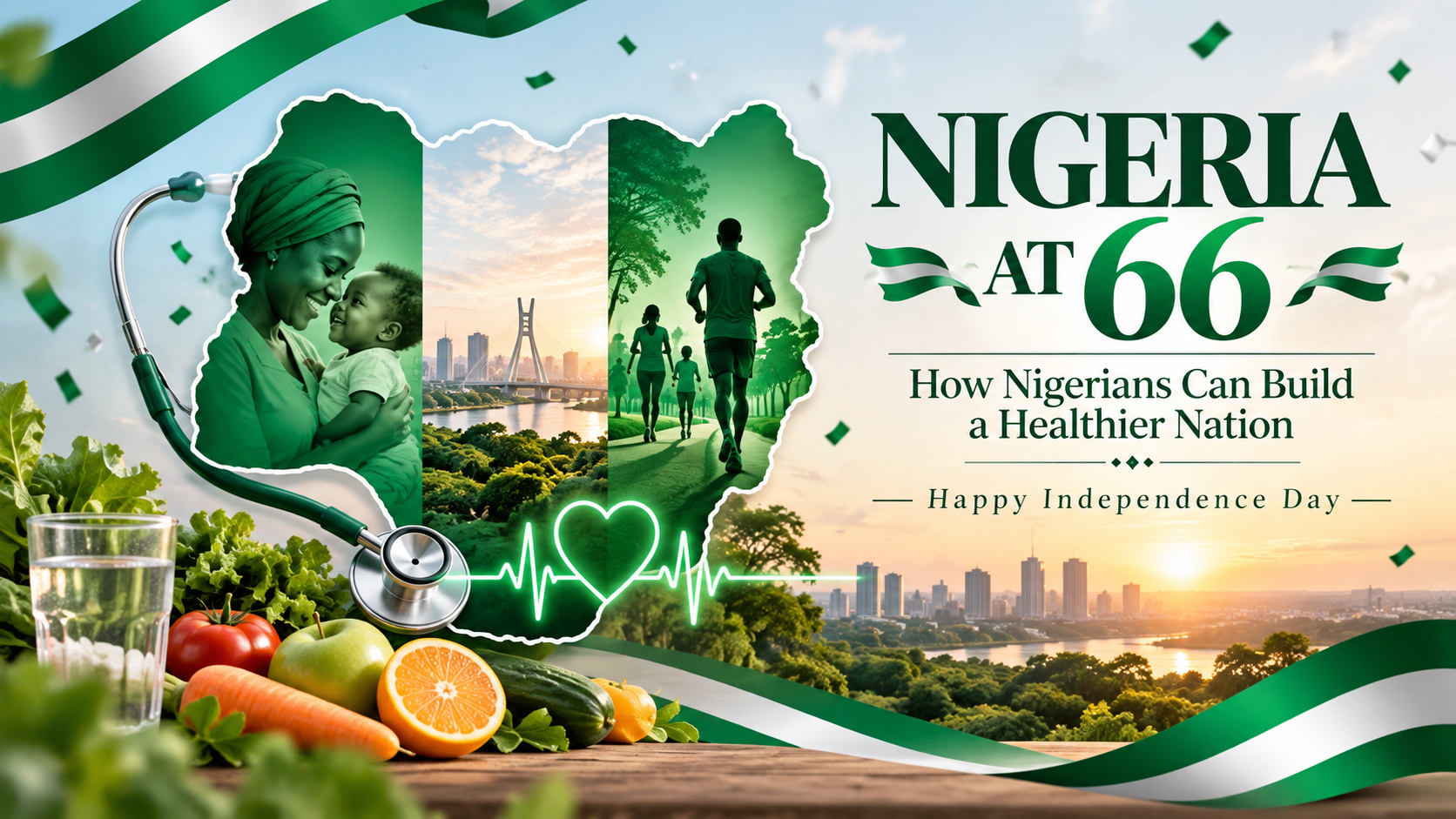
Nigeria at 66: How Nigerians Can Build a Healthier Nation
By Babajide Moronfolu| October 1, 2026
Today, October 1, 2026, Nigeria celebrates 66 years of independence. Across the country and among Nigerians in the diaspora, the green and white flag will fly proudly as we remember our history, celebrate our resilience, and reflect on the kind of nation we want to leave for future generations.
But beyond the celebrations, speeches and congratulatory messages, Independence Day should also give us an opportunity to ask an important question:
How healthy is Nigeria, and what can every Nigerian do to help build a healthier nation?
A truly prosperous country is not measured only by its roads, buildings, natural resources or economic strength. It is also measured by the health and well-being of its people.
Nigeria cannot reach its full potential if millions of citizens are battling preventable diseases, mothers are dying during childbirth, children are not adequately immunized, families cannot afford medical treatment, and people wait until they are seriously ill before visiting a healthcare facility.
As Nigeria celebrates independence, health must become part of our national conversation.
1. Prevention Must Become Part of Our Culture
Many Nigerians visit hospitals only when symptoms become severe. We need to move from a culture of treating sickness to preventing sickness.
Every adult should know basic health numbers such as:
-
Blood pressure
-
Blood sugar
-
Cholesterol level
-
Weight and waist circumference
Regular medical check-ups can detect hypertension, diabetes and other illnesses before complications develop.
This is especially important because noncommunicable diseases such as cardiovascular diseases, cancer, diabetes and chronic respiratory diseases have become a significant health burden in Nigeria. WHO estimates that noncommunicable diseases account for approximately 27% of deaths in Nigeria.
Checking your blood pressure today could prevent a stroke tomorrow.
2. Nigerians Must Eat Better
Our traditional foods can be nutritious, but portion size and preparation matter.
Excessive consumption of salt, sugar, processed food, sugary drinks and fried foods increases the risk of hypertension, obesity, diabetes and heart disease.
A healthier Nigeria requires more:
Vegetables, fruits, whole grains, beans, nuts, fish and clean drinking water.
We do not have to abandon Nigerian foods to become healthy. Instead, we should prepare them in healthier ways and eat balanced portions.
Health begins in the kitchen.
3. We Must Become More Physically Active
Regular exercise should not be considered something meant only for athletes or people trying to lose weight.
Walking, dancing, cycling, gardening and other forms of physical activity can improve heart health, strengthen muscles, reduce stress and help control body weight.
Families can encourage evening walks. Schools can strengthen physical education. Employers can encourage wellness programmes.
Even 30 minutes of brisk walking on most days can make a meaningful difference.
A moving nation is a healthier nation.
4. Primary Healthcare Must Be Strengthened
Nigeria cannot build a healthy population without strong primary healthcare centres.
People should be able to obtain vaccinations, maternal care, malaria treatment, blood-pressure checks, diabetes screening, family planning and basic medical services close to where they live.
There have been encouraging developments. Federal health-sector data reported that visits to facilities supported through the Basic Health Care Provision Fund increased from about 10 million in the first quarter of 2024 to 45 million in the second quarter of 2025.
The Federal Ministry of Health has also reported ongoing revitalisation of primary healthcare facilities and expansion of frontline health-worker training.
These efforts need to translate into reliable healthcare that Nigerians can actually access in cities, towns and rural communities.
5. No Woman Should Die Giving Birth
A healthy Nigeria must protect its mothers and babies.
Nigeria has made some progress, but maternal and newborn deaths remain a major concern. Government data reported a 17% reduction in maternal deaths and a 12% reduction in newborn deaths in 172 high-burden local government areas targeted by a maternal-health initiative.
More pregnant women must receive antenatal care and give birth with trained health professionals present.
Pregnancy complications can occur unexpectedly. Families should therefore avoid unnecessary delays in seeking professional care.
A nation that protects its mothers protects its future.
6. Vaccination Must Remain a Priority
Vaccines remain one of the most effective ways to prevent serious diseases.
Parents should ensure that children receive recommended routine vaccinations, while communities must continue combating misinformation about vaccines.
Nigeria must also remain vigilant against outbreaks of infectious diseases.
WHO notes that the country continues to face recurring disease outbreaks alongside the growing burden of illnesses such as hypertension and diabetes.
Public health surveillance, sanitation, vaccination and early reporting of unusual illnesses are therefore essential.
7. Mental Health Must Be Taken Seriously
Not every illness can be seen from the outside.
Many Nigerians silently struggle with depression, anxiety, grief, financial pressure, unemployment, family difficulties and workplace stress.
Telling someone simply to “be strong” is not always enough.
We need communities where people can discuss emotional difficulties without shame and where professional mental-health care is available when needed.
Seeking help should never be regarded as weakness.
8. Clean Environments Mean Healthier Communities
Nigeria's health is connected directly to its environment.
Blocked drainage systems, indiscriminate dumping of refuse, contaminated water, open defecation and poor sanitation encourage diseases.
Government has responsibilities, but citizens also have responsibilities.
We should stop throwing refuse into drainage channels and roads. Communities should organise sanitation programmes, and authorities must provide effective waste collection and safe water systems.
Environmental responsibility is public health responsibility.
9. Health Insurance Must Reach More Nigerians
One serious illness should not destroy a family's finances.
Yet the cost of healthcare remains a major challenge for many Nigerian households. Federal health-sector figures have indicated that out-of-pocket spending continues to account for a large proportion of healthcare expenditure.
Expanding affordable health insurance and ensuring that enrolled citizens can actually obtain quality services will be vital to achieving universal health coverage.
Healthcare should not become available only to people who can afford large hospital bills.
10. Nigerians Must Take Personal Responsibility
Government cannot do everything.
Healthier citizens also require healthier personal choices.
We can choose to:
Eat better.
Exercise regularly.
Drink enough clean water.
Avoid tobacco.
Limit alcohol consumption.
Sleep adequately.
Maintain proper hygiene.
Check our blood pressure.
Attend medical screenings.
Take prescribed medication correctly.
Seek medical attention early.
Protect our mental health.
And encourage our families to do the same.
Millions of small healthy decisions can collectively transform the health of a nation.
Our Independence Day Health Resolution
As we celebrate Nigeria's independence today, perhaps we should make a different kind of national resolution.
Let us dream of a Nigeria where a pregnant woman can walk into a health centre and receive quality care.
A Nigeria where children receive their vaccinations.
A Nigeria where hypertension is detected before it causes stroke.
A Nigeria where cancer is diagnosed earlier.
A Nigeria where clean water is available.
A Nigeria where mental illness is treated with compassion rather than ridicule.
A Nigeria where quality healthcare does not depend entirely on how much money is in someone's bank account.
And a Nigeria where every citizen understands that good health is both a personal responsibility and a national asset.
Happy Independence Day, Nigeria
At 66, Nigeria still has challenges to overcome, but every Independence Day gives us another opportunity to reflect, improve and recommit ourselves to building a stronger country.
Political independence gave us the freedom to determine our national destiny.
Now we must continue working towards another form of independence:
Freedom from preventable disease.
Freedom from avoidable maternal and child deaths.
Freedom from unhealthy lifestyles.
Freedom from medical poverty.
And freedom to live longer, healthier and more productive lives.
A healthier Nigeria begins with healthier Nigerians.
Happy 66th Independence Day, Nigeria.
God bless the Federal Republic of Nigeria.
Babacares – Promoting Health, Wellness and Ageless Living.
https://www.babacares.com/blog-details?details=1038&title=Nigeria+at+66%3A+How+Nigerians+Can+Build+a+Healthier+Nation





Comments