

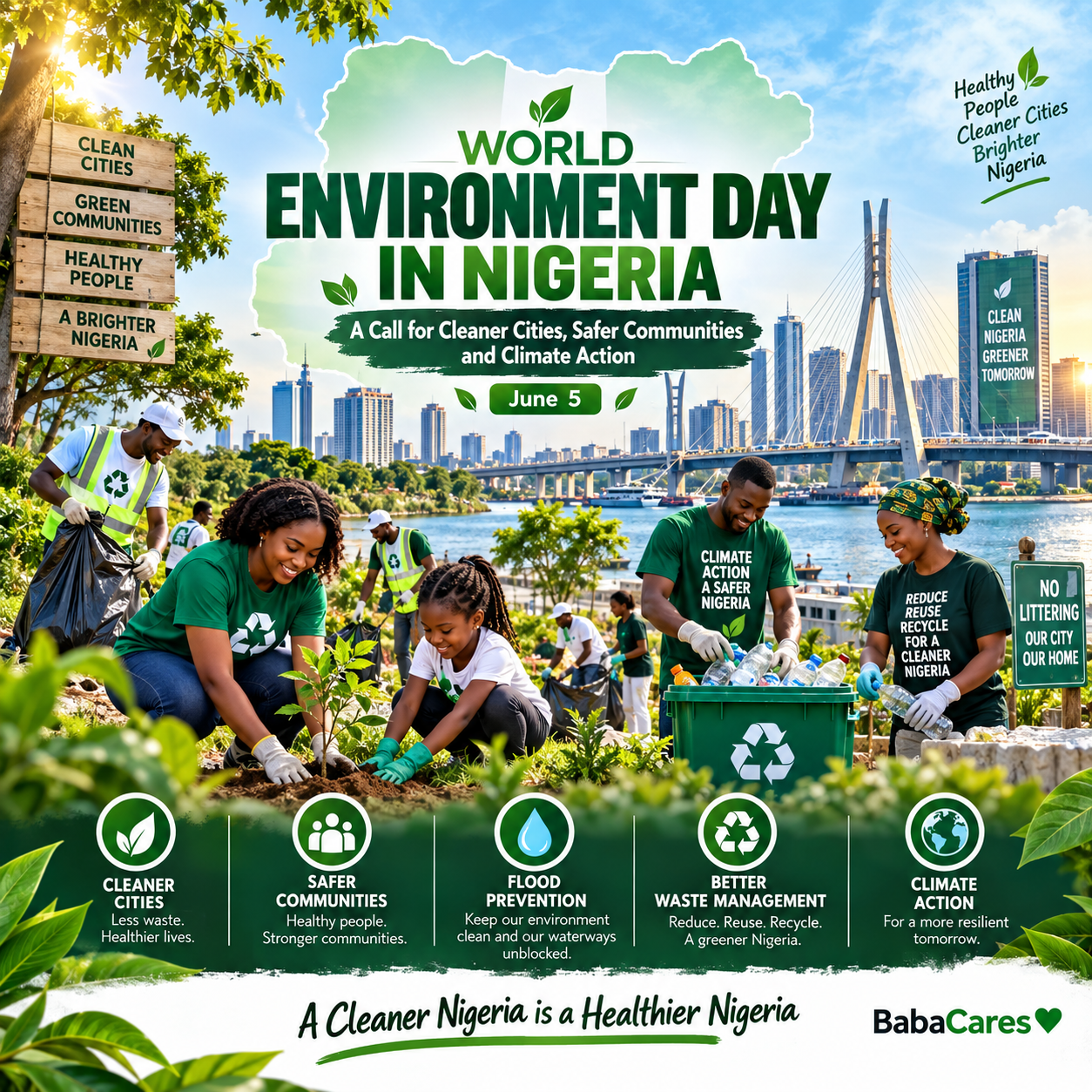
World Environment Day 2026 in Nigeria: A Call for Cleaner Cities, Safer Communities and Climate Action.
Every year on June 5, Nigeria joins the rest of the world to mark World Environment Day, a United Nations initiative dedicated to raising awareness and encouraging action on environmental problems.
In 2026, the global focus was on climate change and urgent climate action, while discussions in Nigeria placed strong emphasis on the relationship between urbanisation, climate change, flooding, waste management and resilient cities.
For Nigeria, this is not an abstract conversation.
Environmental problems are already affecting health, livelihoods, homes, food production and the quality of life in many communities.
Nigeria’s Environmental Challenges Are Growing
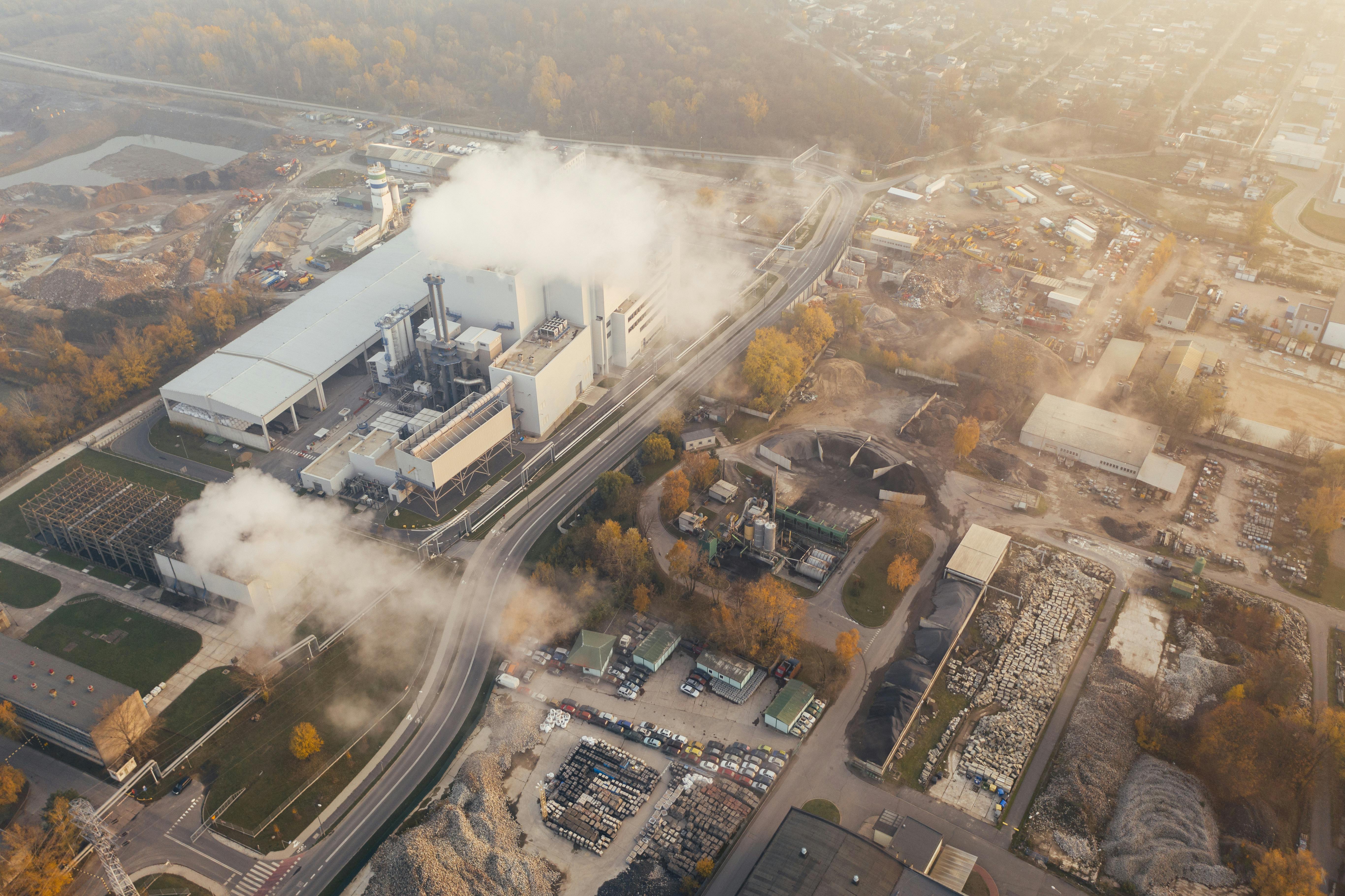
Across the country, Nigerians continue to face serious environmental pressures, including flooding, poor waste disposal, air pollution, deforestation, erosion, oil pollution and the effects of extreme heat.
The Nigerian Institution of Environmental Engineers used World Environment Day 2026 to call for stronger action on flooding, poor waste management and the environmental consequences of rapid urban growth. It also stressed that public awareness alone is not enough and that environmental laws must be properly enforced.
This is especially important in rapidly growing cities such as Lagos, Abuja, Port Harcourt, Ibadan, Kano and others, where population growth often puts additional pressure on drainage systems, roads, housing, waste collection and water resources.
Flooding and Waste Management Must Be Taken Seriously
One of Nigeria’s most visible environmental problems is flooding.
Blocked drainage channels, indiscriminate dumping of waste, poorly planned development and increasingly intense rainfall can combine to turn ordinary rainstorms into major emergencies.
Plastic waste dumped in drains, canals and waterways can worsen flooding and create breeding grounds for mosquitoes and other disease vectors.
World Environment Day should therefore remind Nigerians that environmental responsibility begins at community level.
Keeping drains free of waste, disposing of refuse properly and protecting waterways are not merely matters of cleanliness. They are also matters of public health and safety.
Climate Change Is Affecting Nigerian Farmers
The impact of climate change is also being felt in rural communities.
At a World Environment Day event in Akwa Ibom, farmers and community members were encouraged to adopt measures such as tree planting, sustainable farming and ending bush burning as part of efforts to protect livelihoods and food production from climate-related pressures.
Changing rainfall patterns, flooding, drought and extreme heat can reduce crop yields, damage farmland and increase hardship for families that depend on agriculture.
This means climate action in Nigeria is also about food security and poverty reduction.
Nigerian Organisations Are Taking Action
World Environment Day 2026 also inspired practical environmental activities across the country.
In Lagos, for example, Zenith Bank organised a two-phase environmental clean-up exercise involving staff and community sensitisation on proper waste disposal.
The UBA Foundation also marked the occasion with tree-planting activities in Lagos schools, helping to introduce young people to environmental responsibility and sustainability.
Meanwhile, the National Inland Waterways Authority reaffirmed its commitment to cleaner and more resilient waterways, highlighting the importance of protecting Nigeria’s rivers and inland water systems as urban populations continue to expand.
These actions are useful reminders that government alone cannot solve Nigeria’s environmental problems.
Businesses, schools, communities, religious organisations, civil society groups and individuals all have a role to play.
The Ogoni Cleanup Shows Why Restoration Matters
Environmental restoration is another major issue in Nigeria.
The Hydrocarbon Pollution Remediation Project said during World Environment Day 2026 that ongoing restoration work in Ogoniland includes mangrove restoration intended to reverse decades of environmental degradation while supporting biodiversity and local livelihoods.
The experience of Ogoniland demonstrates how environmental destruction can affect communities for generations—and why prevention is often far less costly than repairing damage later.
What Nigeria Must Do
Nigeria needs stronger and sustained environmental action beyond annual celebrations.
Government agencies need to enforce environmental regulations more consistently, improve waste collection and recycling, strengthen drainage infrastructure, protect forests and waterways, and invest in climate-resilient communities.
Businesses must also take responsibility for the waste and pollution generated by their activities.
Citizens can contribute by avoiding indiscriminate dumping, reducing plastic waste, planting trees, protecting drains and waterways, conserving energy and reporting serious environmental violations.
The Federal Ministry of Environment identifies environmental quality, sustainability, ecosystem restoration, biodiversity protection and public awareness among its core responsibilities.
BabaCares Health Message
The environment is not just about trees, rivers and wildlife.
It is about human health.
Dirty air affects our lungs.
Contaminated water spreads disease.
Blocked drains contribute to flooding.
Extreme heat threatens children, older adults and people with underlying health conditions.
Poor waste disposal creates environments where disease can thrive.
World Environment Day should therefore challenge every Nigerian to ask:
What am I doing to make my environment cleaner, safer and healthier?
Government must act.
Businesses must act.
Communities must act.
And individuals must act.
A cleaner Nigeria is a healthier Nigeria.
Let us protect our environment—not only for ourselves, but for the generations coming after us.
BabaCares.com
References
United Nations Environment Programme — World Environment Day 2026.
Federal Ministry of Environment, Nigeria — World Environment Day and environmental programmes.
Premium Times — Climate action and farming in Akwa Ibom.
The Guardian Nigeria — Flooding, waste management and resilient cities.
The Guardian Nigeria — Ogoni environmental restoration.







Comments