

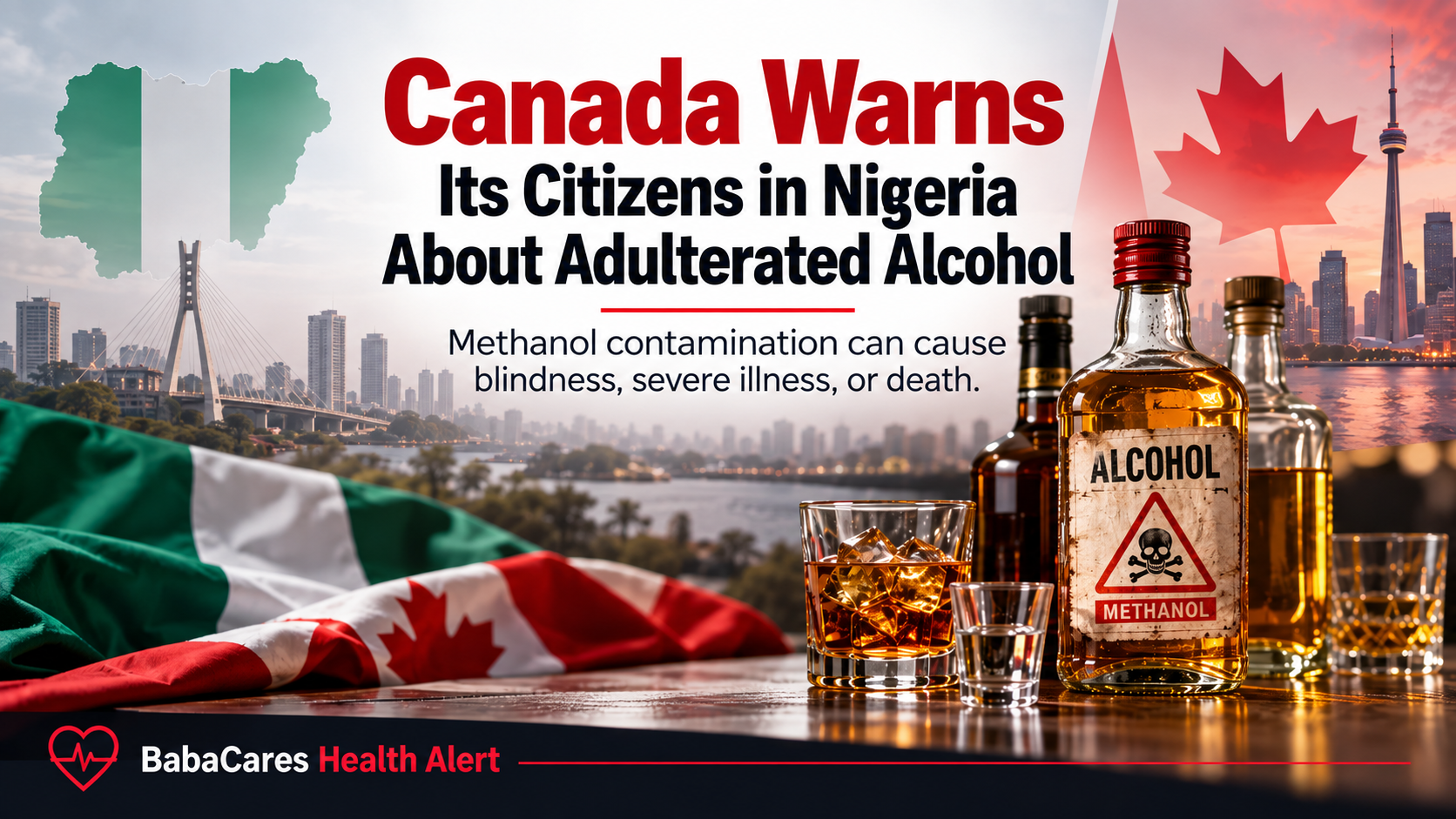
Canada Warns Its Citizens in Nigeria About Adulterated Alcohol.
The Government of Canada has warned its citizens in Nigeria to be cautious about unregulated and adulterated alcoholic drinks, especially beverages that may contain dangerously high levels of methanol.
The warning appears in Canada's official travel advisory for Nigeria and advises travellers to be careful about where they purchase alcoholic beverages.
According to the advisory, there have been casualties linked to the consumption of unregulated or adulterated alcohol containing high levels of methanol. Canadians in Nigeria are therefore advised to buy alcoholic drinks only from reputable establishments and to seek medical attention if they become ill after drinking.
It is important to clarify that Canada is not warning against all alcoholic beverages produced or sold in Nigeria. The concern is specifically about drinks from unregulated or questionable sources that may have been contaminated or improperly produced.
Why Methanol Is Dangerous
Methanol is a highly toxic form of alcohol. It is different from ethanol, which is the alcohol normally used in regulated alcoholic beverages.
When methanol is consumed, the body converts it into toxic substances that can seriously damage the eyes, brain and other organs.
Symptoms of methanol poisoning may include:
- Headache
- Dizziness
- Nausea and vomiting
- Abdominal pain
- Confusion
- Blurred or impaired vision
- Difficulty breathing
- Seizures
- Loss of consciousness
In severe cases, methanol poisoning can cause permanent blindness or death.
One of the dangers is that symptoms may not always appear immediately. A person may initially feel relatively well before becoming seriously ill several hours later.
What Consumers Should Look Out For
The warning highlights the importance of knowing the source of alcoholic beverages before consuming them.
Consumers should be especially cautious about:
- Alcohol sold in unlabelled bottles
- Homemade or illegally produced spirits
- Drinks sold at unusually low prices
- Bottles with broken or suspicious seals
- Alcohol from unknown or unreliable vendors
Buying from reputable shops, hotels, restaurants and licensed outlets may reduce the risk of consuming counterfeit or adulterated products.
Consumers should also remember that methanol contamination cannot always be detected by taste, smell or appearance.
A Public Health Concern
Adulterated alcohol is not only a travel-safety issue. It is also a serious public-health concern.
Authorities have an important role to play in identifying and removing counterfeit or illegally produced alcoholic products from the market.
Regular inspections, stronger enforcement, consumer education and rapid investigation of suspected poisoning cases can help protect the public.
Legitimate beverage manufacturers should also be protected from the activities of counterfeiters whose products can damage public confidence in properly regulated brands.
What To Do If Poisoning Is Suspected
Anyone who becomes seriously ill after consuming a suspicious alcoholic drink should seek medical attention immediately.
Symptoms such as blurred vision, severe vomiting, confusion, breathing difficulties or unusual weakness should not be ignored.
In suspected methanol poisoning, early treatment can be critical.
BabaCares Health Message
The Canadian warning is a timely reminder that consumers should pay attention not only to how much alcohol they drink, but also to what they are drinking and where it came from.
A cheap or unfamiliar alcoholic drink may not always be a bargain. In some cases, it could pose a serious health risk.
Know your drink. Know your source. When in doubt, don't drink it.
For more health and wellness information, visit BabaCares.com.
References
Government of Canada — Travel Advice and Advisories for Nigeria.
Government of Canada — Travel health and safety guidance on alcohol and drugs.
U.S. Centers for Disease Control and Prevention/NIOSH — Methanol emergency response and health information.
World Health Organization — Public-health information on methanol poisoning and adulterated alcoholic beverages.
https://www.babacares.com/blog-details?details=1030&title=Canada+Warns+Its+Citizens+in+Nigeria+About+Adulterated+Alcohol.






Comments