

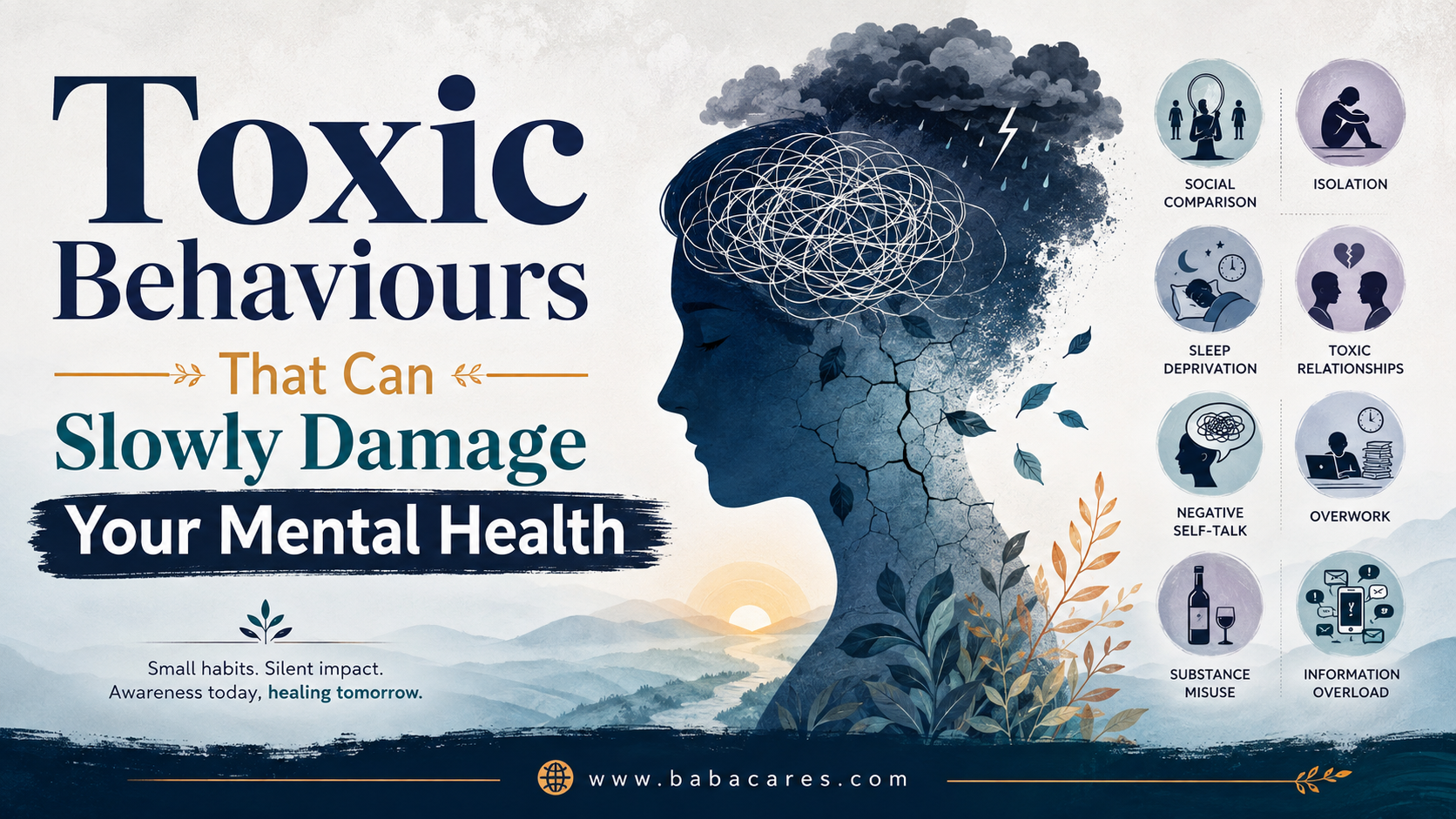
Toxic Behaviours That Can Slowly Damage Your Mental Health
Mental-health problems do not always begin with one dramatic event.
Sometimes, they develop quietly.
A person may continue going to work, caring for family, attending social events and appearing perfectly fine, while certain habits and behaviours gradually weaken their emotional wellbeing.
Depression, anxiety and other mental-health conditions are complex and can arise from many factors, including genetics, physical health, trauma, loss, social circumstances and life experiences. However, some everyday behaviours can increase emotional distress and make existing problems worse.
Recognizing these patterns early can be an important step toward protecting our mental health.
As Babajide Moronfolu emphasizes in his writings on healthy living and longevity, wellbeing should be approached as a combination of body, mind and lifestyle. Looking after mental health is therefore just as important as protecting physical health.
1. Constantly Comparing Yourself With Others
Social media has made comparison almost unavoidable.
We see people's new homes, vacations, marriages, careers, businesses and achievements, but we rarely see their struggles, debts, disappointments or private pain.
Constant comparison can create feelings of inadequacy.
You may begin asking:
Why am I not successful yet?
Why does everyone seem happier than me?
Why is my life not moving forward?
When repeated over time, this mindset can damage self-esteem and contribute to anxiety and depressive feelings.
Your life should not be measured against someone else's highlight reel.
2. Isolating Yourself
There are times when everyone needs privacy and quiet.
But prolonged social isolation can become unhealthy.
Humans need meaningful connection. Having people to talk to, laugh with, worship with, exercise with or simply spend time with can provide emotional protection during difficult periods.
When people gradually withdraw from friends, family and community, loneliness may become deeper.
Sometimes depression causes isolation, and isolation can then worsen depression, creating a difficult cycle.
Reaching out does not mean you are weak. Sometimes a simple conversation can make a significant difference.
3. Living With Chronic Sleep Deprivation
Sleep is not a luxury.
Regularly staying awake late into the night, sleeping only a few hours and expecting the body and brain to function normally can eventually affect mood, concentration and emotional control.
Poor sleep can leave people irritable, exhausted and unable to cope with everyday stress.
Protecting your sleep routine is therefore also part of protecting your mental health.
4. Remaining in Constantly Toxic Relationships
Not every relationship is healthy simply because it has lasted for many years.
Relationships characterized by constant humiliation, manipulation, intimidation, insults, excessive control or emotional abuse can slowly destroy confidence.
A person repeatedly told that they are useless, unattractive or incapable may eventually start believing those messages.
Healthy relationships should provide respect, safety and support—not constant emotional injury.
Recognizing unhealthy relationship patterns and seeking appropriate support can be an important step toward recovery.
5. Suppressing Every Emotion
Some people were raised to believe that showing emotion is a sign of weakness.
Men, in particular, may hear statements such as:
“Men don't cry.”
But constantly suppressing grief, fear, disappointment and anger does not necessarily make those feelings disappear.
Healthy emotional expression can include talking with someone you trust, praying, journaling, exercising or speaking with a mental-health professional.
Strength is not pretending that nothing hurts.
Sometimes strength is acknowledging that something does.
6. Negative Self-Talk
There is a difference between recognizing a mistake and constantly attacking yourself.
Statements such as:
“I can never do anything right.”
“Nobody will ever love me.”
“I am a failure.”
“Nothing good will ever happen to me.”
can become powerful when repeated frequently.
Our internal conversations influence how we see ourselves.
Try replacing absolute negative statements with realistic ones.
Instead of saying, “I am a failure,” say:
“This did not work, but I can learn from it and try another approach.”
That small change in language can begin changing perspective.
7. Trying to Please Everybody
People-pleasing can become emotionally exhausting.
When your happiness depends completely on other people's approval, you may find yourself constantly saying yes when you really want to say no.
Eventually, resentment and emotional exhaustion can develop.
Healthy boundaries are not selfish.
It is possible to be kind, generous and respectful while still protecting your time, energy and emotional wellbeing.
8. Excessive Alcohol or Substance Use
Some people turn to alcohol or other substances to escape stress, grief, loneliness or emotional pain.
The temporary relief may feel helpful, but repeated use can create additional physical, emotional, financial and relationship problems.
Using substances to continually avoid difficult emotions does not address the underlying problem.
When substance use begins affecting daily life, relationships, work or health, professional support may be necessary.
9. Living Without Rest
Our culture often celebrates constant productivity.
Work harder.
Sleep later.
Take another shift.
Start another business.
Answer another email.
Keep going.
But the human body and mind require recovery.
Constant work without adequate rest can contribute to burnout, irritability and emotional exhaustion.
Rest should not only happen when the body finally breaks down.
Make room for recreation, family, hobbies, exercise and moments when you are doing absolutely nothing productive.
10. Spending Too Much Time Consuming Negative Information
The internet gives us access to information 24 hours a day.
Unfortunately, this can also mean continuous exposure to wars, crime, tragedy, arguments, political conflict and disturbing videos.
Constantly scrolling through negative content can leave the mind feeling as though danger is everywhere.
Stay informed, but also know when to disconnect.
Your brain needs positive experiences too.
11. Perfectionism
Wanting to do something well is healthy.
Believing that everything must be perfect is different.
Perfectionists may constantly criticize themselves because their appearance, work, home, marriage or achievements never seem good enough.
They may achieve something significant and immediately focus on what remains unfinished.
Learning to accept progress rather than demanding perfection can reduce unnecessary emotional pressure.
12. Ignoring Signs That Something Is Wrong
Perhaps one of the most harmful behaviours is pretending that serious emotional symptoms will simply disappear.
Persistent sadness, loss of interest in activities, major changes in sleep or appetite, severe anxiety, hopelessness, inability to function normally or thoughts of self-harm deserve attention.
Mental health should be treated with the same seriousness as physical health.
We would not normally ignore persistent chest pain for months and simply hope it disappears. Persistent emotional pain also deserves professional attention.
Protect Your Mind Before You Reach Breaking Point
Mental health is influenced by the small decisions we make every day.
Who we spend time with.
What we repeatedly tell ourselves.
How much we sleep.
How we manage stress.
Whether we ask for help.
Whether we allow ourselves to rest.
Whether we remain connected to other people.
None of these behaviours alone means that someone will develop depression. Mental-health conditions are much more complex than that.
But harmful habits can slowly create an environment in which emotional distress becomes harder to manage.
The encouraging part is that behaviours can change.
Start with one area.
Sleep a little earlier.
Call someone.
Take a walk.
Reduce social-media comparison.
Set a boundary.
Talk about what is troubling you.
Ask for professional help when you need it.
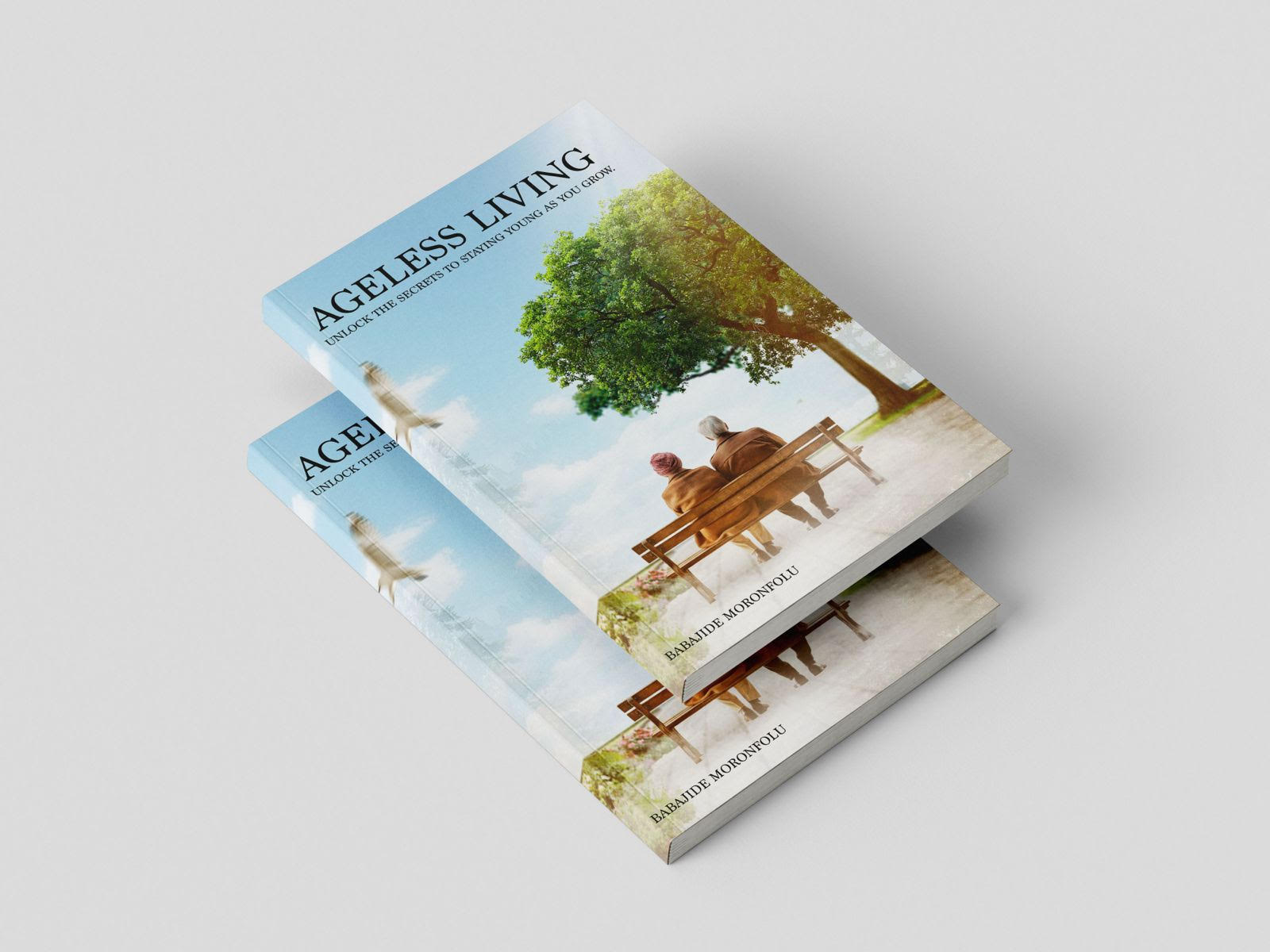
As discussed in Ageless Living: Unlock the Secrets to Staying Young as You Grow and Do Not Grow Old Prematurely – Timeless Principles for Body, Mind, and Lifelong Vitality, healthy living is not built around one dramatic action. It is usually the result of consistent choices that protect the body, mind and overall quality of life.
You do not have to wait until you are completely overwhelmed before taking care of your mental health.
Your mind deserves the same attention, protection and care that you give the rest of your body.
References and Further Reading
- Moronfolu, B. Ageless Living: Unlock the Secrets to Staying Young as You Grow.
- Moronfolu, B. Do Not Grow Old Prematurely – Timeless Principles for Body, Mind, and Lifelong Vitality.
- World Health Organization. Mental Health: Strengthening Our Response.
- World Health Organization. Depressive Disorder (Depression).
- National Institute of Mental Health. Depression.
- American Psychological Association. Resources on stress, social connection, sleep and emotional wellbeing.
- Centers for Disease Control and Prevention. Resources on mental health, social connectedness and healthy lifestyle behaviours.
This article is for general educational purposes and is not a substitute for professional medical or mental-health advice.
BabaCares – Health, Wellness and Better Living
www.babacares.com
https://www.babacares.com/blog-details?details=1003&title=Toxic+Behaviours+That+Can+Slowly+Damage+Your+Mental+Health










Comments